8 Subscription Examples: Models That Stick
Most lists of subscription examples recite famous brand names and stop at surface-level features. That won't help you decide which tools deserve a line item in your studio budget, or how to build recurring income around your own music.
I've organized the eight models below around their underlying revenue mechanics and retention levers, not brand popularity. Each breakdown looks at why customers keep paying, where the model bleeds money, and what an independent artist, producer, or small label can copy directly.
Table of Contents
- 1. Creator Memberships (Patreon)
- 2. Tiered Music Streaming (Spotify Premium)
- 3. Producer Sample and Plugin Subscription (Splice)
- 4. Annual Music Distribution Subscription (DistroKid)
- 5. Creative Software Suite Subscription (Adobe Creative Cloud)
- 6. Paid Newsletter Subscription (Substack)
- 7. Design Tool Subscription for Marketing Assets (Canva Pro)
- 8. Subscription Content Streaming (Netflix)
- Subscription Models at a Glance
- Turn These Subscription Examples Into Action
1. Creator Memberships (Patreon)
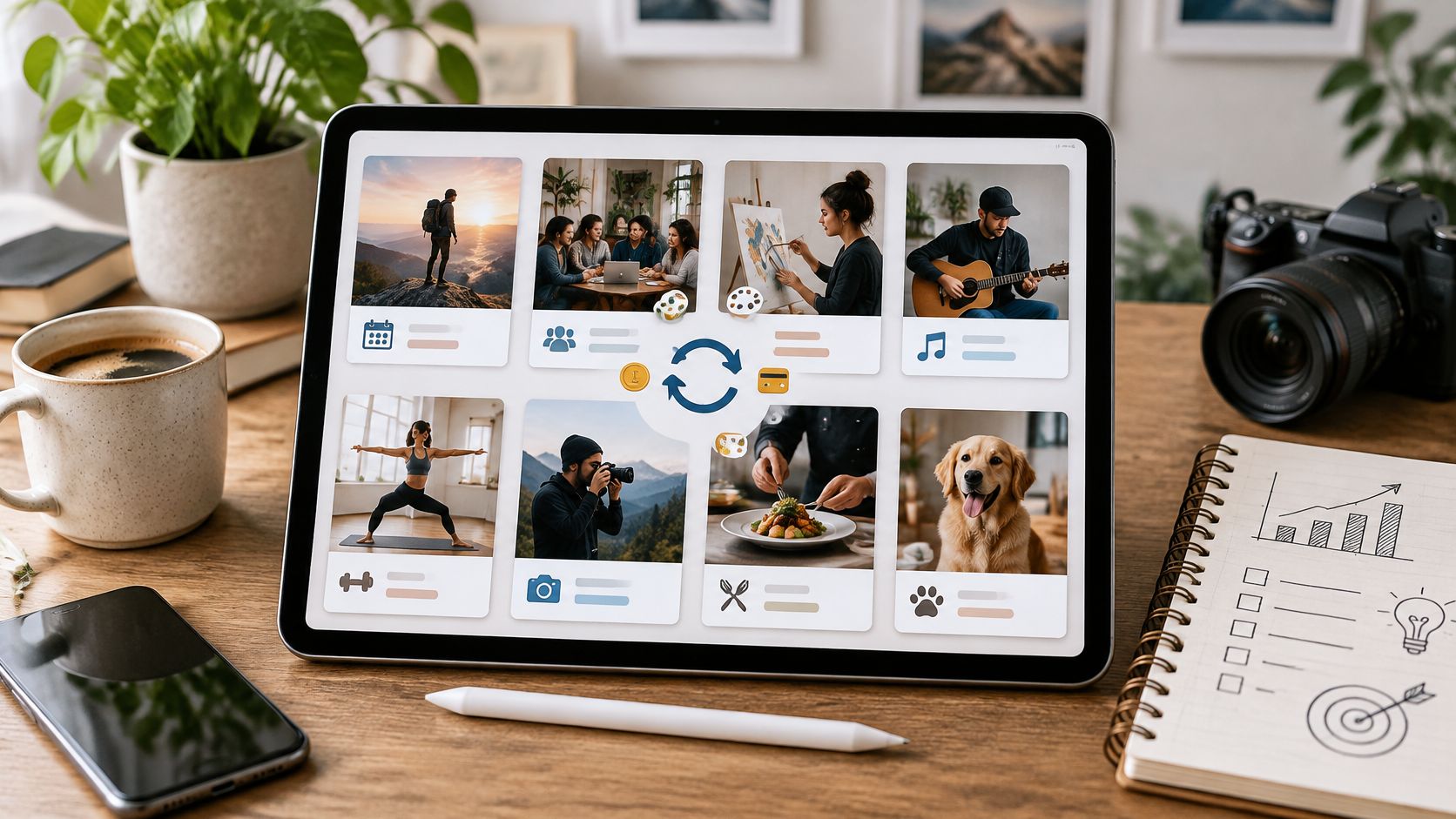
Creator memberships turn casual listeners into recurring patrons who pay a monthly fee for tiered access, direct community perks, and unreleased work. For independent musicians, this model reduces reliance on unpredictable streaming payouts by building a direct financial line to the most committed slice of an audience.

The core trade-off is fulfillment fatigue. A tier that promises a monthly custom remix, handwritten lyric sheet, and weekly livestream sounds generous on launch day, yet turns into a production bottleneck three months later. Before you lock yourself into a single platform's payout rules and fee structure, compare alternatives for recurring creator support and review how transparent subscription terms and conditions govern renewals and billing expectations.
Tiers That Survive Month Three
Say an independent vocalist launches two tiers right before a single drops. The entry tier gives fans early album access and private demos, while a higher tier gives producers stems and vocal presets from the same sessions. Both tiers pull from work the artist is already creating, so delivery stays sustainable.
- Cap your tiers at two or three levels: Too many options create decision paralysis and fracture your production schedule across tiny groups of members.
- Anchor sign-ups to release spikes: Promote your membership right alongside single announcements, pre-saves, and live sessions when listener intent is highest.
- Publish on a predictable rhythm: Supporters rarely cancel over a quiet week, yet irregular silence for a month straight signals an abandoned page.
2. Tiered Music Streaming (Spotify Premium)
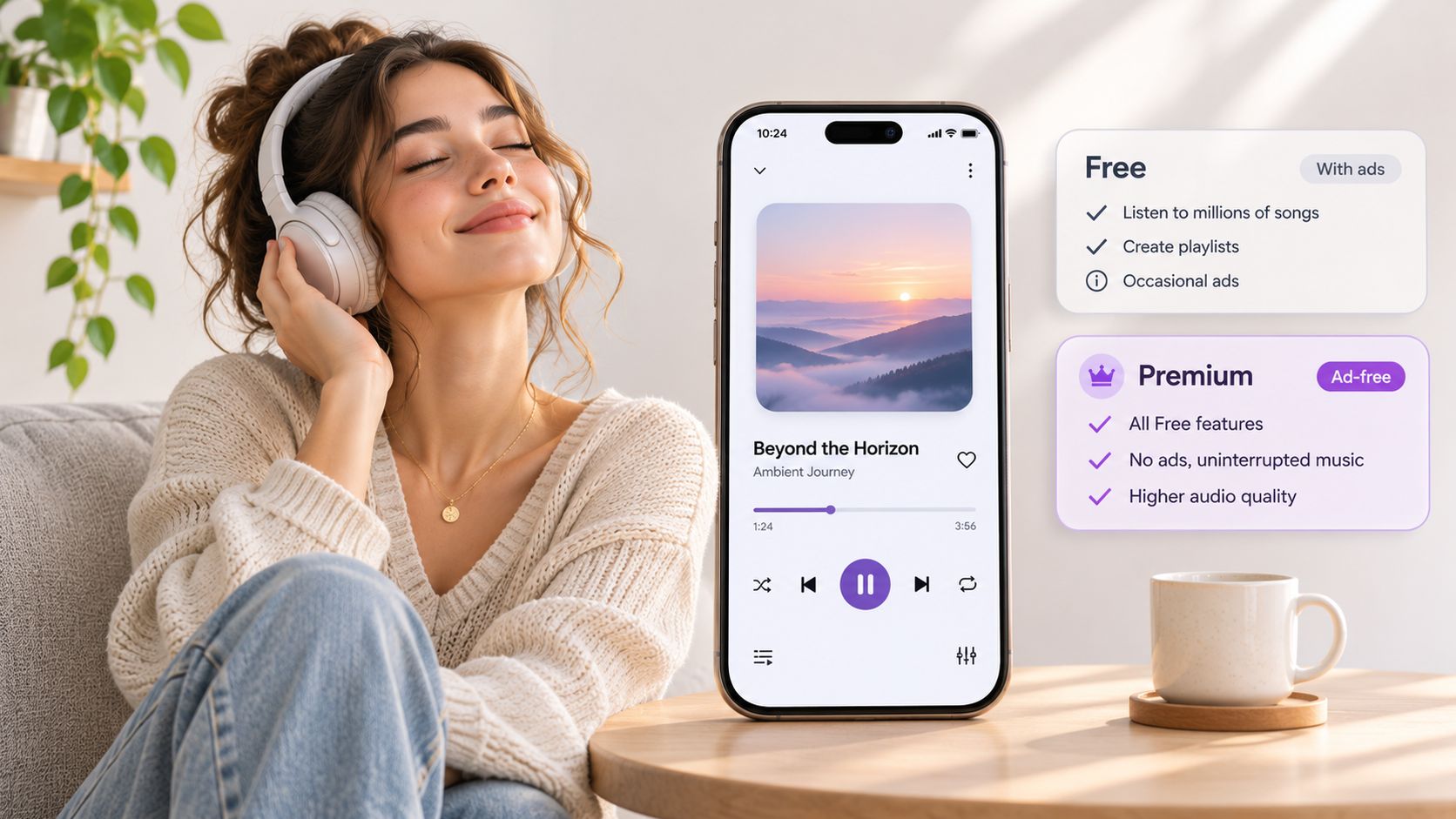
Say a commuter hears a new electronic track on an algorithmic playlist during a free, ad-supported session. Three songs later, an audio ad interrupts the set and offline playback stays locked on the subway. That deliberate friction pushes casual listeners toward Spotify Premium, where individual, duo, family, and student tiers remove ads and provide on-demand offline control.
Spotify's engine is a textbook freemium acquisition funnel. The free tier acts as a massive discovery net, while paid tiers monetize listeners once the habit sticks. Early activation matters enormously in audio subscriptions: a Field Vision Group case study on Pandora reported a 21% lift in second-week return rates after restructuring the first-week listener journey around activation milestones, and behaviorally triggered upsell messages drove 12% higher paid-subscription conversion than generic prompts.
Turning Free Discovery Into Durable Listeners
As an artist, you don't control Spotify's pricing, yet you can borrow its funnel logic across platforms. If you're weighing where to focus release promotion, understanding the structural differences in SoundCloud vs Spotify helps you match your catalog strategy to each ecosystem.
Track real engagement rather than vanity spikes. SoundCloud Insights separates concrete listener signals like plays (excluding your own listens) and likes (listeners saving a track to their Library), giving you an honest read on whether new listeners stick around.
Free tiers build reach, not loyalty. Retention happens when a first-time listener saves your track, explores your profile, and returns for the next release.
3. Producer Sample and Plugin Subscription (Splice)
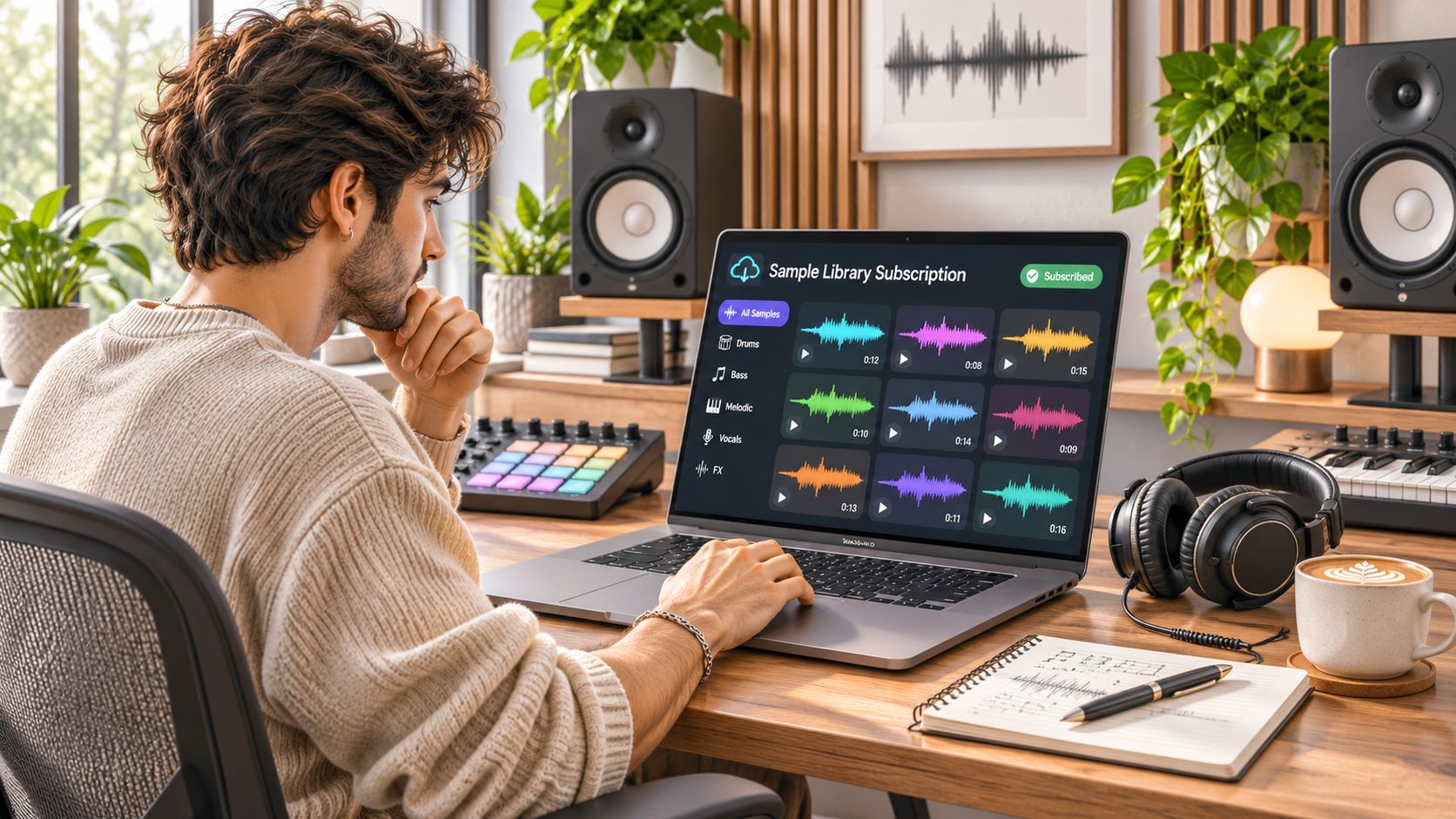
Workflow lock-in beats one-off transactions almost every time in creative software. Splice replaced bulky, expensive one-time sample packs with a monthly credit subscription covering loops, one-shots, project files, cloud backup, and plugin access. Electronic and hip-hop producers plug Splice directly into their daily DAW sessions, which turns a discretionary purchase into a studio utility.
The hidden friction in credit-based libraries is credit hoarding during slow studio months. Flexibility strengthens long-term retention here rather than hurting it. In a global survey of more than 10,000 consumers by Mastercard and FT Strategies, 31% said they frequently cancel and resubscribe, and 74% were more likely to subscribe when cancellation was simple.
Managing Creative Tool Costs Across Release Cycles
A hip-hop producer finishing a ten-track beat tape needs heavy sample volume for two months, then switches to mixing and promotion for the next two. Treating every production subscription as a permanent fixed cost drains cash that belongs in music producer marketing.
- Audit monthly download volume first: Match your credit tier to what you dragged into finished projects last month, not your aspirational studio pace.
- Pause during low-output stretches: Step down or pause plans between release cycles, and test AI stem separation tool alternatives only when a specific project requires remixing or sampling stems.
- Flip stock loops into original textures: Resample, chop, and process subscription loops with your own synths and effects so your tracks don't share identical hooks with hundreds of other releases.
4. Annual Music Distribution Subscription (DistroKid)
Paying per single punishes prolific artists. DistroKid flipped music distribution from a per-release fee into a flat annual utility, letting musicians and small labels upload unlimited singles, EPs, and albums to major streaming stores while keeping their royalties.
That pricing structure sits inside a massive global shift toward recurring commerce. Visa's subscription economy report placed the worldwide subscription economy at roughly $650 billion by the end of 2021 and projected growth to about $1.5 trillion by 2025, fueled by payment infrastructure built for reliable recurring billing. Annual plans lock in lower churn for the provider while cutting per-unit friction for high-output customers.
Operator rule: Unlimited upload plans reward consistent release calendars, yet they never replace audience promotion. Uploading twelve singles a year into an empty room just generates twelve quiet links.
When Unlimited Uploads Actually Pay Off
Say a small label manages three bedroom-pop artists who each drop a single every six weeks. Under a flat annual distribution plan, the marginal cost of each new release drops to zero, making frequent waterfall releases easy to execute.
By contrast, a solo act releasing one EP every eighteen months may pay more over two renewal cycles than a one-time per-release distributor would charge. Map your realistic twelve-month release calendar before choosing an annual utility, and reserve separate budget and time for listener discovery around every drop.
5. Creative Software Suite Subscription (Adobe Creative Cloud)
Adobe's shift from boxed perpetual licenses to Adobe Creative Cloud remains one of the clearest commercial pivots in modern software. Instead of selling a static version every few years, Adobe bundled desktop apps, continuous feature updates, and shared cloud storage into recurring monthly or annual seats.
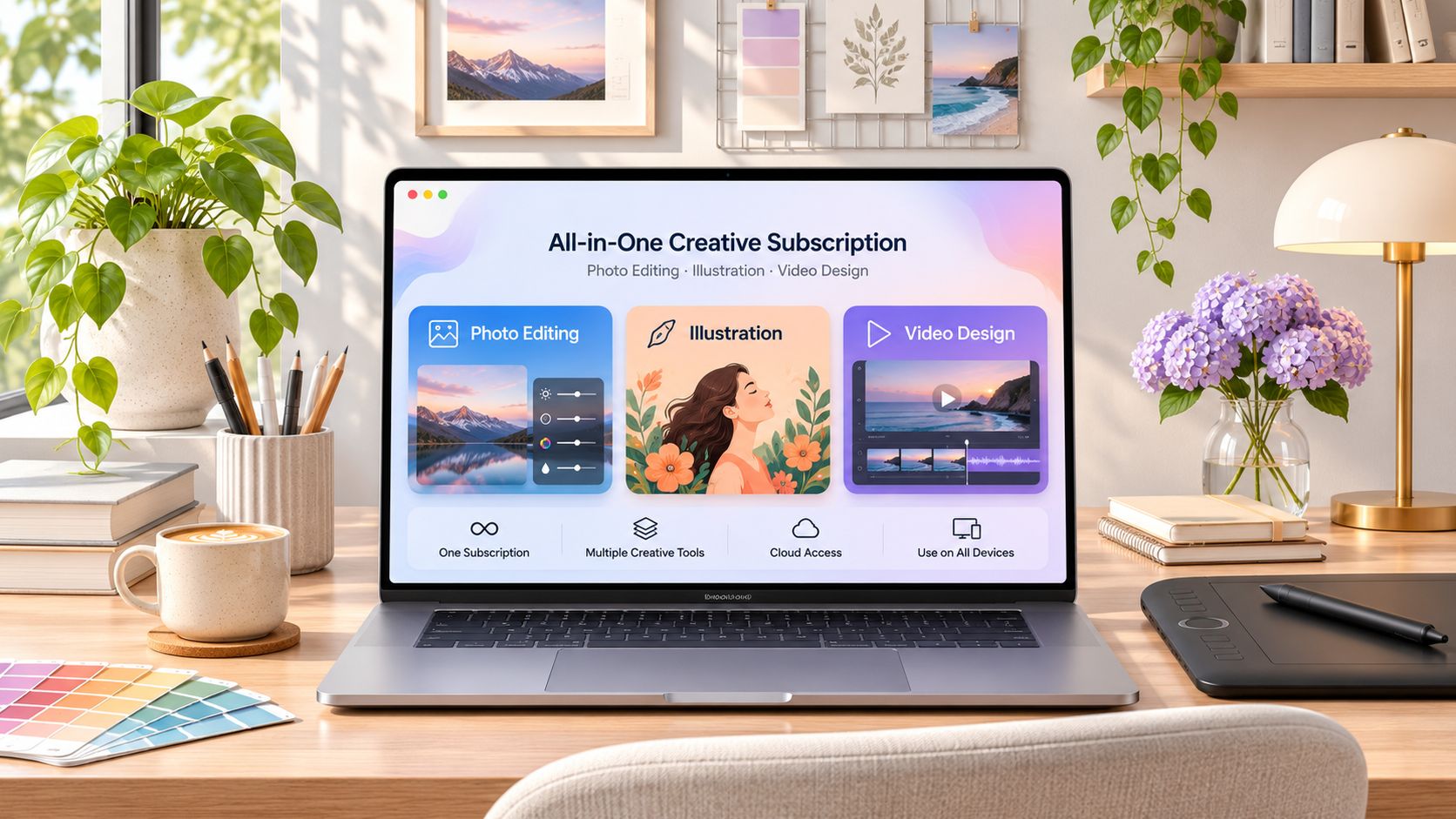
Bundled suites carry a predictable retention trap called shelfware. Customers sign up for twenty tools, use two, and eventually resent the invoice. According to RevenueCat's 2025 State of Subscription Apps report, "not enough usage" is the leading reason subscribers cancel, accounting for 32% to 47% of cancellations across app categories.
Avoiding Shelfware in Creative Suites
Say a visual designer and a video editor collaborate on a music video and album rollout using shared Creative Cloud libraries. Both open Premiere Pro and Photoshop daily, so the suite pays for itself immediately. A solo musician who only edits cover art twice a year faces a completely different math problem.
- Buy single-app plans when your workflow is narrow: Don't subsidize an entire software suite if you only open one audio or image editor each month.
- Match billing cadence to campaign length: Use monthly billing for short, intense album rollouts, and switch to annual billing only when you open the software every week.
- Export local master files before changing plans: Keep flattened PNGs, WAVs, and high-resolution video renders on your own drive so a plan downgrade never traps finished promotional assets inside proprietary project files.
6. Paid Newsletter Subscription (Substack)
Say a music journalist publishes a free weekly breakdown of independent rollout strategies, then puts deep-dive campaign budgets and subscriber Q&A threads behind a paid wall on Substack. Readers already know the writing quality before a paywall ever appears, so the paid tier converts on established trust rather than hype.
Direct reader subscriptions keep finding new buyers even in a crowded media market. In a January 2025 Harris Poll of 3,087 U.S. adults reported by Zuora, 68% said they subscribed to a new service for the first time in 2024. Substack lowers the technical bar for capturing that demand by bundling email delivery, web hosting, and recurring payments under one roof.
Building a Paid Tier Readers Keep
Artists can run this exact playbook without becoming full-time essayists. Send a free monthly dispatch covering tour dates and new tracks, while offering paying readers behind-the-scenes studio notes, raw voice memos, and early merch links.
Consistency drives renewal far more than word count. Link your newsletter sign-up form directly from your SoundCloud bio, track descriptions, and release announcements so every wave of new listeners feeds an email list you own.
"Show the exact value of the paid tier inside your free posts, and keep the publishing schedule steady enough that readers expect your name in their inbox."
7. Design Tool Subscription for Marketing Assets (Canva Pro)
Most independent musicians aren't trained graphic designers, yet every single needs square cover art, vertical teaser clips, and cohesive social banners. Canva Pro converts a capable free design editor into a recurring subscription by gating time-saving upgrades rather than basic functionality.
You can build a clean graphic on Canva's free plan in twenty minutes. You upgrade to Pro the moment you need one-click background removal, instant resizing across platforms, shared Brand Kits, and expanded asset storage right before a Friday release deadline. That feature-gate structure is easy to study and copy because the user feels the exact time savings before entering a card number.
Feature Gates That Convert Non-Designers
Say a small label handles releases for four vocalists and stores each artist's typography, color palette, and logo inside separate Brand Kits. Every promotional campaign then takes minutes instead of hours, keeping the subscription visibly useful every week.
- Build your Brand Kit on day one: Lock in your fonts, hex codes, and visual frames once so every artwork looks like it belongs to the same artist.
- Validate the workflow on the free tier first: Run one full release cycle on the free version to see which Pro features remove bottlenecks.
- Replace stock photos with original visuals: Swap default template imagery for your own studio shots or press photos so your release graphics don't blend into generic social feeds.
8. Subscription Content Streaming (Netflix)
Netflix proved that recurring access to an evolving catalog can replace per-item purchases at global scale. Starting with DVD-by-mail plans before pivoting to on-demand streaming, it shifted subscriber retention around two levers: steady new releases and personalized discovery that keeps the catalog feeling fresh.
Discovery quality directly drives whether subscribers renew or leave. A Provectus case study on the music-streaming subscription nugs.net found that personalized recommendations produced a 40% higher retention rate among users who engaged with them compared with non-engagers, while trial-to-paid conversion more than doubled. Putting the right track or show in front of the right listener beats piling up catalog volume.
Retention Lessons for Independent Catalogs
You don't need a Hollywood studio budget to copy Netflix's retention playbook. Treat your artist community, Patreon library, or member feed like a curated catalog where members always know what's dropping next.
Publish a light monthly roadmap showing upcoming tracks, acoustic takes, or livestreams, and ask subscribers which format they replay most. When listeners see a clear reason to stay for next month's drop, churn falls without aggressive discounting.
Retention check: Subscribers rarely leave because a catalog is small. They leave when they finish what they came for and can't see what's coming next.
Subscription Models at a Glance
| Item | Model Type | Billing Cycle | Best For |
|---|---|---|---|
| Creator Memberships (Patreon) | Tiered creator memberships | Monthly or annual | Creators seeking recurring fan support |
| Tiered Music Streaming (Spotify Premium) | Freemium streaming subscription | Recurring subscription | Listeners wanting ad-free, offline, on-demand music |
| Producer Sample and Plugin Subscription (Splice) | Sample library and production tools subscription | Monthly | Producers who regularly use samples and plugins |
| Annual Music Distribution Subscription (DistroKid) | Music distribution subscription | Annual | Artists releasing music frequently |
| Creative Software Suite Subscription (Adobe Creative Cloud) | Creative software suite subscription | Monthly or annual | Designers and creators needing ongoing access to creative apps |
| Paid Newsletter Subscription (Substack) | Paid newsletter subscription | Recurring subscription | Writers and creators monetizing a loyal readership |
| Design Tool Subscription for Marketing Assets (Canva Pro) | Freemium design tool subscription | Recurring subscription | Artists and teams creating promotional graphics |
| Subscription Content Streaming (Netflix) | On-demand content streaming subscription | Monthly | Viewers seeking unlimited access to a video catalog |
Turn These Subscription Examples Into Action
Look across all eight subscription examples, and four transferable tactics stand out for any creator or small team building recurring revenue or auditing monthly tools:
- Tie billing to real usage cycles: Match short-term campaigns to monthly plans and reserve multi-month commitments for steady, ongoing workflows.
- Make onboarding produce an early win: Whether you run a paid newsletter or a fan club, deliver clear value in the first seven days before asking for a deeper commitment.
- Keep discovery active: Fresh releases, curated playlists, and timely reminders prevent the quiet usage drop-off that triggers cancellations.
- Make billing, cancellation, and account access crystal clear: Regulators are watching closely. UK government guidance on subscription contracts notes that consumers may hold penalty-free cancellation rights, and where a refund is owed it must generally be paid without undue delay and within 14 days after cancellation. Review how artist subscriptions renew and cancel before launching or signing up for any recurring plan.
Account security matters just as much when a subscription connects to your artist profile. SoundCloud's API terms of use require third-party apps to use the official "Connect with SoundCloud" OAuth webview and prohibit implying official endorsement, while the SoundCloud API documentation specifies OAuth 2.1 with PKCE and explicit user consent through secure.soundcloud.com so you never share your password.
You can see campaign-based subscription tiers applied directly inside SCHelper's own plans: a 1-month plan at $9.99 for a focused single rollout on one account, a 3-month plan at $26.99 (our most popular option, recommended for steady audience growth), and a 6-month plan at $53.99 for longer-term audience building. Each connected SoundCloud account requires its own active subscription, payments run through PayPal or Stripe with product updates included at no extra charge, and you can cancel at any time or choose not to renew before your billing date (once a renewal processes without prior cancellation, charges aren't refundable, though we refund users with no questions asked if the service fails to function properly).
Pick one recurring model to test over the next thirty days. Audit the subscriptions you currently pay for, cut anything you haven't opened in a month, and sketch a simple two-tier offer or release cadence you can sustain without burning out.
If you want a structured subscription built around your SoundCloud release calendar, our platform gives you daily curated listener recommendations, audience research, and Engagement Momentum through a secure OAuth connection without storing your password. Choose a 1-, 3-, or 6-month plan that matches your campaign timeline and test it on your next release by visiting SCHelper.