
Music Producer Marketing: A Practical Guide for 2026
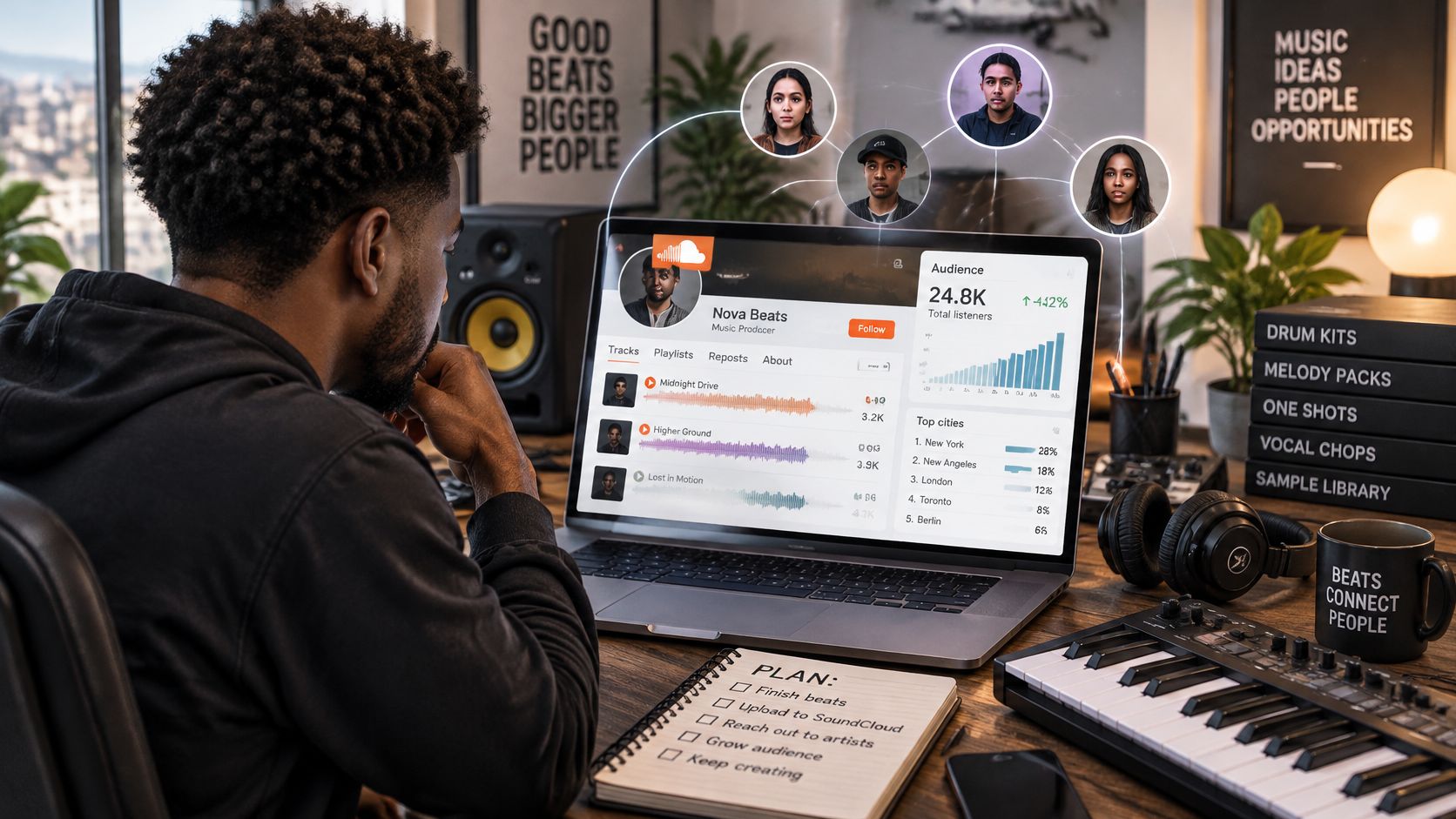
Your beat goes live on a Tuesday. By Thursday it's pulled a few hundred plays, two reposts from friends, and one comment asking what key it's in. A week later the track is flat, and the next upload starts from zero again.
Nothing is broken. The mix is fine, the cover is fine. What's missing is a marketing routine that keeps running after the upload notification stops, and that's a different skill from production. It's learnable, it's measurable, and it's cheap once you stop pouring hours into channels that never send anyone back to your profile.
The producers who keep growing between releases aren't doing more than you. They're doing two or three things on a schedule and checking the numbers every week. That's the whole method, and it starts with understanding why the silence happens at all.
Table of Contents
- Why Streaming Makes Producer Marketing a Discovery Game
- Which Channel Does Which Job
- Set Up Your 30-Day Producer Marketing Routine
- Growing on SoundCloud Through Peer Discovery
- How to Pitch Your Beats to Artists and Labels
- Networking Inside Your Scene Without Burning Bridges
- Turning Stems and Sound Packs into a Mailing List
Why Streaming Makes Producer Marketing a Discovery Game
The flattening has a structural cause. IFPI's global recorded music report puts streaming revenue at US$20.4 billion in 2024, the first time it has passed that mark, equal to 69.0% of total global recorded-music revenue. Paid subscription accounts rose 10.6% to 752 million worldwide in the same year. Nearly all the listening that could turn into a fan now happens inside platforms that decide what to surface next based on what people finish, save, and replay.
Reach and fit are not the same thing. Those 752 million paid accounts are a huge, globally spread base, and almost none of them want your sound. Converting the ones who do takes targeted discovery and steady engagement, not a single blast to everyone you can reach. A producer with 400 plays from the right listeners has more to work with than one with 40,000 from a genre mismatch.
So keep the first month narrow. Pick two channels from the table below, run them with the same measurement for 30 days, and add a third only when the first two move.
Which Channel Does Which Job
Most producers fail here by running six channels badly instead of two well. Each channel below does one job, reports one number, and costs a predictable slice of your week.
| Channel | Main job | Metric to track | Weekly effort (planning estimate) |
|---|---|---|---|
| SoundCloud profile and track discovery | Profile visits, reposts, repeat plays | 3-5 hours | |
| Artist and label pitching | Placements, remixes, collaborations | Replies, placements, link clicks | 2-3 hours |
| Scene networking | Collaborations, feedback swaps, DJ support | Repeat collaborators per quarter | 2 hours |
| Stems and sound packs | Turn listeners into buyers and list members | Downloads, sales, sign-ups | 1 hour after setup |
| Email list | Release reminders and direct sales | Clicks and conversions by segment | 1 hour |
| Short-form video | Show hooks and loops to new ears | 2-4 hours |
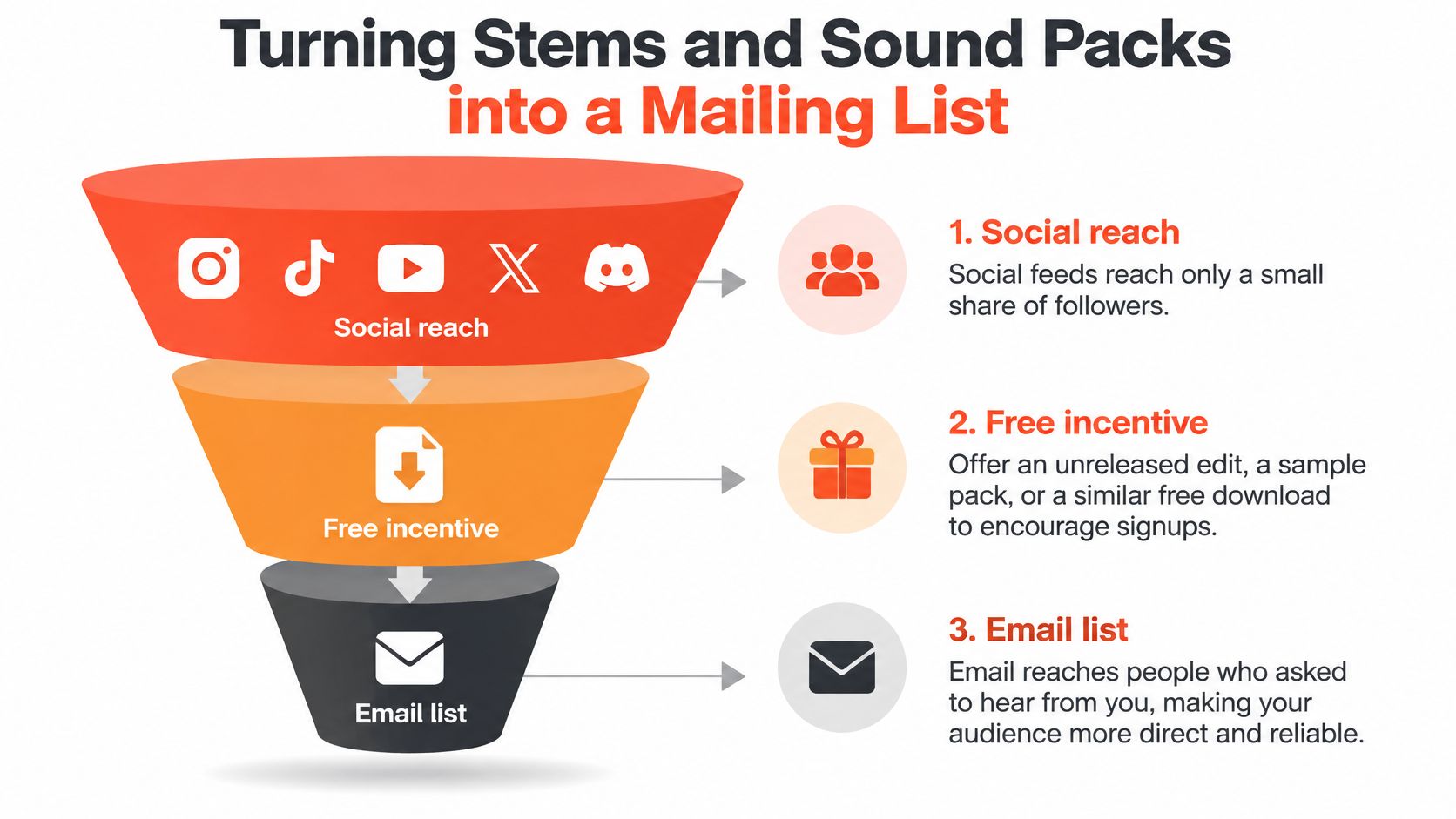
SoundCloud discovery and artist pitching usually come first because both reach people who are already listening to something adjacent. Email is the slowest to build and the only one you own outright, which is why it earns a row despite a low weekly cost. Stems and sound packs sit underneath it: they turn a listener into a buyer and a subscriber in the same transaction.
Short-form video belongs in the plan only when the loop itself is the hook. If you can't film yourself, beat-synced AI visuals for songs give the same 15 seconds a second life without a shoot day.
The four-week rule: a channel stays in the plan only if its metric moved over four weeks. Interest isn't evidence.
Pick your two this way. Take the channel closest to where your current listeners already are, then the one that matches what you're releasing in the next eight weeks. If a single is coming, pitching plus email beats pitching plus a brand-new video account. The weekly effort figures are planning estimates for one person working alone, and the metric column is what you review every Sunday, not what you check hourly.
If you're unsure where your audience spends time, comparing music discovery platforms will save you a month of guessing.
Set Up Your 30-Day Producer Marketing Routine
Before any campaign, write down a baseline: monthly listeners, saves, playlist additions, top countries, and traffic sources for the catalog you already have. Build one spreadsheet and reuse the same attribution links everywhere, so a click from a direct message is distinguishable from a click in your bio. Without that, every later decision is a guess.
Then run a four-stage cycle that a release planner can finish:
- Set the baseline. Numbers as they stand today, dated.
- Segment by geography and listener behaviour. Send the release to the markets already responding before you widen out. Choose target artists whose existing listeners already match your sound and scene, rather than whoever is biggest in your genre.
- Campaign for three to four weeks with four to six coordinated email touches, running alongside your pitches and SoundCloud work, as Upncomer's music analytics guide lays out in its four-stage workflow.
- Review weekly and move effort toward qualified actions. Saves, library additions, and profile visits earn next week's hours. Raw plays don't.
Saves and library additions tell you someone intends to come back. Plays tell you a track appeared in front of someone.
Pre-save conversion is a diagnostic, not a promise. The same guide reports benchmarks of roughly 4-7% for emerging artists against 8-15% for established artists, which means a 5% conversion on a small list is normal rather than a failure, and a low number usually points at the offer or the audience, not the song.
The pitfall to avoid is optimising for follower or stream totals without checking whether anyone returns. A spike that produces no repeat listening leaves you with a bigger number and the same audience. A daily reminder to check new potential fans is the difference between a routine and week-one enthusiasm.
Growing on SoundCloud Through Peer Discovery
Broad algorithmic reach and an engaged audience are different products, and the difference shows up in engagement rates. Ditto Music's independent music report cites SoundCloud-focused evidence that listeners who found a track through another user's Liked By playlist were more than three times as likely to like, repost, or comment as listeners who arrived through an editorial recommendation. Fewer impressions, deeper response.
That finding gives you a targeting rule. Define comparable artists as the ones whose followers already overlap your genre and scene, ideally a tier above you, and ideally active in the last few months. Followers of a dormant artist are a stale list.
Read the ladder from the bottom
SoundCloud's own Insights documentation defines each metric, and they rank cleanly by intent:
| Metric | What it counts | What it signals |
|---|---|---|
| Plays | Times a track is played, excluding your own plays | Exposure only; high plays with no other action means weak fit |
| Likes | Listeners who saved the track to their Library | Intent to return |
| Comments | Feedback pinned to the waveform in real time | Active listening and direct response |
| Reposts | Shares into other listeners' Streams | Peer endorsement and new reach |
| Downloads | Enabled saves of the audio file | Strongest action, often tied to DJs and fans |
High plays with no likes is the clearest diagnosis you'll get: the audience is wrong, not the track. Change who you're showing up in front of before you change the arrangement.
How to Pitch Your Beats to Artists and Labels
A pitch is a fit argument, not a broadcast. Work through these five steps and most of your wasted sends disappear.
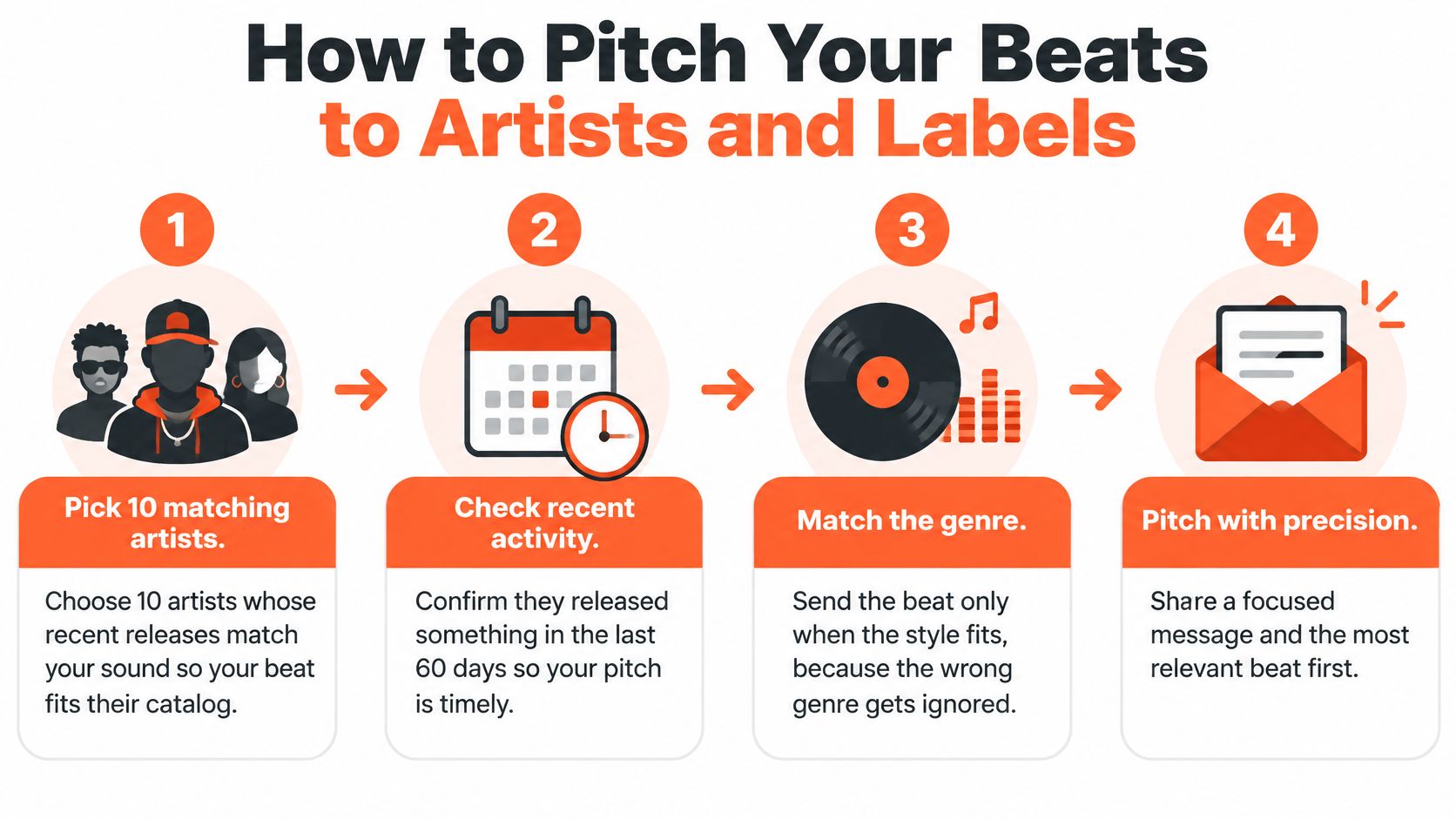
- Pick ten artists whose recent releases match your sound. Ten, written down, not two hundred scraped from a chart. Your beat has to fit their catalog, and a pitch into the wrong genre gets deleted before the second line.
- Confirm they released something in the last 60 days. Artists in an active cycle are the ones shopping for beats. Someone whose last drop was a year ago is usually between projects and not checking their inbox for production.
- Find a real contact. A booking email, a manager, or a message to the artist's own account that clearly isn't automated. Mass-sent forms get filtered and teach you nothing about who listened.
- Send a short showcase. One link to your three strongest tracks or a folder of loops, one sentence on why this artist fits, and one clear ask such as a remix or a feature. The standard slip is sending a full discography or a pitch that could go to anybody. If you struggle to write those two sentences, Web Mage's small business copywriting guide covers the same principle of writing to one reader instead of a crowd.
If you're also chasing editorial placements, the sequences and timing are a separate discipline from beat pitching, covered in this guide to playlist pitching.
The portfolio check most producers skip
Open your own link on a phone with a slow connection. The music should play without a download step, the first track should be the one you referenced in your message, and the titles should match what you claimed. A link that asks for a password or lands on a playlist of 40 sketches undoes a good pitch in five seconds.
Networking Inside Your Scene Without Burning Bridges
Scenes meet in unglamorous places: genre Discord servers, producer feedback threads, local listening nights, open decks, and the comment sections of artists you already rate. Take a trap producer who joins a small server with about 200 members. He posts specific feedback on three tracks a week for a month, naming the arrangement problem and suggesting a fix rather than saying "fire". By week five a vocalist who had responded twice asks whether he has anything for a hook. That's a collaboration, built from four weeks of unpaid attention.
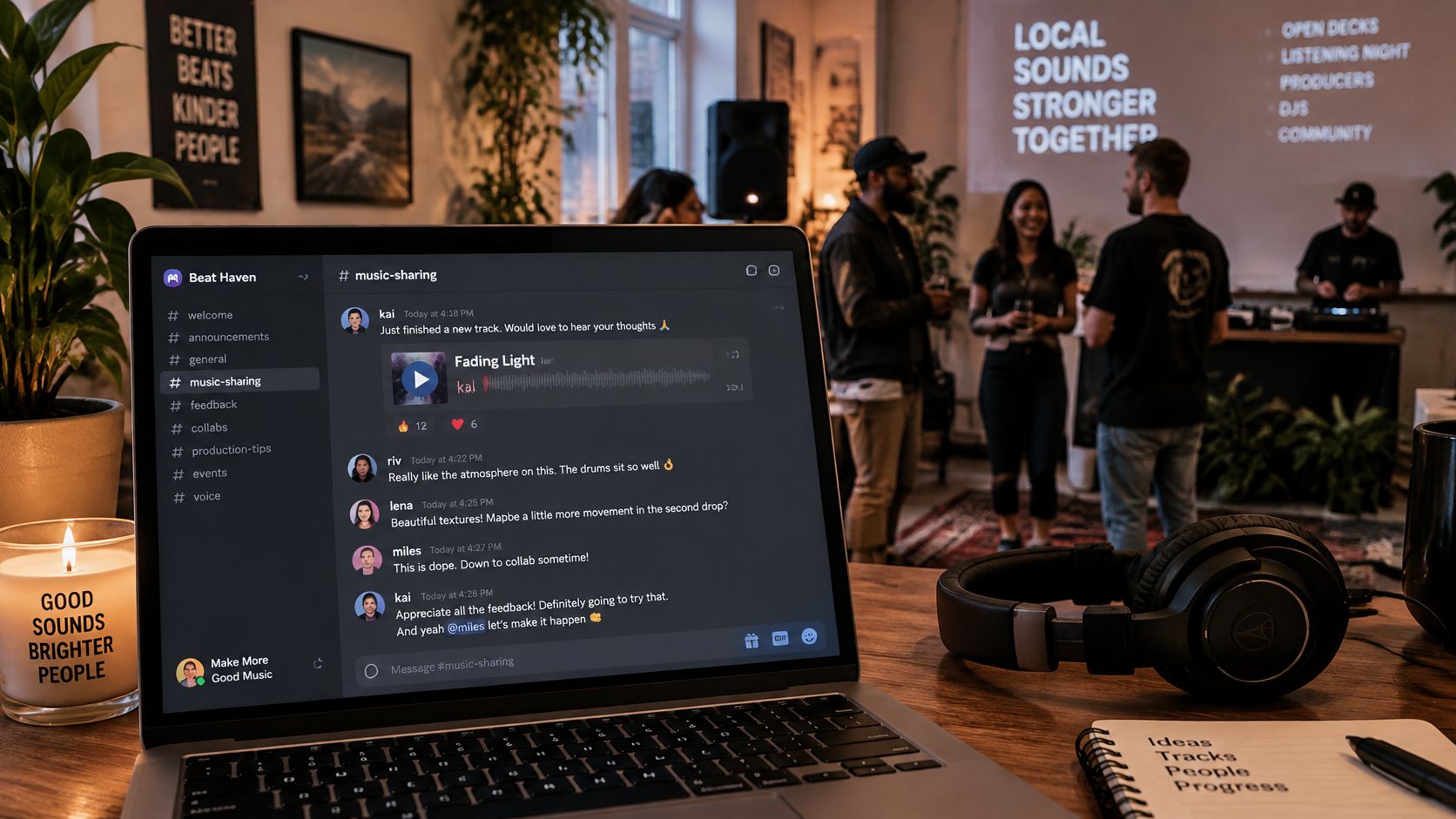
Track collaborations per quarter, not likes. Keep a note on who replied, what they make, what they're working on next, and when to check back. Two real collaborators a quarter will do more for your catalog than a thousand passive followers, and the note is what keeps the relationship alive.
Treating peers as leads is the fastest way to get frozen out. People in a small scene notice when every message opens with a request.
The three rules I'd hold to: give before you ask, keep the ask specific and small, and never make a favour feel like a transaction. One concrete move this week beats a plan for next month. Pick a single community, make three useful contributions there, and don't ask for anything until you've done it.
Turning Stems and Sound Packs into a Mailing List
The four-email sequence
Offer something legitimate: an unreleased edit, a sample pack, or a production breakdown. Get clear permission, then tag each subscriber by genre and release interest so later messages match what they signed up for.
- The announcement. What's coming, when, and why they'd care.
- The breakdown. How the track was built, with a screenshot or a short video of the session.
- Release day. One link, no clutter, sent in the morning of your local time.
What the benchmarks actually mean
Music-focused benchmarks put email open rates around 20-35% and click-through rates around 3-8%, per the same Andr Music guide. Read those as directional, not as a pass mark: list quality, sender reputation, region, and privacy-related measurement all shift them. A tight list of 300 engaged listeners can outperform a rented list of 30,000.
The failures are predictable. Purchased lists, misleading subject lines, mailing three times in a week, and counting opens without checking clicks. Suppress addresses that never open instead of mailing them again, because every ignored send lowers what the next one achieves. For a wider view of how this fits into a release calendar, see this guide to independent artist marketing.
License tiers on the sales page
Paid packs need terms before you promote them. Split the sales page into personal use, commercial release, and exclusivity, with the price and the rights stated next to each. Offer one free loop kit as the list incentive, and link every paid pack to the same sign-up flow so buyers join the list at checkout with consent recorded. That single change turns a one-off sale into a contact you can email on the next drop.