
SoundCloud for Artists: How to Grow Your Audience

Table of Contents
- Why SoundCloud Still Matters for Independent Artists
- How Fan-Powered Royalties Reward Real Listeners
- Setting Up Your SoundCloud Artist Account
- Optimizing Your Profile and Release Pages
- Reading Insights to Track Real Audience Growth
- Choosing Between Organic Growth and Guided Tools
- Next Steps for Building Your SoundCloud Audience
Why SoundCloud Still Matters for Independent Artists
Picture a producer who has three mixes online, a vocalist with a handful of demos, or a small label parking a new single somewhere fans already hang out. The upload worked. The return didn't. Plays arrived from people who never came back, and the profile looked busy without becoming a place anyone stayed.
SoundCloud still fits that crowd because the page is social as well as sonic. A DJ can leave a long mix up. A beatmaker can share a work in progress. A vocalist can pin the song they want a first-time visitor to hear. A two-person label can keep several artists under one roof and still point each listener somewhere specific. Hosting alone doesn't pay rent. What changed is that SoundCloud tied on-platform income to how individual fans listen, instead of only to a giant pool of plays.
That shift is why a quiet, repeat audience can matter more than a noisy one-off spike. Someone who plays your catalog again is a different economic signal from someone who taps once and leaves. If you're weighing this home against a mainstream streaming app, the practical differences in discovery and payout logic are laid out in this SoundCloud and Spotify comparison.
Practical rule: Treat a returning listener as the unit that counts, and treat a raw play as only the first clue.
By the end of this guide you'll be able to explain why dedicated listening changes the split, finish a one-session account setup, make a profile and a release page easy to scan, read Insights without mistaking launch day for lasting growth, and decide whether organic work, hand research, or a guided tool belongs in your week.
How Fan-Powered Royalties Reward Real Listeners
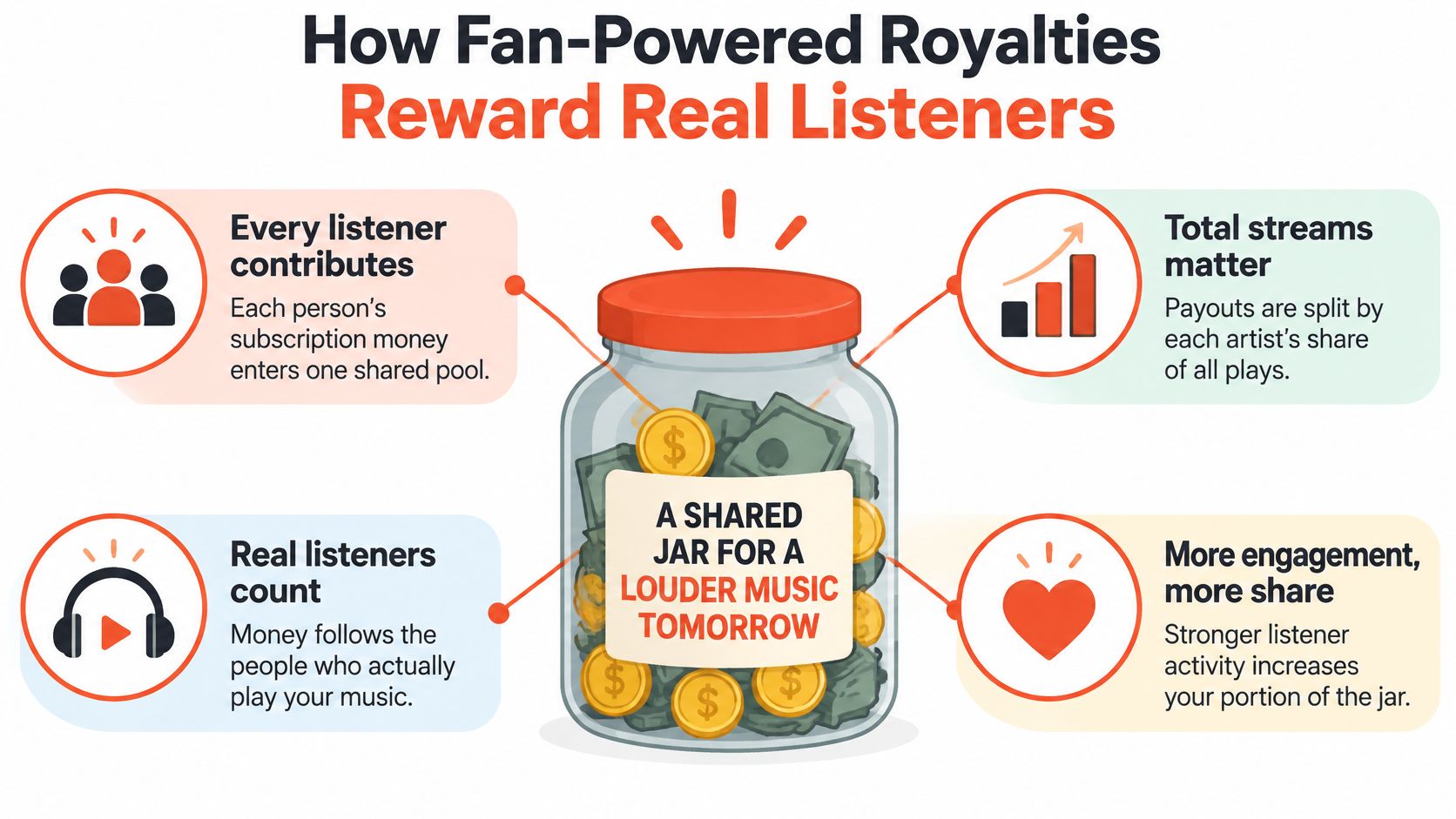
A larger crowd is not automatically the richer crowd. A 2022 analysis of 118,000 participating musicians found that 56% earned more than they would have under a conventional pro-rata system. 64% of artists with between 100 and 1,000 listeners were better off, and 65% of those with between 10,000 and 100,000 listeners were too, while only 38% of artists above 100,000 listeners came out ahead, according to how fan-powered royalties worked for artists. The same analysis said artists could potentially double streaming income by lifting highly engaged "superfan" listeners to about 2–3% of the audience. That is a model, not a guarantee.
What "100%" still withholds
"100% of net on-platform income" is easy to overread. SoundCloud's own getting-paid guidance says payouts still involve a processing fee, a $25 balance threshold, an initial 45–60 day setup period, and a standard two-month reporting delay, as set out on SoundCloud's get paid page. Monetization is limited to tracks you own or are legally allowed to monetize, and dashboard approval can take up to five business days.
- Rights first: If you don't control the beat, the sample, or the vocal, don't submit it and hope.
- Timing second: Plays before approval are not the same as plays after the track is monetizing.
- Cash third: A small, loved catalog can sit under the threshold for a long time. That isn't a failure of the song. It's the calendar and the minimum.
A tight group of people who replay you can be worth more than a wide spray of one-time taps. Track repeat listening and how deep they go into the catalog, not only the play total.
Setting Up Your SoundCloud Artist Account
Do this before you tell anyone the link exists. A messy profile makes later numbers impossible to trust, because you won't know whether a visit bounced off a blank header or heard the music.
- Confirm the artist account. Use the profile you'll release under, not a personal leftover. If a label runs several acts, keep each identity obvious so Insights aren't blended by accident.
- Match the display name to the name on the music. Fans search the name on the artwork and the flyer. A cute variation that doesn't match creates a dead end.
- Write a short bio that answers two questions. Who are you, and what do you sound like? One or two sentences on city, role, and the lane (club mixes, introspective rap, vocal house) beat a vague mission statement.
- Add a profile image and a header. They should be readable at phone size. If you don't have final art, use a consistent stand-in and replace it before the next release, not after the campaign.
- Link the places you already use. A website, a mailing list, or another music profile belongs in the featured links so a convinced listener isn't stranded on the page.
Artist Pro and the rights check
Artist Pro is the upgrade to weigh if you want deeper fan signals, including Top Fans, on top of the standard picture of who listened. You don't have to buy it on day one. You do need the free profile finished so the upgrade has something clean to measure.
Before you hit publish on anything you hope to monetize, run this in one sitting:
- Titles and genres match what a fan would search.
- Credits name collaborators the way you want them seen.
- Rights paperwork is in a folder you can easily find, not in a chat thread from last year.
- Monetizing status is something you'll check after submission, not something you'll assume.
That checklist is the baseline. Promotion that starts before it is finished teaches you nothing useful about the audience.
Optimizing Your Profile and Release Pages
Setup gets the account into existence. Optimization is what a stranger sees in the first screen, and whether that screen tells them where to click next.
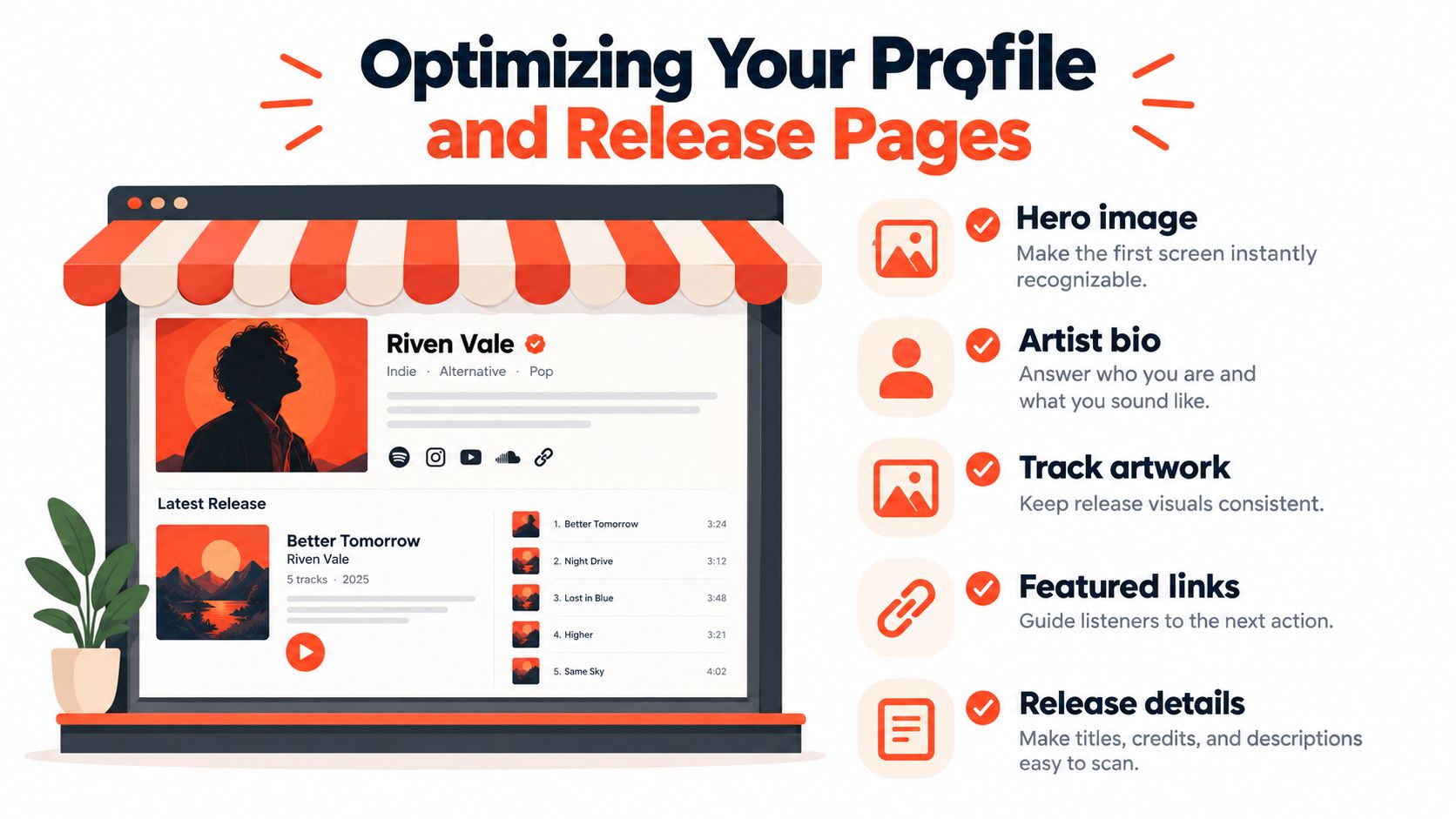
Treat the profile like a shop window. The hero image should be recognizable without a caption. The bio should say who you are and what the music feels like. The first tracks in view should be the ones you'd play for a new fan, not the oldest upload that happens to sit on top. Consistency does more than decoration. When artwork, type, and color rhyme across releases, people recognize the next post as yours before they read the title. If the cover is the weak point, a practical music library artwork guide is a useful pass on size, crop, and clarity before you export.
Make the next click obvious
Track titles should say what the file is. "Final2" helps you and no one else. Genre and tags should describe the music a similar listener already likes, not every adjacent style you admire. Descriptions earn their space when they add context a title can't: a remix, a collaboration, a recorded mix session, or who the record is for.
Release day is a terrible judge of whether you grew. A spike on hour one can be your friends and a group chat. Schedule the push across a consistent window, then compare that window with the days around it. A fuller way to sequence the drop itself sits in this music release strategy.
Run this before every release, not only the first:
- Hero image: Still recognizable, still yours.
- Artist bio: Still true if the sound has shifted.
- Track artwork: Matches the rest of the catalog.
- Featured links: Point at the action you want this month.
- Release details: Title, credits, and description scannable on a phone.
The routine is the point. Each piece exists to make the listener's next click easier, whether that's pressing play, opening another track, or leaving for a show link.
Reading Insights to Track Real Audience Growth
Insights is where you stop guessing. SoundCloud's dashboard shows who is listening, how they interact, where momentum is building, traffic sources, listener locations, and top tracks. On advanced plans it also shows Top Fans, as outlined in Insights on SoundCloud. Follower count is the loudest number and often the least honest one.
| Metric | Question it answers |
|---|---|
| Who is listening | Are these people in the scene you meant to reach? |
| How listeners interact | Did they play, repost, or comment, or only land? |
| Where momentum is developing | Is attention spreading, or stuck on one upload? |
| Traffic sources | Which path actually brought them in? |
| Listener locations | Is a city or region clustering, or is it scatter? |
| Top tracks | What should the profile lead with next? |
| Top Fans (advanced plans) | Who is dedicated enough to warrant a direct note? |
The funnel that follower counts hide
Watch four steps in order. Targeted discovery leads to a profile visit. A visit leads to a track interaction, a play, a repost, or a comment. An interaction becomes growth only when it turns into repeat listening.
Record a baseline before a campaign: plays, engagement, traffic sources, and geography. Then look at the same windows, daily or weekly, not a random afternoon after a good comment. Otherwise the release-day spike gets mistaken for an audience you still have on Thursday.
A rising repeat-play line in two cities tells you more than a follower jump you can't trace.
Choosing Between Organic Growth and Guided Tools
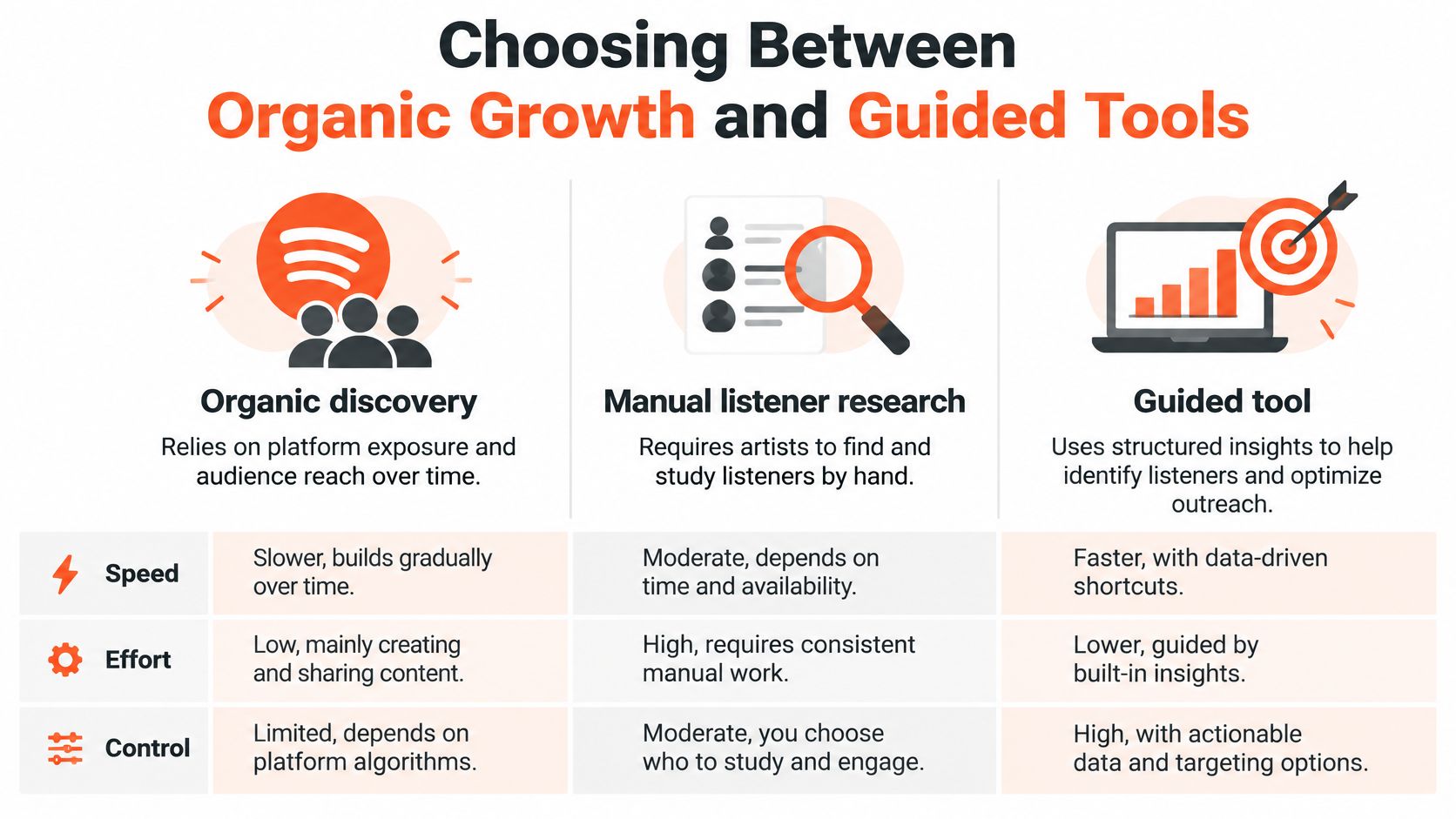
Three ways artists usually try to find listeners sit on the same three tests: time, consistency, and how much say you keep over who gets your attention.
Organic discovery waits on the platform, your existing fans, and whatever a repost or an on-platform recommendation does. Speed is slow. Effort after the release is low. Control is thin, because you don't choose the next listener, you accept whoever arrives. It fits a catalog that already gets replayed, and it struggles when nobody outside your group chat knows the name.
Manual listener research is the opposite trade. You look up artists you resemble, open their audiences, and decide one profile at a time whether the taste overlaps. Control is high. Consistency dies the week you're in the studio or on the road. The work is real, and it doesn't scale past the hours you personally give it.
A guided tool sits between them. You still choose the artists, genre, and scene that define "relevant." Software narrows the pile so the daily job is review, not a blank search. Speed goes up. Effort becomes a short daily pass. Control stays with you only if nothing happens until you confirm it.
What a guided workflow actually includes
SCHelper is a web app that connects with SoundCloud OAuth, so it doesn't store your password. It offers a daily shortlist of listener recommendations from target artists, genre, and scene, aimed at accounts with relevant engagement. You can filter toward PRO or non-PRO listeners, drop people you've already engaged, and get a daily nudge to review the list. You confirm each action yourself. Each connected profile needs its own subscription. Plans run 1, 3, or 6 months through PayPal or Stripe, with access right after payment.
Use that shape of tool for a short campaign or a steady build once the profile and the release calendar are already clean. Skip it if the bio is empty, the next release has no date, or you want a machine to act while you're away. SoundCloud's terms treat activity that misrepresents popularity as a problem, so judge any aid by whether the workflow stays transparent and in your hands. A wider look at how these choices sit next to other channels is in this note on social media growth tools.
Next Steps for Building Your SoundCloud Audience
Don't try to "grow" in the abstract this month. Run a 30-day start that makes the next decision obvious.
Week one is the account. Finish the display name, bio, images, and links, and confirm rights on anything you plan to monetize. Week two is the window. Audit the profile and the next release with the checklist so a new visitor can tell who you are and what to play. On the day that page is ready, write down your Insights baseline: plays, traffic sources, locations, and whatever engagement you already have. Weeks three and four are the same weekly review. Repeat plays, sources, and geography. If a number only moved on release day, it isn't a trend yet.
Add a guided shortlist after that, not before. The profile should already answer a stranger, and the release calendar should already have a next date. The tool's job is a structured daily list of listeners to review, not a substitute for either of those. If you also talk to fans on Instagram, learning how to turn Instagram listeners into loyal fans keeps that channel pointed at the same people who replay you, instead of at empty reach.
Start with one monthly plan on one profile if you want a short test. A longer plan only makes sense once the weekly review shows that relevant listeners are actually sticking.
The first action this week is small and specific. Open the plans, read how the daily review works, and decide with the baseline in front of you. A clean page plus people who come back will always beat a louder number you can't explain. That's the same bet the royalty model already makes.
SCHelper gives independent artists a daily, OAuth-connected shortlist of listeners tied to the artists and scenes they choose, so audience work stays reviewable instead of random. That fits a SoundCloud practice built on repeat listening, Insights, and realistic payout timing rather than play-count hype. If your profile and next release are already in shape, visit SCHelper and compare the monthly plans before you commit.