10 Social Media Growth Tools for SoundCloud Artists

The most useful social media growth tools do different jobs. Some help you discover relevant SoundCloud listeners; others promote a specific track, collect fan details, pitch music, schedule posts, or measure campaign performance. The right choice depends on the bottleneck you're trying to fix.
Treat discovery, distribution, relationship-building, and measurement as separate parts of one workflow. That makes it easier to choose a tool for a clear purpose instead of paying for overlapping features or adding another dashboard you won't use. Below, the tools are grouped by the job they do for a working artist or small music team, with practical trade-offs to consider before you build a stack.
Table of Contents
- 1. SCHelper
- 2. SoundCloud Promote
- 3. Hypeddit
- 4. Feature.fm
- 5. Groover
- 6. ToneDen
- 7. Buffer
- 8. Metricool
- 9. Later
- 10. Hootsuite
- Top 10 Social Media Growth Tools Compared
- Build a Growth Stack, Not a Tool Wishlist
1. SCHelper
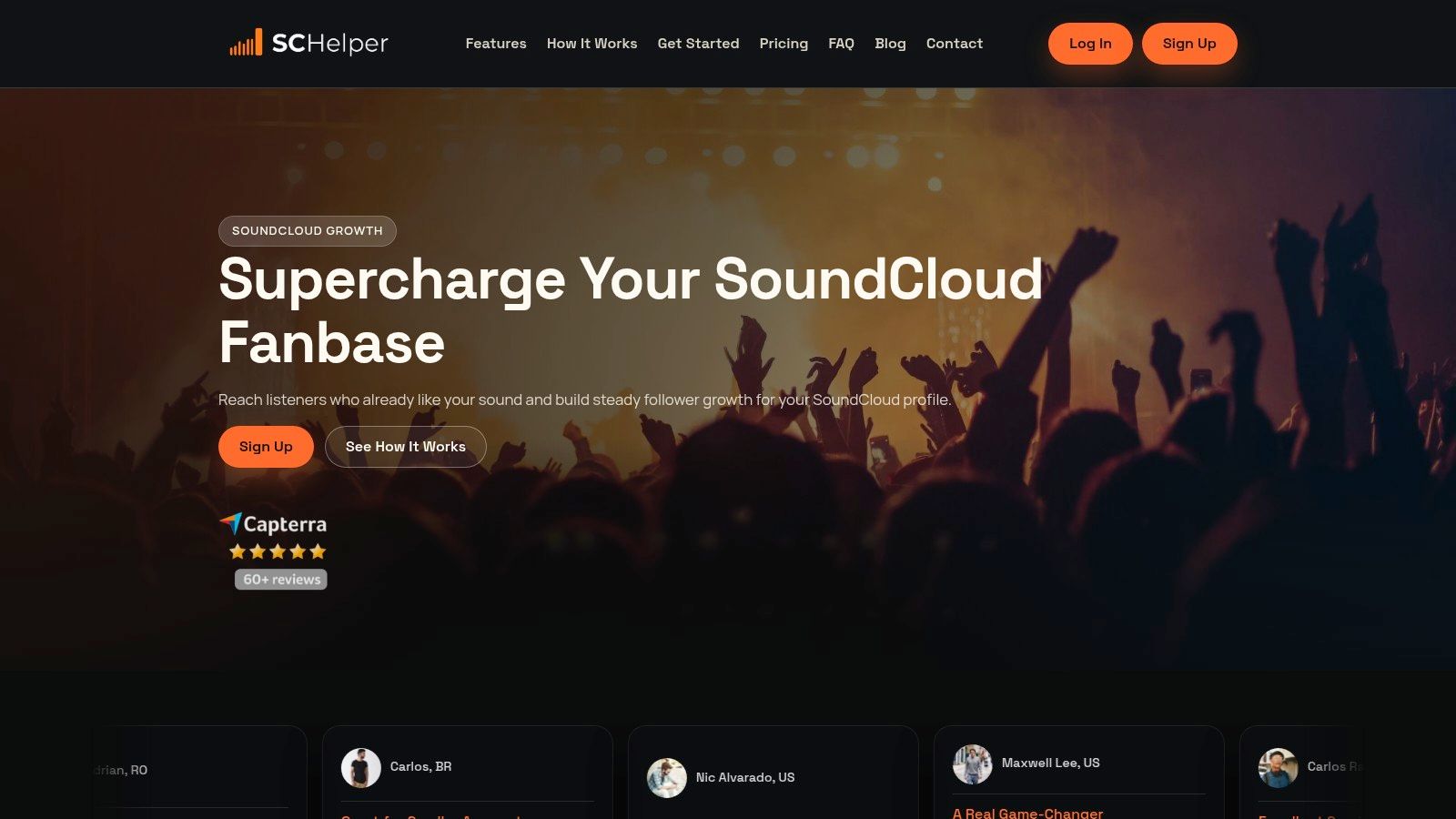
Finding SoundCloud listeners by hand is slow work. SCHelper is built specifically for that job: you select artists that fit your sound, then review curated recommendations of accounts connected to those artists. That gives you a more focused starting point than browsing profiles at random, though you still need to judge whether each account looks relevant.
Practical rule: Treat recommendations as a shortlist for human review, not a guarantee that every account will become a listener or fan.
Where it fits
SCHelper makes sense when manual audience research is taking time away from making music. Its recommendations and batch actions can make discovery more manageable. A strong profile, clear track presentation, and consistent engagement still do most of the work, and results depend on which artists you select, how well the suggested accounts fit, and how regularly you review the list.
Plans are offered monthly and over longer terms, and each connected SoundCloud profile requires its own subscription. Check current plan terms on the SCHelper site, especially if you manage multiple artist accounts. For a broader look at music-focused campaign options, see this guide to music promotion tools.
Best for: Artists who want a structured way to discover and review listeners connected to similar music.
2. SoundCloud Promote
SoundCloud Promote is the straightforward choice when you want to pay for visibility for a particular track within SoundCloud. It's a native promotional option, so the campaign is tied to the platform where listeners can play the music rather than relying only on off-platform traffic.
Use it for reach, not relationship-building
Set a campaign around a track with a clear reason to promote it, such as a release you're actively supporting. Then decide in advance what you'll examine beyond impressions, including profile activity and meaningful responses. If the campaign delivers visibility but little listener action, the lesson may be about targeting, creative, or track fit rather than a reason to buy more reach.
Promoted impressions also don't provide the one-to-one discovery workflow that a tool like SCHelper offers. Charges for delivered impressions are non-refundable under SoundCloud's terms, so review the campaign setup before launching. Artists comparing paid promotion with other approaches can also consult this guide to a music promotion service.
Best for: Artists who want paid placement for a specific SoundCloud release and understand that reach isn't a fan guarantee.
3. Hypeddit
Hypeddit combines music-focused landing pages and fan-capture tools with promotion features. That makes it useful when a release needs a destination as well as a way to send people there. Smart links, pre-saves, download gates, and link gates can help organize a campaign around the action you want a listener to take.
The practical advantage is having the campaign path and promotional tools in one music-oriented service. Depending on the plan, Hypeddit also offers tracking, fan analytics, and music-ad campaign tools. A free Rookie tier gives artists a way to explore basic features before choosing a paid option.
Make the action worth taking
A download gate or other exchange works best when the offer is useful to the listener. It can capture an email address or prompt a specified action, but an interaction earned through an incentive doesn't automatically mean the person will return to hear future releases. Review the quality of the resulting engagement, not only the number of people who complete a gate.
Hypeddit doesn't provide SCHelper-style discovery of SoundCloud listeners, and paid advertising brings its own spend beyond the software plan. Use it when you need to turn campaign traffic into a specific next step, not as a substitute for finding an audience.
Best for: Independent artists who want music-specific landing pages and fan-capture options around a release.
4. Feature.fm
Feature.fm helps artists connect social posts and promotions to music destinations. Smart links can route fans to listening services, while pre-save and release pages give a campaign a consistent landing point. Artists can also create pages that embed players, including SoundCloud, YouTube, and Spotify.
That makes Feature.fm a conversion tool, not a discovery engine. A link page can make the next action clearer, but it doesn't create traffic on its own. You still need to reach listeners through content, advertising, pitching, or direct audience discovery.
A useful landing page answers one question quickly: where should a listener go next?
Keep the path simple
Feature.fm also offers audience-capture and advertising tools, with features and limits dependent on the selected plan. It can fit a wider music-marketing workflow, but it won't replace targeted SoundCloud listener discovery or a publishing calendar.
Best for: Artists who need a polished destination for traffic coming from social posts, ads, or release announcements.
5. Groover
Groover is for pitching tracks to music curators, media outlets, labels, and other professionals. You choose contacts according to their stated interests and submit music for consideration. That makes it a different kind of growth tool: it helps you seek attention from selected industry contacts rather than find SoundCloud listeners directly.
Groover's pay-per-submission model can suit an artist who wants to test whether a track fits a particular outlet without committing to an ongoing subscription. The platform promises written feedback within its stated period, and credits are returned for contacts who don't reply within that timeframe. Check the current submission terms before spending.
Pitch for fit
A response is not a placement. Even useful feedback doesn't guarantee coverage, playlist inclusion, or new fans, and the cost can add up if you contact many people without checking their fit. Read curator profiles, listen to the music they support, and submit selectively.
Groover is most useful when you have a specific release and a plausible reason that a particular contact might care about it. It's not a replacement for building direct relationships with listeners, scheduling social content, or measuring what happens after someone discovers a track.
Best for: Artists seeking targeted feedback or opportunities to put a release in front of relevant music professionals.
6. ToneDen
Match the incentive to the listener
A bonus works best when it adds something meaningful to the release, such as a related download or extra material. If the incentive is disconnected from the music, it can attract people who want the offer but have little interest in the artist. ToneDen's advertising features may also require connected ad accounts and separate ad spend, so account for both the platform and campaign costs.
ToneDen is more music-specific than a general social calendar, but it isn't a substitute for organic audience discovery or a guarantee of repeat listening. Check current plan features and campaign documentation before building a feature around a particular action.
Best for: Artists with a relevant bonus who want to connect a campaign offer to a specific fan action.
7. Buffer
Buffer is a social publishing tool for artists who need to plan posts across supported channels. A solo musician can use its content calendar to coordinate release announcements, short clips, behind-the-scenes posts, and reminders across networks such as Instagram, TikTok, and YouTube. Buffer's free plan supports a small set of connected channels, which can be enough to test whether a scheduler fits your routine.
Schedule around the release
Build a simple sequence that gives each post a distinct purpose. One post might introduce the track, another might share a short excerpt, and another could point listeners toward the SoundCloud profile. Repeating the same announcement across every channel can make the schedule feel mechanical, so tailor the framing to the format and audience.
Buffer's general-purpose design keeps it accessible, but it won't discover relevant listeners or run a music-specific campaign. Paid costs can rise as you connect more channels, so start with the accounts you use rather than adding every profile by default.
Best for: Solo artists who want a straightforward way to plan social posts around releases.
8. Metricool
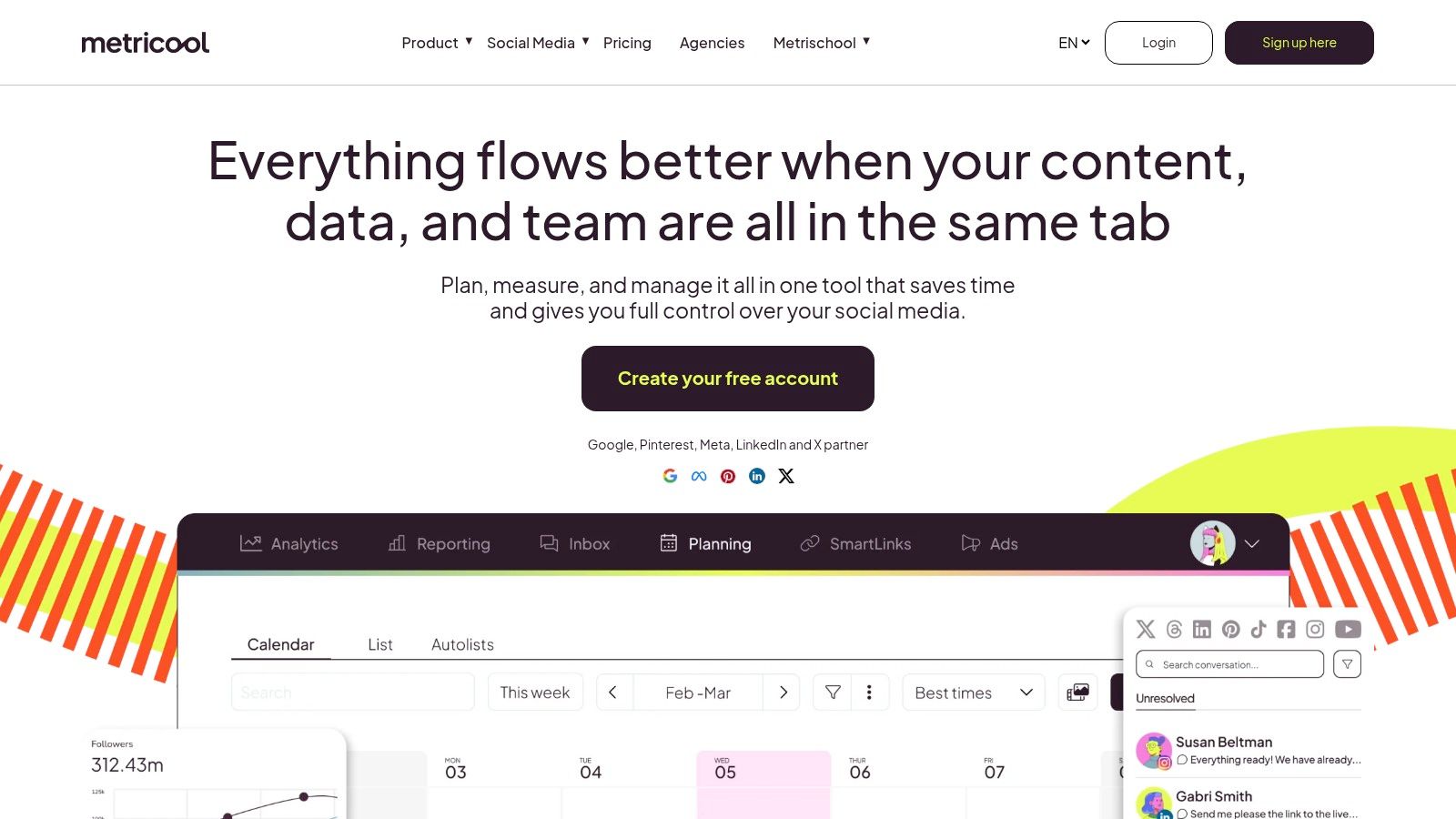
Metricool combines social scheduling with analytics and reporting. That makes it useful after a campaign is underway: you can review how posts performed across connected accounts and use the results to refine what you publish next. Artists, managers, and small labels may value having planning and reporting together rather than splitting those jobs between separate services.
The product's account limits and reporting features vary by plan, and some features are available only on paid tiers. It also requires more setup than a minimal scheduler if you're connecting several accounts or want a wider view of campaign performance.
Measure beyond reach
For a SoundCloud-focused campaign, pair social performance with actions that indicate listener interest. Track whether posts lead to profile visits, plays, comments, reposts, or repeat listening where those measures are available. A social dashboard can show how content performs on connected channels, but it won't provide a SoundCloud-specific discovery workflow by itself.
Metricool's free starting option can help you see whether its reporting style suits your needs before you commit. For other tools that support music campaigns, this guide to music marketing tools offers additional context.
Best for: Artists and small teams that want scheduling and cross-account reporting in one place.
9. Later
Later brings social scheduling together with visual planning and creator-oriented tools. That can suit artists who promote releases through image- and video-led content and want to coordinate a campaign across several social platforms. Its calendar helps organize assets and posts so a release doesn't rely on last-minute uploads.
Plan the visuals with the destination in mind
Use Later to line up different campaign assets, such as cover artwork, a track excerpt, or a short studio clip, and make sure each post points toward a useful next step. A visual calendar is especially helpful when another person needs to review or approve campaign content. Collaboration and analytics features vary by plan, so check whether your team needs them before paying for a higher tier.
For an artist working alone, Later may be more platform than necessary if the main need is to queue a few posts. It's most useful when visual organization and campaign coordination are real recurring tasks.
Best for: Artists or teams managing visual content across multiple social channels.
10. Hootsuite
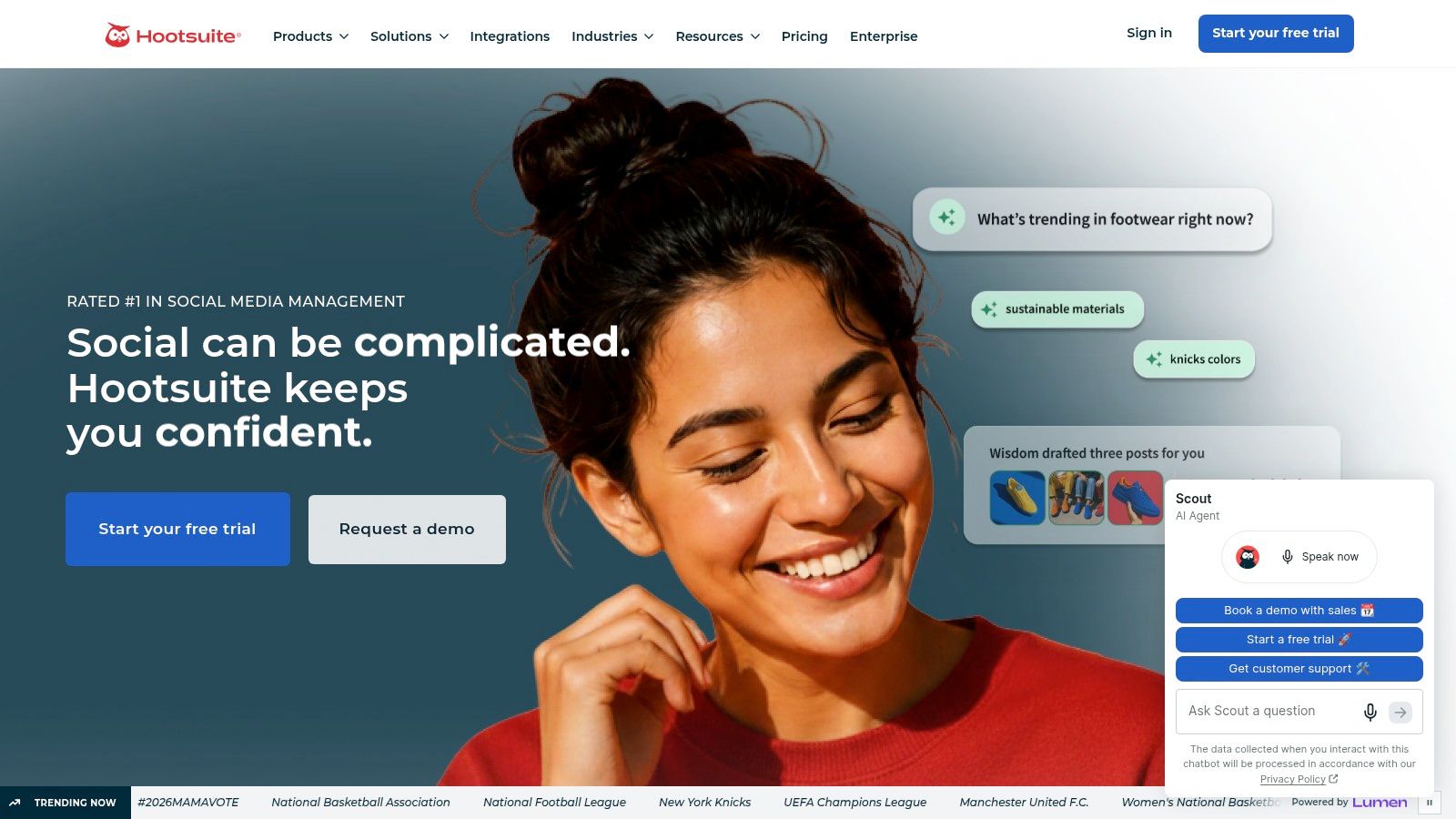
Hootsuite is a broad social-media management platform for scheduling, monitoring, and managing multiple accounts. It's more likely to fit a label, manager, or artist with a coordinated promotional operation than a solo creator looking only for SoundCloud discovery. Shared account views, publishing, and reporting can help teams work from one management system.
Its breadth is also the main trade-off. A musician running a small number of accounts may not need a large management suite, and plan features and account limits vary. Hootsuite doesn't directly find SoundCloud listeners or replace a music-specific release campaign tool.
Choose it for coordination
Hootsuite makes more sense when several people are involved in planning and managing social activity. A manager can use the shared workflow to coordinate posts and review account activity, while an artist can focus on the music and campaign assets. That value depends on having a real need for the additional management layer.
For an independent artist, compare the included features with a simpler scheduler before signing up. If you mainly need to plan posts, a lighter tool may be easier to maintain; if you're overseeing several profiles and a team, the consolidated workflow may justify the extra complexity.
Best for: Managers, labels, and larger artist teams coordinating multiple social accounts.
Top 10 Social Media Growth Tools Compared
| Tool | Core approach & standout features | Best for | Price / value | Main trade-off |
|---|---|---|---|---|
| 🏆 SCHelper | 👥 SoundCloud artists seeking relevant listeners and a guided growth workflow | 💰 $9.99 / 1 month; $26.99 / 3 months; $53.99 / 6 months | Growth varies; daily review is required, and each account needs its own subscription | |
| SoundCloud Promote | ✨ Native track placements priced by delivered impressions | 👥 Artists seeking paid reach on SoundCloud | 💰 Impression-based campaign spend | |
| Hypeddit | ✨ Smart links, fan-capture pages, analytics, and ad tools | 👥 Artists and DJs running release campaigns | 💰 Free tier; paid plans available; ad spend may be extra | No SoundCloud listener discovery |
| Feature.fm | ✨ Smart links, pre-saves, landing pages, and audience capture | 👥 Artists coordinating cross-platform campaigns | 💰 Free or lower-cost entry may be available; plan limits vary | Links don't generate traffic by themselves |
| Groover | ✨ Track submissions to curators and music professionals, with written feedback | 👥 Artists seeking feedback or coverage opportunities | 💰 Pay per submission | A response doesn't guarantee placement or new fans |
| ToneDen | ✨ Social unlocks, contests, FanLinks, and campaign tools | 👥 Artists offering incentives for fan actions | 💰 Some tools on a free plan; ads may cost extra | |
| Buffer | ★ Social scheduling, content calendar, and basic analytics | 👥 Solo artists planning posts across social channels | 💰 Free plan for up to 3 channels; paid options scale by channel | Not music-specific and doesn't directly find SoundCloud listeners |
| Metricool | ★ Scheduling, analytics, reporting, and multi-account tools | 👥 Artists or small teams tracking promotional performance | 💰 Free and paid plans; features vary | No SoundCloud-specific growth workflow |
| Later | ✨ Visual planning, social scheduling, and collaboration features | 👥 Artists organizing visual content across platforms | 💰 Tiered plans; profile and post limits vary | Doesn't create or guarantee reach |
| Hootsuite | ★ Broad scheduling, monitoring, and reporting for multiple accounts | 👥 Labels, managers, and larger promotional teams | 💰 Plan-based; may be costly for solo artists | Broad social management, not SoundCloud-specific growth |
Build a Growth Stack, Not a Tool Wishlist
The strongest setup for a SoundCloud artist connects discovery, conversion, distribution, and measurement. SCHelper can support discovery by helping you review listeners connected to similar artists. A landing-page tool such as Hypeddit or Feature.fm can give campaign traffic a clear destination, while Buffer, Later, Metricool, or Hootsuite can help distribute content across social channels. Analytics then help you decide what deserves more attention.
Don't buy all of these tools at once. Start with the bottleneck you can describe most clearly. If you're spending too much time searching for potential listeners, test a discovery workflow. If people see your posts but don't know where to play the track, improve the landing page. If releases go quiet between announcements, build a manageable schedule before adding more channels.
For fan quality, pay attention to what happens after someone discovers a track. Do they return to listen? Do they save, comment, or repost? Does a release bring people back to your profile later? Those signals give you a more useful picture of audience development than raw follower growth alone.
Keep the workflow proportionate to your team. A solo artist may need a discovery tool and a scheduler, not a full management suite. A small label handling several profiles may benefit from shared calendars, account separation, and reporting, but only if someone will actively use those systems. This guide for social media managers can provide broader context on organizing social content workflows.
The right stack isn't the one with the most features. It's the one that helps you reach relevant listeners, give them a clear next step, stay visible without burning out, and learn from the response.
SCHelper gives SoundCloud artists curated recommendations based on similar artists, with a controlled workflow for reviewing and engaging potential listeners. If finding a relevant audience is your current bottleneck, visit SCHelper to explore its features and plans.