10 Music Marketing Tools for 2026: Compared by Use Case
A track goes live on Friday. By Monday, you're looking at the first listens, follows, saves, comments, and profile visits, trying to decide whether the song needs more reach, better targeting, curator attention, or a stronger path from listener to fan. Most artists then end up with five browser tabs, a pile of link tools, and no clear order of operations.
That's the core problem with music marketing tools. The market is full of platforms that promise discovery, data, promotion, or conversion, but each one solves a different job. A smart link won't replace audience research. A playlist pitching service won't fix a weak profile. An analytics dashboard won't create meaningful engagement by itself.
This guide groups ten tools by the work they're built to do. You'll see where each one fits in a release cycle, when it earns its cost, and where it falls short. SCHelper appears alongside the other options as a SoundCloud-focused tool for controlled listener discovery, not as a universal answer.
The shift toward digital discovery makes this separation important. In 2024, streaming represented 69% of global recorded-music revenue, or approximately US$20.4 billion of the reported US$29.6 billion total, according to WIPO's summary of IFPI's digital transformation data. Your toolkit should help you understand where attention comes from and what happens after someone discovers the track. For visual campaigns, you can also connect promotion to Music Video Generation.
Table of Contents
- 1. Chartmetric
- 2. SCHelper
- 3. SubmitHub
- 4. Groover
- 5. Playlist Push
- 6. SoundCampaign
- 7. PUSH.fm
- 8. Hypeddit
- 9. Feature.fm
- 10. Linkfire
- Top 10 Music Marketing Tools, Feature & Pricing Comparison
- Build a Small Stack and Test One Gap at a Time
1. Chartmetric
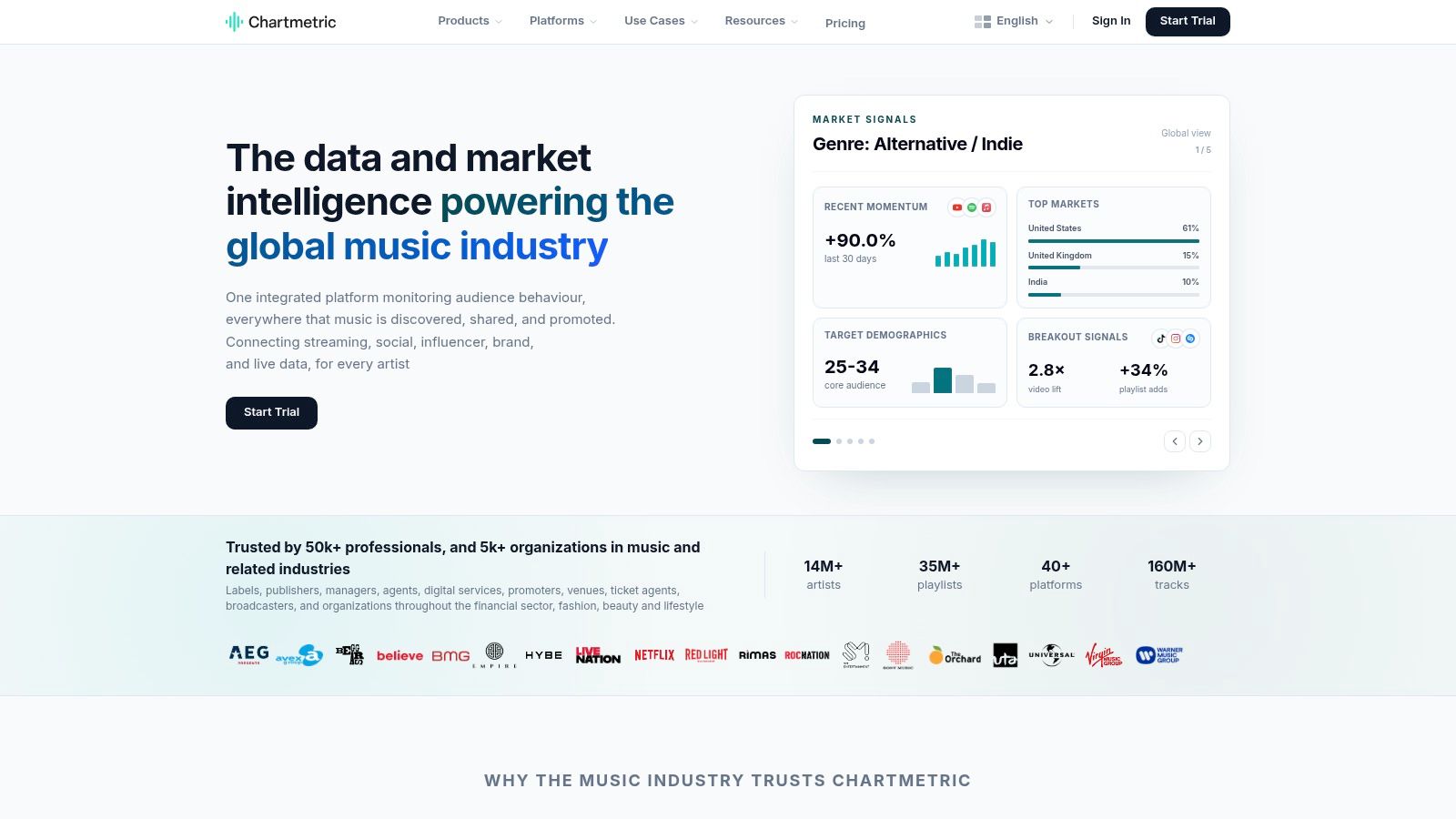
Chartmetric belongs at the research and planning end of the release cycle. It's built for artists, managers, labels, and marketers who need to understand which audiences, territories, playlists, and comparable artists are worth pursuing before money and time are committed.
The platform combines data on artists, tracks, playlists, and audience demographics across streaming services and social networks. You can examine location patterns, playlist movement, trend charts, and similar-artist relationships. Its Flow AI feature adds assisted interpretation, while API access makes the platform more suitable for teams building reporting or research workflows of their own.
That depth is useful when your question is specific. You might want to compare the audience around several similar artists, identify territories where a sound is gaining traction, or check whether a playlist fits your artist before pitching. Chartmetric can also support campaign reporting because it gives you more context than a single platform dashboard.
Best use scenario
Use Chartmetric before a release when you need to prioritize targets rather than collect more targets. It's especially useful for managers preparing territory plans, identifying relevant playlist ecosystems, or explaining campaign decisions to collaborators.
Practical rule: Research should narrow your list. If the dashboard only gives you more names to contact, you haven't turned data into a decision yet.
The trade-off is complexity. Chartmetric is excessive if your immediate need is a pre-save page, a bio link, or a simple campaign landing page. Premium and Ultra plans also sit above basic creator-link services, so the cost makes more sense when you'll use the data repeatedly for planning, reporting, or roster management. For a SoundCloud-heavy strategy, compare its broad research role with this guide to SoundCloud versus Spotify.
Find the platform at Chartmetric.
2. SCHelper
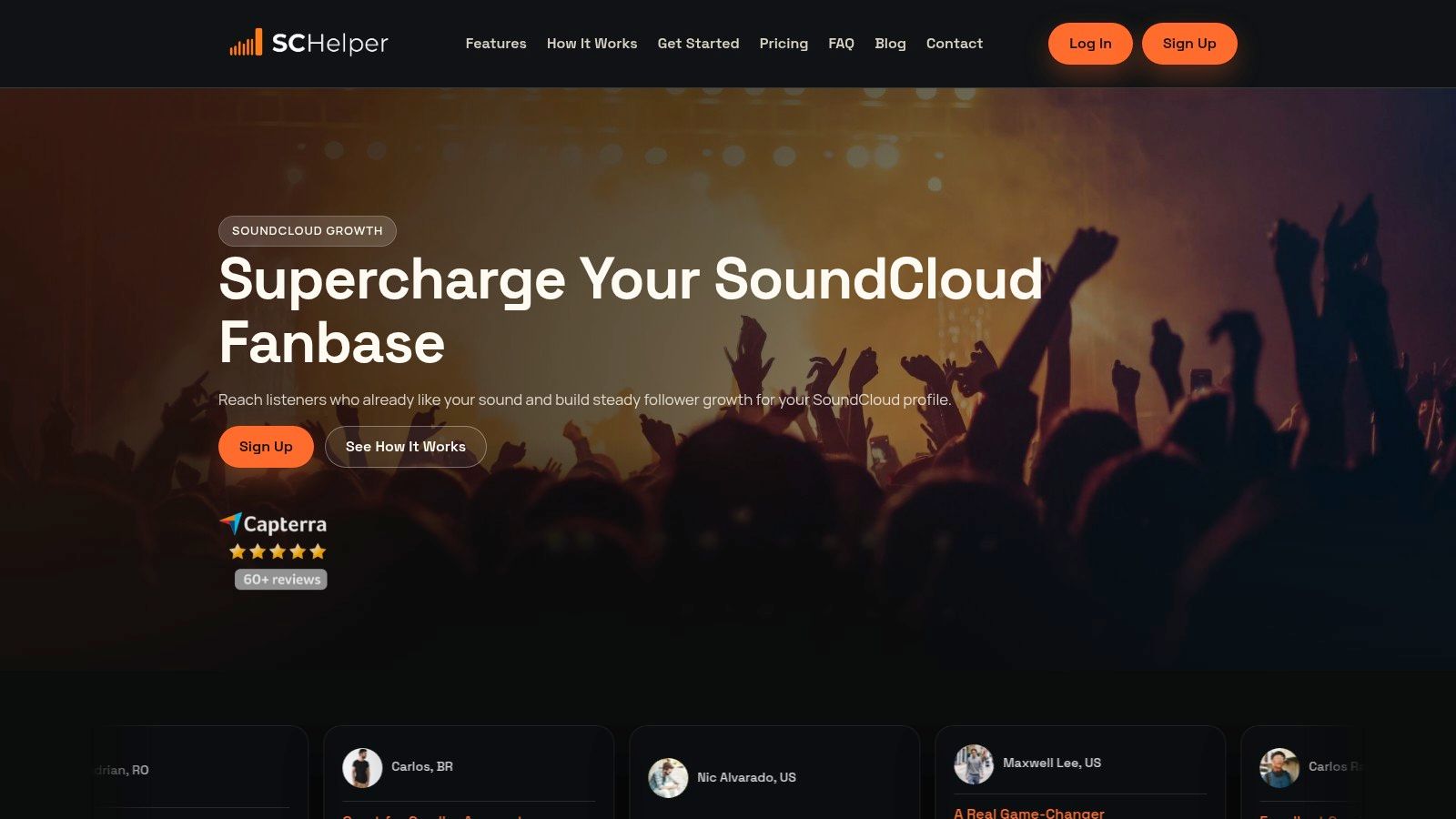
A common SoundCloud problem shows up the week after release. The track is live, the core posts are out, and now someone has to keep finding listeners who might actually care. SCHelper is built for that job. It focuses on finding and engaging relevant SoundCloud listeners consistently for independent artists, DJs, producers, vocalists, small labels, and managers who do not want to spend each day digging through similar-artist audiences by hand.
The setup is straightforward. You connect through secure SoundCloud OAuth, so your password stays with SoundCloud. SCHelper then prepares a daily shortlist based on target artists, genres, scenes, and related listener behavior. You review the list, cut weak fits, and approve the follow or unfollow batches yourself. That matters in practice, because the tool supports a routine you control rather than hands-off activity.
The best use case is narrow, but clear. Use SCHelper when your main gap is audience growth on SoundCloud through targeted discovery, not broad market research, link routing, or paid campaign management. If an artist already knows the lane they want to grow in, this can save real time. It gives managers and self-releasing artists a repeatable workflow for staying active around a release instead of doing one burst of promo and disappearing.
Best use scenario
The day-to-day process is simple. Pick the audience direction you want, review the recommendations, remove poor matches, and run only the actions you approve. You can also exclude accounts you already touched and choose whether to focus on PRO users or leave them out. Daily reminders help with consistency, which is usually the first thing that slips once release-week energy is gone.
SCHelper's current version puts the emphasis on stability, account controls, and a visible workflow. The service also shares operating guidance for daily actions, but those numbers are not outcomes. Results still depend on the music, the profile, the targeting, and whether the artist gives new listeners a good reason to stay.
There are trade-offs. Plans are offered for 1, 3, or 6 months, with checkout through PayPal or Stripe and access after purchase. Each connected SoundCloud account needs its own subscription, so managers running several profiles need to watch costs.
The bigger limitation is conversion. SCHelper can help you reach more relevant listeners, but it cannot fix a weak page. Before using any audience-growth tool, make sure the profile looks credible, the artwork is strong, the descriptions are complete, and the tracks match the audience you are trying to attract.
Explore the workflow at SCHelper.
3. SubmitHub
SubmitHub is built for curator pitching and feedback, not audience analytics. It gives artists a self-serve way to submit songs to playlist curators, blogs, YouTube channels, and other music contacts using a credits model.
The platform's value comes from structure. You can filter curators by genre and destination, review their stated preferences, and choose between Standard and Premium submissions. Premium submissions include defined listening or feedback windows, which makes the process more predictable than sending cold emails and hoping someone responds.
That predictability doesn't mean placement. A curator may listen and still decline because the track doesn't fit the channel, the timing is wrong, or the song isn't strong enough for that audience. SubmitHub gives you a more documented process, but it can't manufacture relevance.
Best use scenario
Use it when you're prepared to research targets carefully and want to test outreach without committing to a large managed campaign. It's also useful when playlist exposure isn't your only aim and you want to reach blogs or YouTube channels that can provide context around the release.
The main limitation is time. You can waste credits quickly if you choose contacts by volume instead of fit. Read curator descriptions, listen to the outlets, and treat feedback as information about positioning rather than as a promise that the next submission will work.
A response window is not the same thing as a placement guarantee.
SubmitHub works best when you have a release asset that already has a clear angle. Give curators a concise reason the track fits their audience, and keep your submission focused. If your pitch needs several paragraphs to explain the song, the targeting probably isn't sharp enough.
Visit SubmitHub.
4. Groover
Groover suits artists who want predictable feedback timelines and broader industry outreach. Its directory includes playlist curators, blogs, radio contacts, labels, and other music professionals, so it reaches beyond a playlist-only campaign.
The pay-per-contact structure makes each outreach decision visible. You choose contacts based on genre, role, and relevance, then submit the track through a defined workflow. Groover states that contacts should respond within 7 days, or the credits are returned, which gives you a clearer operating window for a release campaign.
Best use scenario
Groover is a good fit when you're coordinating a release with several possible routes to attention. You might be seeking playlist consideration while also testing blogs, radio, or label interest. The broader directory can help when your campaign needs industry feedback, not just streaming exposure.
The platform also offers optional coaching through Groover+, alongside bundle and subscription-related features. Those options may help artists who want more guidance, but they also make it easier to expand spending before the core pitch has proved its fit.
Quality still varies by contact and genre. A fast response can be useful, but it doesn't tell you whether the person has the right audience for your music. Review every contact's recent activity, listen to the channels you're approaching, and keep a record of which conversations produce useful next steps.
Limitation
Costs can accumulate when you scale outreach across many contacts. Groover makes communication more orderly, but you're still paying for access and feedback, not guaranteed playlist placement, editorial support, or audience retention.
The platform earns its place when response reliability matters and your release can support a wider campaign than one platform. It's less attractive if you haven't defined the audience, positioning, or follow-up plan yet.
Go to Groover.
5. Playlist Push
Playlist Push is for artists who want a straightforward campaign around Spotify playlists or TikTok creators. It offers separate campaign paths, one focused on playlist consideration and another focused on short-form creator activity.
The practical advantage is operational simplicity. You're not building a curator list from scratch or negotiating with individual creators one by one. Genre targeting and campaign dashboards give you a defined process, while performance summaries help you review what happened after the campaign runs.
That matters because social discovery is now a major part of how listeners find music. Luminate research found that 36% of U.S. music listeners identified social media as a music-discovery method, compared with 43% for streaming services, 43% for AM/FM radio, and 44% for friends and relatives, as reported in Luminate's Music 360 analysis. Social content deserves a place in the release plan, but it shouldn't replace every other discovery route.
Best use scenario
Use Playlist Push after you've validated the track's positioning and have usable short-form content. It's better for scaling a defined campaign than for discovering whether anyone understands the song.
The drawback is cost, particularly for niche genres where targeting may require more testing. Placements aren't guaranteed, and a campaign can generate activity without building a durable audience if the listener journey ends at a single stream.
For electronic releases, the surrounding content matters as much as the submission. A club clip, performance excerpt, or production-focused video may give creators a stronger starting point than cover art alone. The same principle applies to broader electronic music promotion, where the campaign needs to match the scene and its listening habits.
Find the service at Playlist Push.
6. SoundCampaign
SoundCampaign is the managed option in this list. It combines playlist pitching, TikTok creator activation, and managed Meta advertising for artists who want to reduce the amount of daily campaign administration.
That combination can be useful for a small team with a clear budget and no appetite for running separate outreach and ad workflows. Playlist campaigns include curator feedback and pay-per-review mechanics. The TikTok side uses performance-based creator rewards, while the Meta service supports managed Instagram and Facebook advertising with campaign dashboards.
Best use scenario
Choose SoundCampaign when your release needs multi-channel execution and you'd rather review a structured campaign than handle every submission, creator contact, and ad setup yourself. It can be a reasonable fit for managers who need an external workflow but still want reporting.
The trade-off is reduced control over the details compared with doing each part yourself. You'll still need to approve the audience, creative direction, budget, and success indicators. Managed execution doesn't remove the need for judgment.
Management isn't strategy. A service can run the campaign efficiently while the artist still needs to decide who the campaign is for and what action matters.
Costs and results vary with targeting and content quality. Playlist placements aren't guaranteed, and exposure across several channels can make attribution harder if you don't use consistent links and naming conventions. If the campaign produces streams but no profile activity, follows, or repeat engagement, the dashboard may look busy without proving that the audience is becoming more valuable.
Use SoundCampaign when time is the constraint. Don't use it to avoid making basic decisions about the release.
7. PUSH.fm
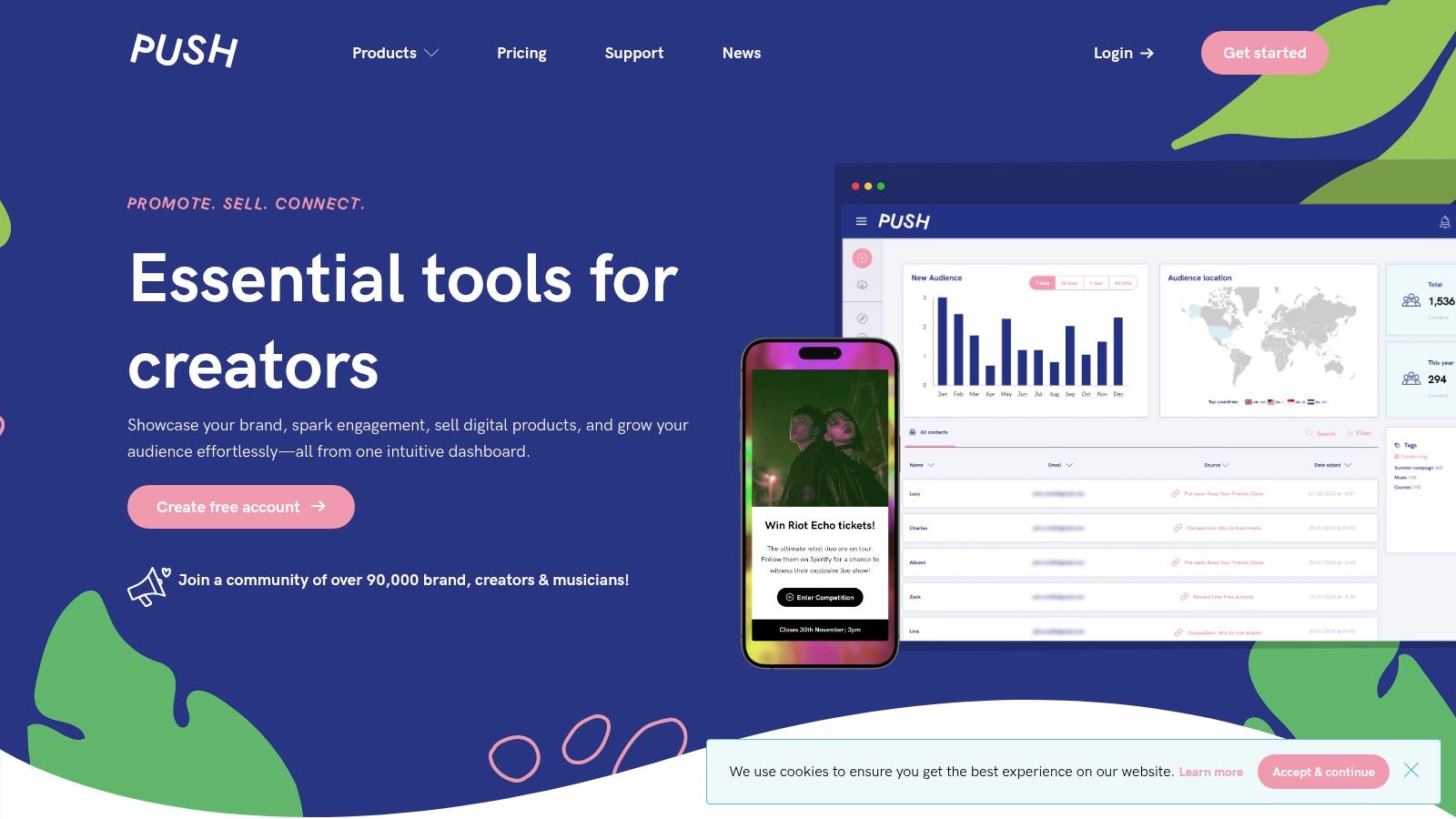
PUSH.fm is a practical choice for smart links, pre-saves, and lightweight fan capture. It's aimed at artists who need a campaign page quickly without buying a large marketing suite.
Its Fan Links and Pre-saves are available through a generous free offering, while reward and competition links can support email capture. The platform also supports Meta pixel and Conversions API setups, basic analytics, and optional Pay Links for direct sales.
Best use scenario
PUSH.fm works well for a first release, a small campaign, or a test where you need to route listeners to several services and learn whether the landing page earns clicks or contacts. The interface is simple enough for an artist to build a page without handing the setup to a specialist.
The limitation is reporting depth. If you need detailed audience segmentation, extensive team permissions, or complex campaign comparisons, you'll probably outgrow the lighter analytics. Support and integrations are also more basic than what you'd expect from larger enterprise-oriented platforms.
A free tool can still support disciplined measurement. Use one link per campaign source, name each campaign clearly, and check whether visitors take the action you actually want. A pre-save page that collects no usable relationship after release may be fine for a short campaign, but it shouldn't be mistaken for an owned audience system.
What it replaces
PUSH.fm can replace several basic link pages for an independent artist. It doesn't replace research, curator outreach, or a consistent content plan. Think of it as the destination layer that helps you capture and route attention generated elsewhere.
Build pages at PUSH.fm.
8. Hypeddit
Hypeddit focuses on conversion-oriented music links and gates. It's useful when the campaign asks a listener to do something specific, such as exchange a follow or email for a download, join a pre-save, or move through a customized landing page.
The platform includes smart links, pre-saves, download and link gates, custom domains, analytics, and pixel support for Meta and TikTok. Its tools are designed for fast testing, which suits independent artists running ads or promoting releases through several social channels.
Best use scenario
Use Hypeddit when you have a clear offer and want to measure the response. A download, exclusive edit, sample pack, or other worthwhile asset can give a listener a reason to identify themselves instead of clicking through anonymously.
That offer has to be convincing. A gate adds friction, and some listeners will leave rather than complete it. Don't build a multi-step form just because the platform allows it. Ask for the smallest useful action, explain what the listener receives, and make the page load cleanly on mobile.
Limitation
Advanced controls sit behind paid plans, and pre-save conversion still depends on the strength of the creative, the offer, and the traffic source. Pixels can help you build audiences for later advertising, but they don't make poor targeting profitable.
For SoundCloud artists using downloads or gated assets, the mechanics should support the relationship rather than obscure it. This guide to SoundCloud download gates is relevant when you're deciding whether a gate helps the campaign or disrupts listening.
Hypeddit is a strong fit for artists who understand conversion. It's less useful if you only need a clean link in your bio with no extra action.
Visit Hypeddit.
9. Feature.fm
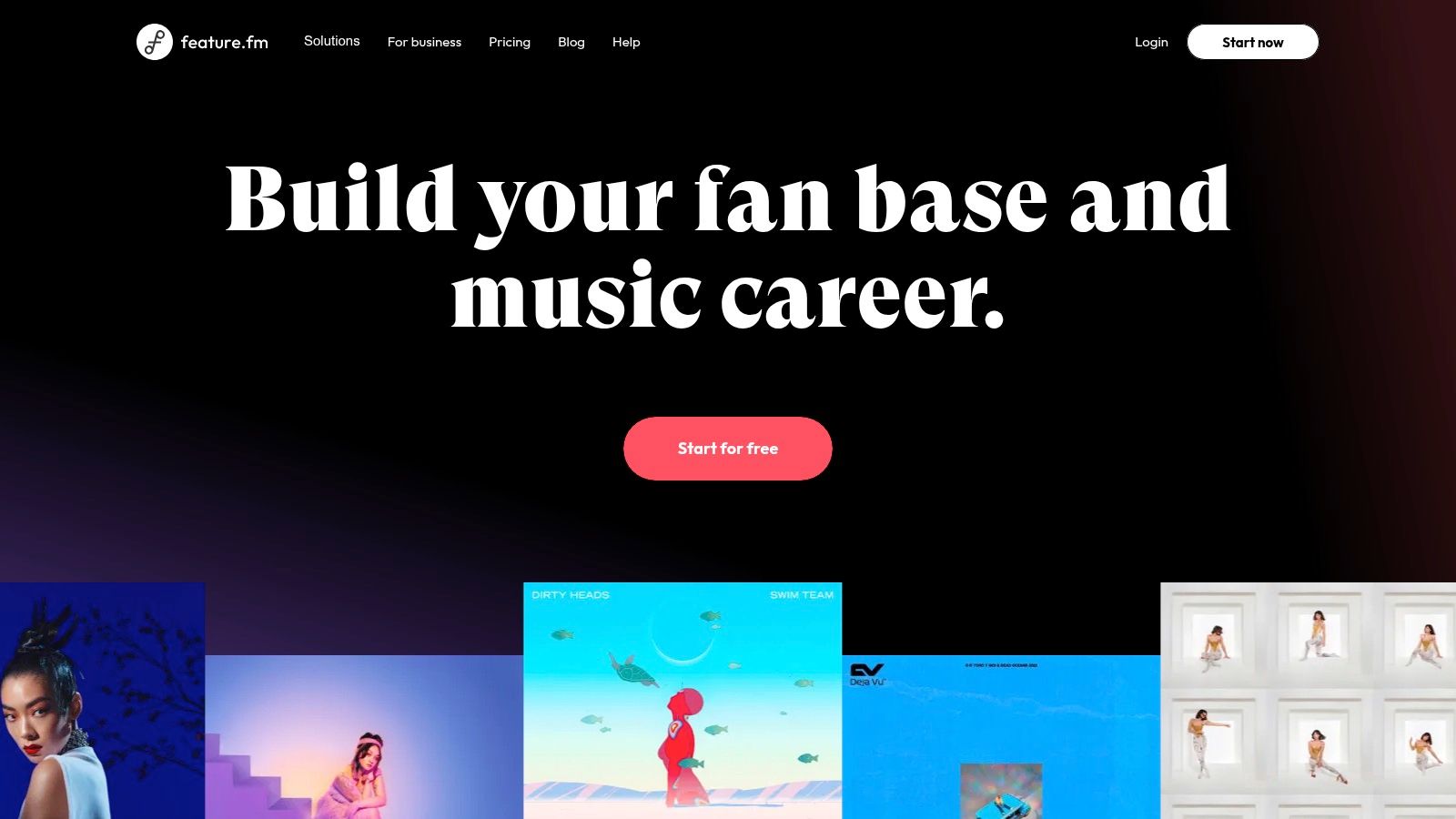
Feature.fm sits between smart links, fan capture, and advertising infrastructure. It's designed for campaigns where you need to route listeners to their preferred streaming service while retaining enough information to support future communication and retargeting.
Paid plans include smart links and pre-saves, while the platform also offers bio pages, Future Save functionality, custom domains, email capture, and pixels for Meta, TikTok, and Google. Its business tier supports labels and teams that need more organized campaign management, including store-level revenue or stream tracking.
That makes Feature.fm useful when the campaign has several moving parts. A listener may arrive from a social ad, choose a preferred DSP, and later become part of an audience you can reach again. The link is no longer just a convenience. It becomes a measurement and routing layer.
Best use scenario
Choose Feature.fm for paid campaigns, multiple releases, or team workflows where retargeting and fan data matter. It's also a good option when fast-loading pages and ad-platform compatibility are more important than a minimal interface.
The interface can feel dense when you're managing many links. Deeper analytics, custom domains, and advanced controls require paid tiers, so the platform may be more than a solo artist needs for a single release.
Keep the measurement simple. Track source, landing-page action, streaming destination, and any follow-up permission you collect. Don't confuse a large retargeting audience with a group of active fans. A useful audience is one that responds again.
Start with Feature.fm.
10. Linkfire
Linkfire is the mature choice for smart links, pre-saves, reward pages, and roster-level campaign organization. It has the infrastructure and integrations that make sense for labels, managers, and teams handling several artists, but creator-friendly plans also make it accessible to individual campaigns.
You can build release, pre-release, bio, ticket, and reward links, then add retargeting pixels for major advertising platforms. Artist Workspaces help separate campaigns across a roster, while collaboration features and organizational boards reduce the risk of mixing links or permissions between projects.
Best use scenario
Linkfire earns its place when reliability and organization matter more than having the cheapest possible link page. It's useful for a manager who needs to keep multiple releases separate, a label that wants a consistent campaign structure, or an artist running recurring releases with several destinations.
The platform's maturity is also its limitation for some users. Extra workspaces and seats add cost, and pricing pages or plan presentation can feel confusing when you're comparing needs across a team. A solo artist with one release may not use enough of the organizational layer to justify it.
Don't choose Linkfire because a label uses it. Choose it when the campaign needs separation, collaboration, and dependable routing. If you only need a basic pre-save link, PUSH.fm or another lighter tool may be more efficient.
Find the platform at Linkfire.
Top 10 Music Marketing Tools, Feature & Pricing Comparison
| Service | Core focus | ✨ Unique / Key strength | ★ Quality | 💰 Price / Value | 👥 Target audience |
|---|---|---|---|---|---|
| Chartmetric | Cross-platform music analytics & audience insights | ✨ Deep dataset + AI insights & API access | ★★★★★ | 💰 High, premium tiers for power users | 👥 Labels, managers, data-driven teams |
| 🏆 SCHelper | Daily curated SoundCloud listener discovery & controlled growth | ✨ Secure SoundCloud OAuth; daily shortlists; manual-confirm batch actions | ★★★★☆ | 💰 $9.99/1mo · $26.99/3mo · $53.99/6mo; volume discounts | 👥 Indie SoundCloud artists, DJs, small labels |
| SubmitHub | Self-serve song pitching to vetted curators (credits) | ✨ Premium listens/feedback windows for more reliable responses | ★★★★ | 💰 Credits model, low-to-mid per submission | 👥 Artists seeking blog/playlist/YouTube coverage |
| Groover | Paid submissions to curators with guaranteed feedback (7 days) | ✨ High response rates; Groover+ perks & bundles | ★★★★ | 💰 Pay-per-contact; bundles & subscription options | 👥 Artists wanting predictable curator feedback |
| Playlist Push | Spotify playlist submissions + TikTok creator campaigns | ✨ Dual campaign types (playlists + TikTok) with campaign dashboards | ★★★★ | 💰 Mid–high campaign costs (pay-per-campaign) | 👥 Artists scaling promotion after validation |
| SoundCampaign | Managed multi-channel campaigns (playlists, TikTok, Meta ads) | ✨ Done-for-you campaigns + ad packages | ★★★★ | 💰 High, managed service pricing | 👥 Artists/labels wanting full-service campaigns |
| PUSH.fm | Smart links, pre-saves, reward/competition links | ✨ Unlimited free Fan Links & pre-saves; pixel/CAPI support | ★★★☆☆ | 💰 Free tier; inexpensive Premium upgrades | 👥 Artists needing free landing pages & pre-saves |
| Hypeddit | Conversion-focused links, gates & pre-saves | ✨ Follow-for-download gates; fast pages & pixel support | ★★★★ | 💰 Low, cost-effective paid plans | 👥 Indie artists running ads / fan-capture campaigns |
| Feature.fm | Marketing suite: smart links, pre-saves, retargeting | ✨ Ad-friendly tracking, Future Save & audience capture | ★★★★ | 💰 Mid, paid tiers for advanced features | 👥 Artists running paid ads; labels needing tracking |
| Linkfire | Enterprise-grade smart links, pre-saves & workspaces | ✨ Stable, scalable infra; workspaces & label collaboration | ★★★★★ | 💰 High, enterprise pricing; creator plans available | 👥 Labels, major campaigns, teams |
Build a Small Stack and Test One Gap at a Time
You don't need a complete software stack before a release has shown you where the problem is. Start with the gap that is costing you attention now. That might be weak audience reach, slow curator response, poor campaign routing, or no way to capture a relationship after the first stream.
For research, Chartmetric can help you make better targeting decisions before you spend. For curator outreach, SubmitHub and Groover provide structured routes to contacts, with different balances of feedback, reach, and control. Playlist Push and SoundCampaign make more sense when you've already defined the campaign and need distribution across playlist or creator channels. PUSH.fm, Hypeddit, Feature.fm, and Linkfire solve different versions of the link and fan-capture problem.
SCHelper is the specialist option when SoundCloud discovery is the bottleneck. Its daily recommendations and confirmed batch actions can reduce manual research while keeping the artist responsible for what happens on the account. That makes it different from a dashboard, a pitching marketplace, or a smart-link service. It's a workflow for finding relevant listeners and maintaining controlled activity over time.
The broader market supports that kind of specialization. A global survey of more than 2,000 independent artists and music professionals found that 56% considered TikTok the most important platform for career growth, compared with 16% for Spotify, 15% for Instagram, and 13% for YouTube, according to Ditto Music's survey report. The same survey identified social media marketing as the largest overall driver of artist growth for 43% of respondents. Those figures are directional, not a universal budget formula. They show why your toolkit should follow your audience and workflow, not a generic ranking.
Run one tool for one release cycle. Record profile visits, follows, repeat engagement, source relevance, curator responses, link actions, and post-release retention where those measures are available. Keep the tool only if it performs a job you couldn't do manually at a reasonable cost.
Also keep a clear record of subscriptions, renewal dates, access permissions, and campaign links. Review whether a service uses secure account access, requires human confirmation, separates artist profiles, and explains what it does without promising guaranteed outcomes. Any claim about placements or follower counts remains unproven until your own data confirms that the audience is relevant and returns.
The best stack is usually smaller than the one you first want to buy. Fix the biggest gap, measure the result, then add the next layer only when the workflow earns it.
SCHelper helps SoundCloud artists discover relevant listeners through daily curated recommendations and controlled, confirmed follow and unfollow actions. If targeted SoundCloud discovery is your biggest gap this release, visit SCHelper to review the workflow and choose a plan for a focused campaign.
Powered by the Outrank tool