Music Streaming Promotion That Actually Works in 2026
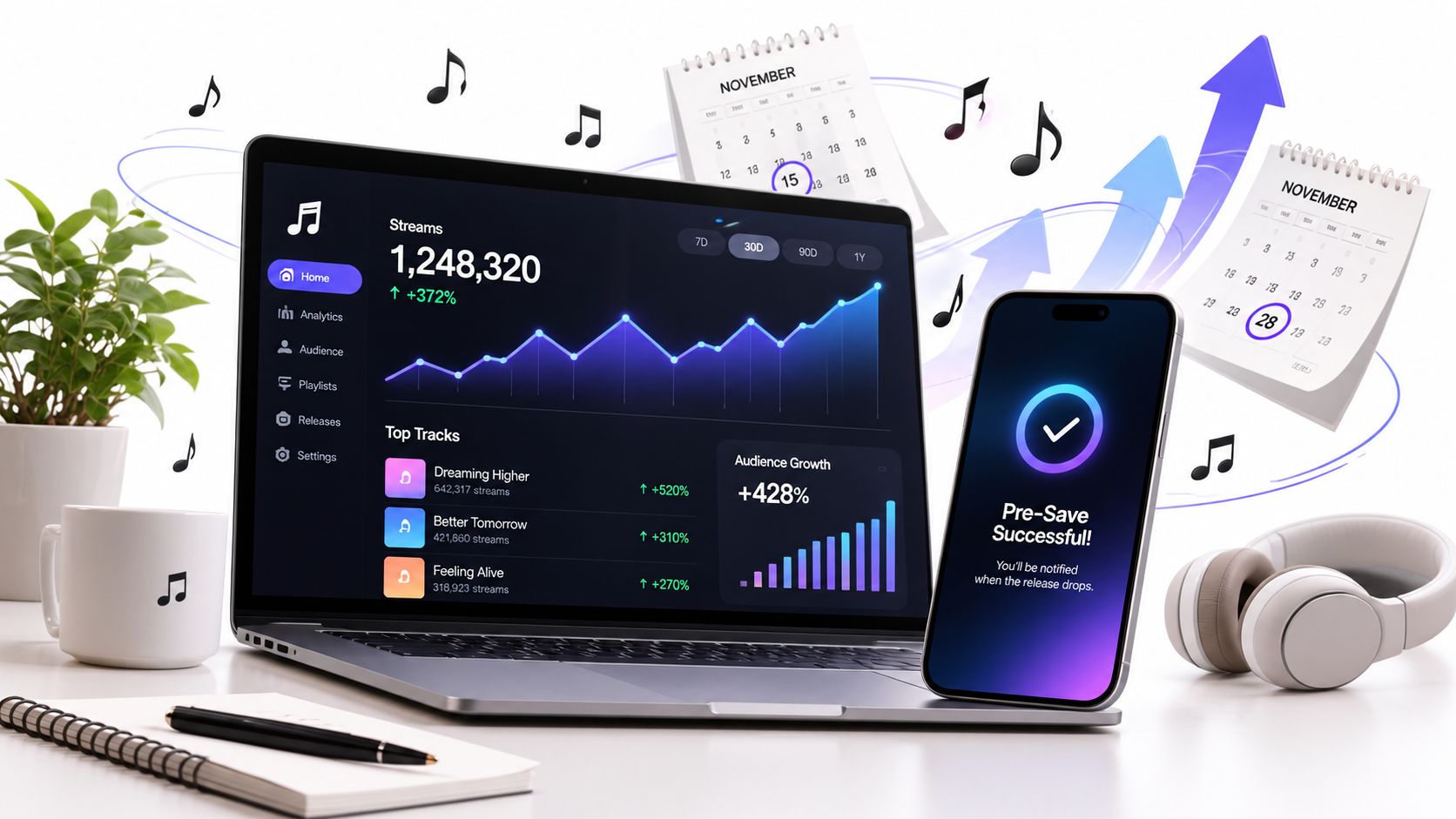
Most advice about music streaming promotion starts in the wrong place. It tells artists to chase plays, chase playlists, and chase launch-day noise, as if the job ends once the release goes live. That mindset burns time and usually leaves you with spikes that don't turn into fans.
Streaming is now the main commercial engine of recorded music, and that changes the job. In 2024, global recorded-music trade revenue reached US$29.6 billion, streaming generated US$20.4 billion, and streaming made up 69.0% of all recorded-music revenue, according to IFPI. Paid subscriptions were the clearest growth driver, which means promotion works best when it's built to qualify listeners who might stay, not just click once. IFPI's 2024 recorded-music revenue report makes that commercial reality plain.
The practical shift is simple. Treat promotion as a 30 to 90 day audience qualification cycle, not a one-week burst. The work is to get the right listeners to follow, save, replay, and return, then keep refining who you target and how you show up.
Independent artist marketing tactics that support streaming growth sit underneath that mindset, because the strongest campaigns don't start with a pitch. They start with a profile that can convert attention into a relationship, then move through release timing, channel selection, and a daily routine that keeps activity alive after the initial drop.
Table of Contents
- Why Most Music Streaming Promotion Falls Flat
- Setting Up Your Profile and Pre-Save Funnel
- Choosing Where to Lead Your Streaming Push
- Release Timing and Your Four-Week Run-Up
- Cross-Platform Promotion Without Spreading Too Thin
- Sustaining Plays With a Daily Engagement Workflow
- Your 90-Day Streaming Promotion Plan
Why Most Music Streaming Promotion Falls Flat
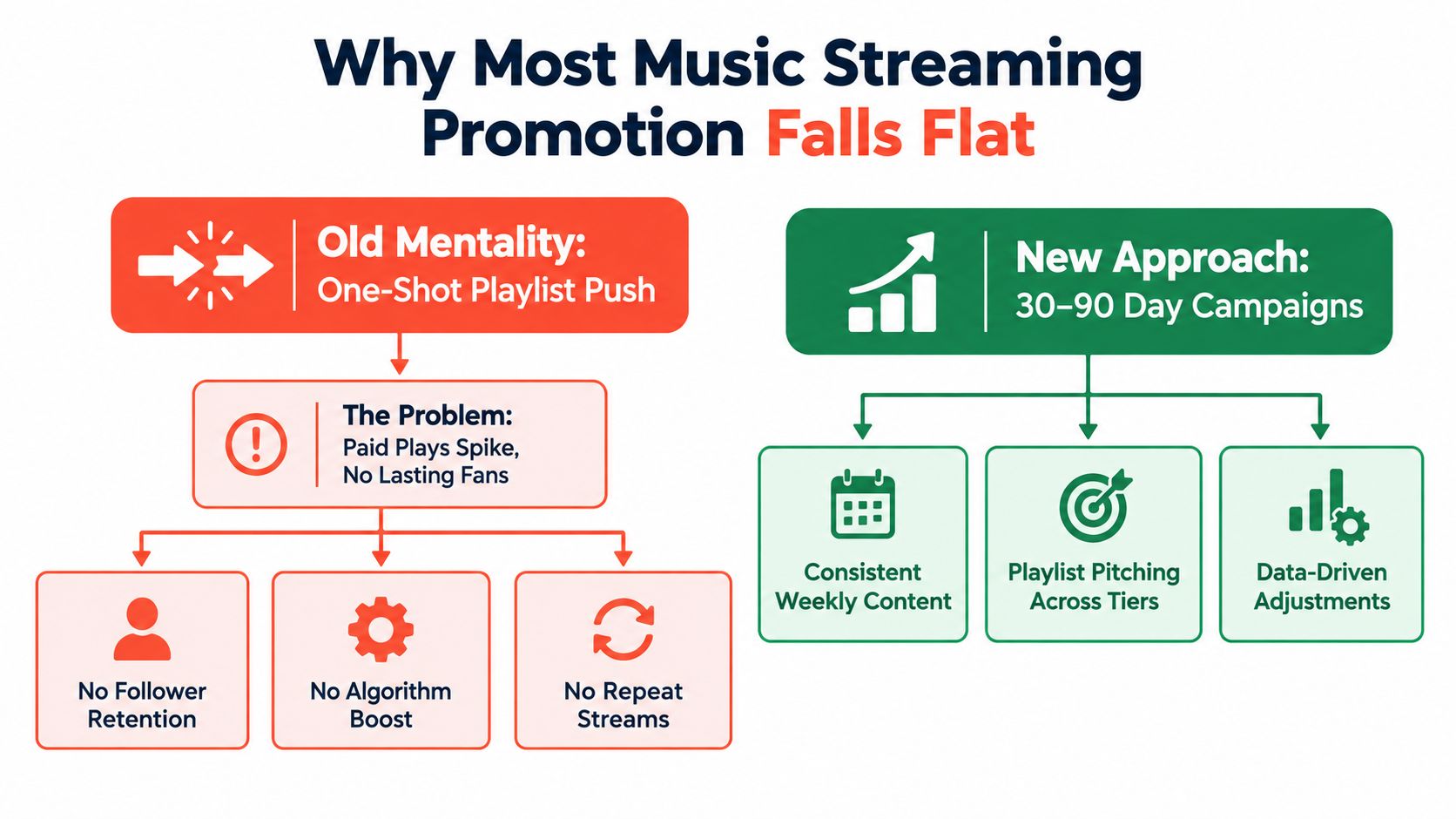
The common failure is obvious once you've watched enough indie campaigns. An artist spends a week stacking playlist submissions, social posts, and a little paid traffic, then wonders why the track goes quiet the next Monday. The problem isn't effort, it's that the campaign was designed around a spike instead of a filter.
Chasing plays doesn't build a listener base
A play is the weakest useful signal if it doesn't lead anywhere. What matters more is whether the listener follows, saves, revisits, or starts sampling the rest of the catalog. That's why the goal of music streaming promotion should be to qualify people who match the song, not to inflate a number on a dashboard.
Practical rule: if a tactic can't produce repeatable listener behavior, it probably can't support steady growth.
The market now makes that distinction unavoidable. Luminate reported 4.8 trillion global on-demand audio streams in 2024, up 14% from roughly 4.2 trillion in 2023, which means each release lands in a louder and more crowded environment. When that much listening is happening, broad exposure without targeting just creates more noise. MBW's coverage of Luminate's 2024 streaming data shows why visibility now has to be earned repeatedly.
A better model is qualification, not interruption
The campaign that works keeps asking the same question, who is most likely to come back? If the answer is listeners who already follow similar artists, then promotion should keep returning to those listeners through content, playlists, and follow-up touches. That's also why generic mass outreach underperforms. It ignores relevance, and relevance is what turns a click into an audience.
The four pillars that hold up the rest of the process are straightforward. First, make the profile convert. Second, pick the right lead platform. Third, time the release properly. Fourth, keep engagement moving after launch week. If any one of those is weak, the campaign leaks attention.
Setting Up Your Profile and Pre-Save Funnel
A lot of campaigns fail before the first pitch goes out. The listener clicks through, sees an unfinished profile, and leaves without following or saving anything. If you want music streaming promotion to convert, the profile has to do real work the moment someone arrives.
Make the profile do the selling
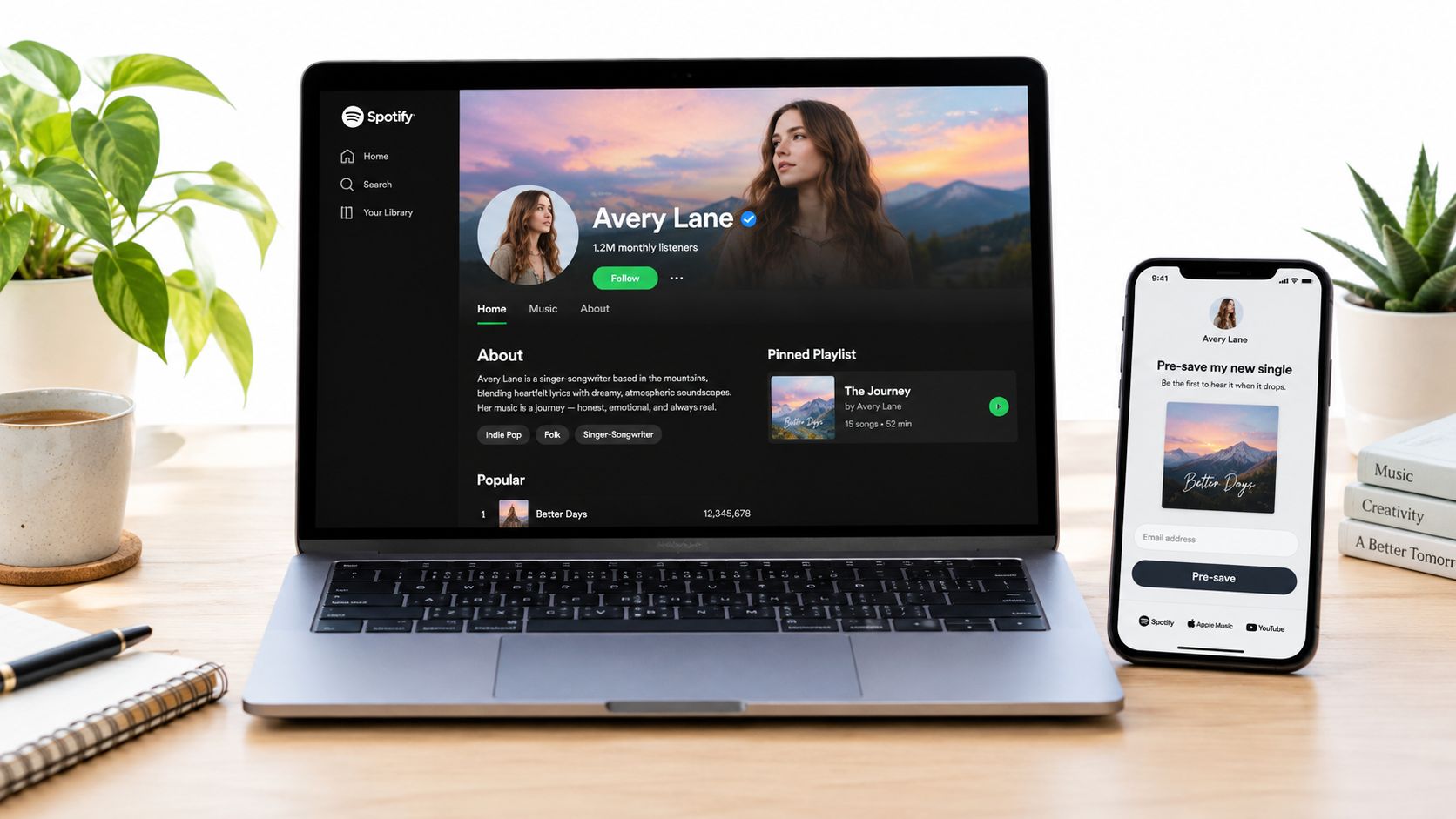
Start with the basics, avatar, header art, bio, pinned track, and contact details. Use one name everywhere if you can, because inconsistent naming makes it harder for listeners to follow you across platforms. Put the newest or strongest release where a visitor can hear it immediately, then make sure the bio says what kind of artist you are in plain language.
A profile should answer three things fast. Who is this. What should I play first. Why should I follow now. If those aren't clear, the rest of the campaign works harder than it should.
For release art, teaser clips, and visual assets, Image Studio for artists is a useful reference point when you want to think like a listener instead of like a file uploader. Good visuals don't replace the song, but they do make the click more likely to stick.
Keep the page lean. Every extra tap between interest and playback costs you listeners.
Turn interest into a pre-save or follow
A pre-save campaign is still one of the cleanest ways to catch interest before release day. Set up a smart link with a pre-save option, pair it with the artwork and headline track, and give fans one clear action, follow, save, or join the email list. The point is to convert curiosity before the release window opens.
If you're using label-distributed tracks on third-party pre-save services, check the rights and access rules first. That part gets skipped too often. A clean setup matters more than a flashy countdown.
SoundCloud artists can treat the profile as a daily habit, not just a storefront. A tool such as music promotion tools built for SoundCloud growth works best when it supports routine review, not passive waiting. The same logic applies everywhere, the visit has to become a follow, a save, or a replay.
Choosing Where to Lead Your Streaming Push
Not every platform rewards the same action, so trying to push everything at once usually blunts the result. The cleanest campaigns pick one lead surface, then use the rest to support it. That choice should be based on what the platform rewards, not on which app feels biggest.
| Platform | Algorithmic Signal | Editorial Pitch Lead Time | Realistic Access for Indies |
|---|---|---|---|
| SoundCloud | Follows, reposts, repeat engagement | Depends on the curator or scene, usually relationship-driven | Strong for niche discovery and direct listener behavior |
| Spotify | Saves, follows, repeat listens, playlist adds | Editorial pitching usually needs advance planning | Competitive, but reachable with strong metadata and timing |
| Apple Music | Repeat listening and catalog behavior | Curated pitching is selective | Harder to access broadly, better for polished releases |
| YouTube Music | Watch time and repeat plays | Creator and channel timing matter more than formal pitching | Accessible if video assets and search demand are strong |
| Deezer | Repeat visits and authentic engagement | Varies by market and curator | Useful as a supporting surface, especially where audience fit is strong |
The practical move is to lead with the platform where your audience already behaves like your fans. If the song works best in direct listener communities, SoundCloud can make sense. If the release is built for saves and playlist inclusion, Spotify deserves more of your attention. If the content has a visual edge, YouTube Music can support discovery through watch behavior.
The same logic explains why authenticity matters more than raw volume. WIPO noted that Deezer estimated AI-generated music represented 18% of daily uploads in April 2025, which is a reminder that platforms are already sorting signal from noise. In that environment, saves, repeats, and profile visits say more than cheap streams do. iMusician's summary of SoundCloud's Music Intelligence Report is also a useful reminder that recent music and superfans can outweigh vanity reach when the fit is right.
SoundCloud versus Spotify for independent promotion choices comes down to the same question every manager asks before a rollout, where is the listener most likely to act like a fan, not a passerby.
Release Timing and Your Four-Week Run-Up
Release day matters, but it's only one checkpoint in the calendar. The hard work is the month before it, when pitching windows open, assets get locked, and listeners start seeing the song often enough to remember it. If that prep is late, the campaign starts behind.
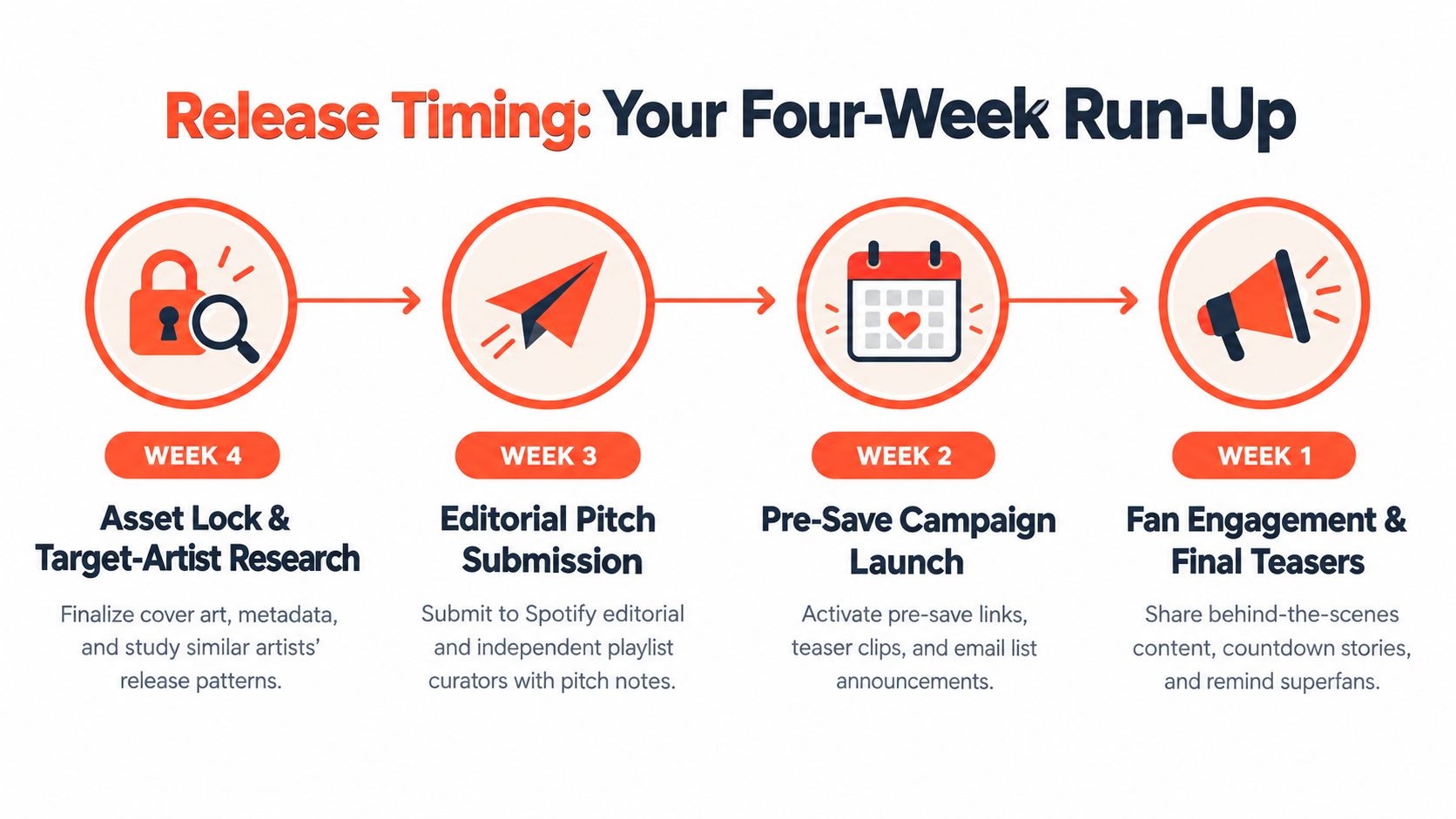
Week by week without the fluff
Week 4 is for asset lock and target-artist research. Finalize the cover art, metadata, and links, then build a short list of comparable artists whose audiences overlap with yours. If the metadata is sloppy, every later step gets less effective.
Week 3 is for pitching. Submit to editorial teams and independent curators while the release still sits inside the window they can use. That timing matters because once the date is too close, the pitch is already stale.
Week 2 is pre-save launch, community playlist seeding, and short-form video teasers. This is also where smart links need a final routing check, because broken links kill momentum fast.
Week 1 is the reminder loop. Post daily if the content is fresh, contact collaborators and micro-influencers, and confirm every channel points to the right destination. Don't stack the same pre-save link in every message, because people stop reading when the ask feels repetitive.
Friday and Tuesday both have a logic
Friday can help if you're aiming at new-playlist activity and the broader release-day conversation. Tuesday can work if you want to avoid the most crowded lane and line up with older album-cycle habits. I've seen campaigns succeed on both days, but only when the rest of the prep matched the date.
The bigger mistake is overlap. Don't run the same content everywhere with no adaptation, and don't push identical copy in email, social, and direct outreach on the same day. Listeners notice when a release looks automated, and curators notice it even faster.
Cross-Platform Promotion Without Spreading Too Thin
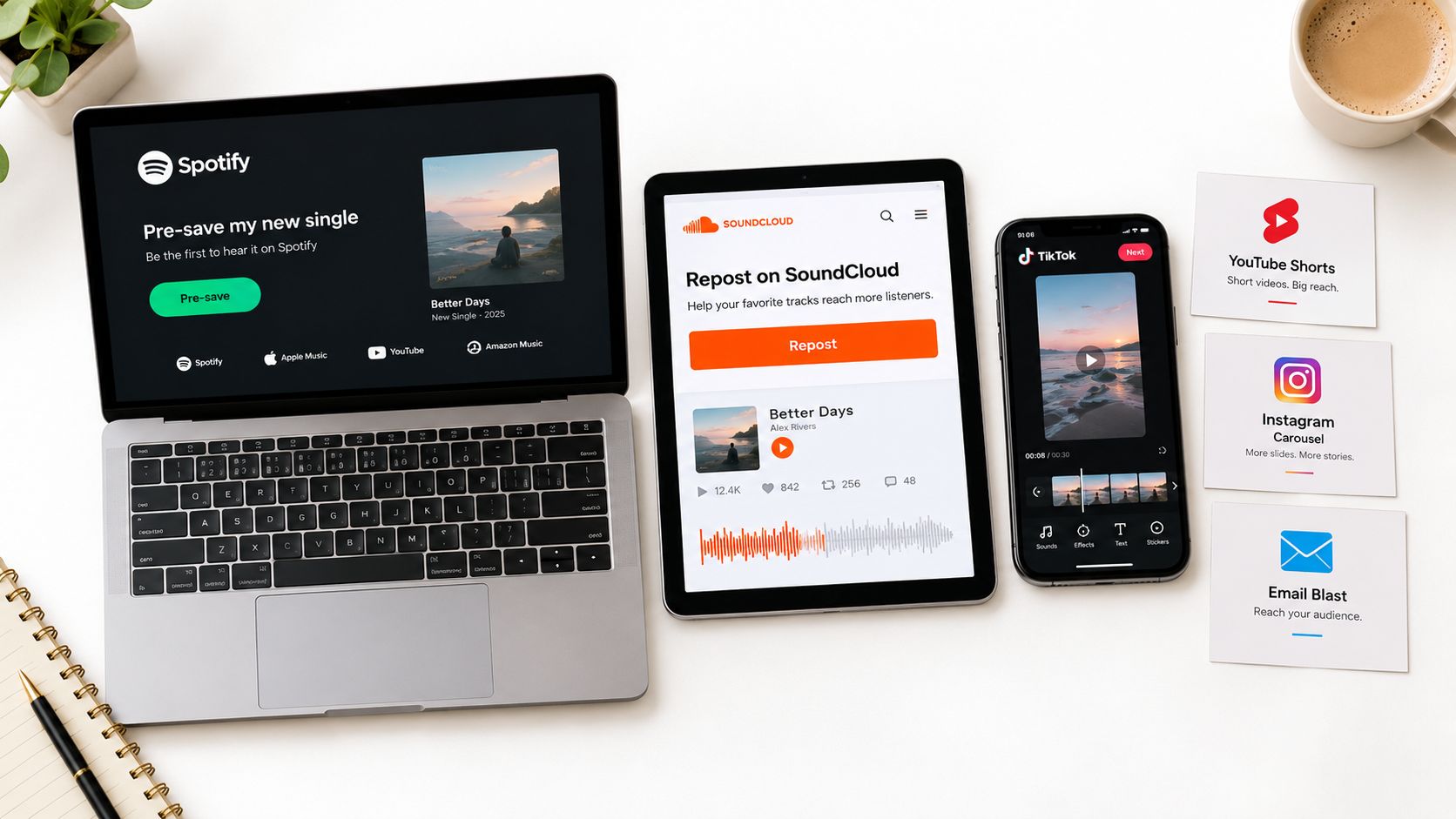
A two-person indie team juggling five channels usually gets five weak signals instead of one strong one. Keep social, email, and video, but rank them by how much useful feedback each one sends back into the streaming platforms that matter. That ranking keeps the work focused.
Put the strongest feedback loops first
Short-form video usually gets the first slot because it drives searches, curiosity, and outside traffic that can turn into follows or saves. Targeted email belongs next because it uses first-party data and gives you control over who sees the release. SoundCloud reposts can sit in the same tier when the audience is already active there, since reposts can move a track through a scene faster than generic social chatter.
A smart social media scheduling guide helps keep posting steady without turning every upload into a manual scramble. Consistency matters more than volume, especially when one release needs attention over several weeks, not just one day.
The weak channels are the ones that look busy but do not change behavior. Playlist payola, fake bot exchanges, and low-retention ads can create activity that never turns into repeat listening. They can also blur your read on what is working.
Slow, relevant discovery usually beats broad exposure when the goal is durable listener behavior.
That sounds counterintuitive until you track the right signals. Saves, repeat visits, and profile follows show whether a listener is moving closer to becoming a fan. Broad exposure can create reach, but reach without retention does not carry far once the release-week chatter fades.
Sustaining Plays With a Daily Engagement Workflow
A good release doesn't keep itself alive. It needs a daily operating routine, especially once the first burst of attention has passed. The strongest campaigns I've seen weren't the loudest, they were the ones that kept qualifying listeners after launch week.
A representative two-week rhythm
On day one after release, review who visited the profile, who followed, and which posts pulled people back to the track. On day two, check the playlist adds and the listeners who came back a second time. On day three, use that information to adjust who you're talking to, then repeat the cycle.
That same logic is what makes a controlled SoundCloud workflow useful. SCHelper, for example, uses SoundCloud OAuth, curated listener recommendations, and manual follow and unfollow actions after user confirmation, which fits the idea of guided daily review rather than unattended automation. I'd still treat it as a workflow tool, not a growth magic trick.
What to watch and what to ignore
The useful signals are profile visits, follows, reposts, returning listeners, and playlist adds. Raw stream count matters far less if none of those actions move. If people listen once and disappear, the campaign isn't qualifying well enough.
Manual confirmation is the safety valve. Modest batch sizes, exclusion of previously contacted accounts, and review before action all keep the work closer to normal user behavior. That matters because services promising guaranteed plays or instant playlist placement usually solve the wrong problem and create the wrong kind of attention.
Daily notifications help because they force the review habit. You open the recommendations, scan the shortlist, make a small set of choices, and move on. That's more sustainable than trying to rescue a release with one huge outreach day.
Your 90-Day Streaming Promotion Plan
A 90-day plan works because it gives the release time to prove something. Thirty days is enough to see whether the setup is clean. Sixty days is enough to see whether the channel mix is working. Ninety days is enough to decide what to keep and what to cut.
Days 1 to 30 focus on foundation
Lock the profile, clean up naming, build the target-artist list, and launch the first pre-save or follow capture. During this block, the main question is simple, does a curious listener convert when they land on the page? If not, fix the page before spending more energy on outreach.
Days 31 to 60 focus on active release and daily workflow
The run-up, launch, and post-launch habits overlap at this point. Keep the daily engagement loop going, watch which channels produce repeat visitors, and don't wait until the second week to start qualifying listeners. Early drop-off usually means the post-release routine started too late.
Days 61 to 90 focus on qualification and refresh
Cut target artists that don't convert. Expand the ones that do. Then evaluate which signals moved, not just which posts got liked. A campaign that sends you the wrong audience is more expensive than a small campaign that reaches the right one.
If response is weak, revisit target-artist selection and pitch timing first. If the release spikes and then fades, start the daily workflow earlier next time. If account risk becomes a concern, stay with manual confirmation, modest batches, and tools that don't promise guaranteed plays.
Pick one target artist and one lead platform, then run the daily workflow for fourteen days before you decide whether to expand it. That's usually enough time to see whether you're building listeners or just generating noise.
SCHelper gives SoundCloud artists a controlled way to work similar-artist discovery through daily listener recommendations, manual follow and unfollow actions, and secure OAuth access. If your release plan needs steadier audience qualification instead of a one-week spike, visit SCHelper and build the workflow around the next 30 to 90 days.