Independent Artist Marketing That Builds Real Fans

Most advice about independent artist marketing starts with reach. That's backwards. If a listener lands on your profile and nothing about it tells them who you are, what you sound like, and why they should come back, the extra attention just leaks away.
Independent music is no longer on the outside looking in. Spotify said DIY artists and independent labels generated about half of its total artist royalties in 2023, and its 2024 figures put independent artists and labels at more than $5 billion from Spotify alone, again around half of the royalty pool Spotify's Loud & Clear royalty report. That's real scale, but it also means the field is crowded, and uploading tracks is not a growth strategy by itself.
Core premise: marketing isn't something you do after the music is finished. It's part of the job, because discovery only turns into revenue when people keep moving forward.
That's why I'd rather look at profile visit, follow, save, repeat listen than chase vanity plays. If you also want to think visually about how a track can be presented before it ever gets heard, a practical tool like make cartoon videos with AI can help turn a release into something people recognize fast, but only if the rest of the funnel is ready.
Table of Contents
- Why Marketing Is Now Part of the Job
- The Four Stages of Independent Artist Marketing
- Making Your Profile Worth Following
- Planning a Release That Stays Alive
- Turning Casual Listeners Into Real Fans
- Low-Budget Promotion That Targets the Right Listeners
- Measuring What Actually Works
- Your Next Thirty Days of Marketing
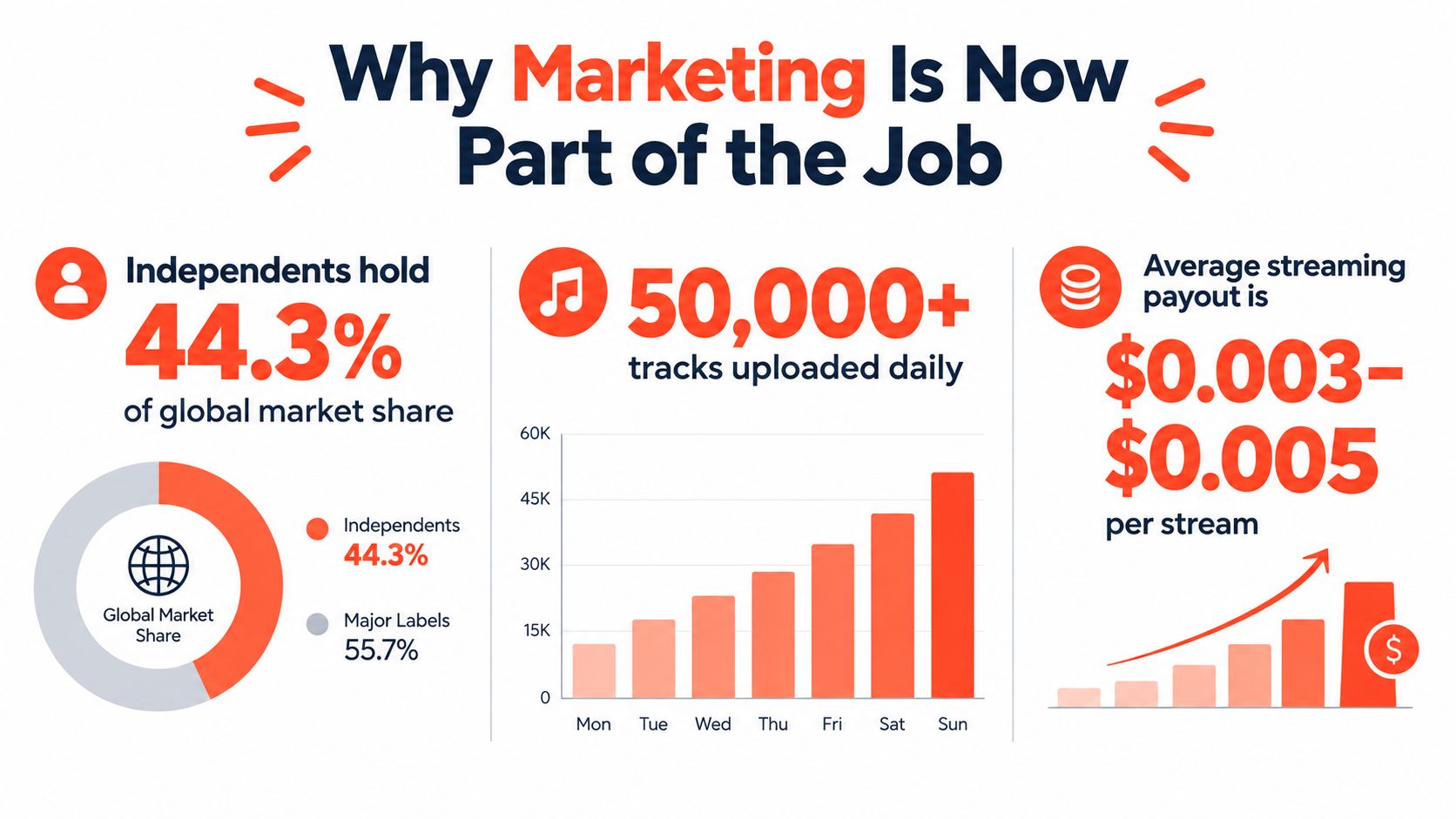
Why Marketing Is Now Part of the Job
The old myth says good music finds its audience. In practice, the audience has to find the music first, then decide whether the artist is worth keeping in rotation. Independent artists sit inside a huge market, but they also compete inside a very uneven one, where a small slice of acts captures meaningful results and most uploaders don't break through.
Spotify's 2024 reporting makes that split hard to ignore. More than 71,000 artists generated at least $10,000, nearly 1,500 cleared $1 million, and the 10,000th-ranked artist rose from about $34,000 in 2017 to $131,000 in 2024 Musically's summary of Spotify's Loud & Clear data. That doesn't mean every artist is headed there. It does mean the market is active enough that consistent promotion can matter, because listeners are clearly still moving up and down the discovery ladder.
Why uploading is not enough
A lot of artists confuse distribution with marketing. Distribution gets the track live, marketing gets the track seen, clicked, followed, saved, and played again. That second part is where independent artists win or lose, because the platform doesn't care how hard you worked in the studio, it cares what listeners do after they arrive.
Practical rule: if a visitor doesn't understand your lane in a few seconds, promotion is just paying to confuse people faster.
That's the shift this article is built around. Instead of treating marketing as a noisy push for streams, treat it as a conversion system. The goal isn't raw attention, it's the movement from stranger to follower to returning listener.
The Four Stages of Independent Artist Marketing
Think of marketing a song like hosting a party. First, the venue has to look inviting. Then people need directions. Then the first visit has to feel good enough to earn a return trip. After that, the regulars keep the room alive.
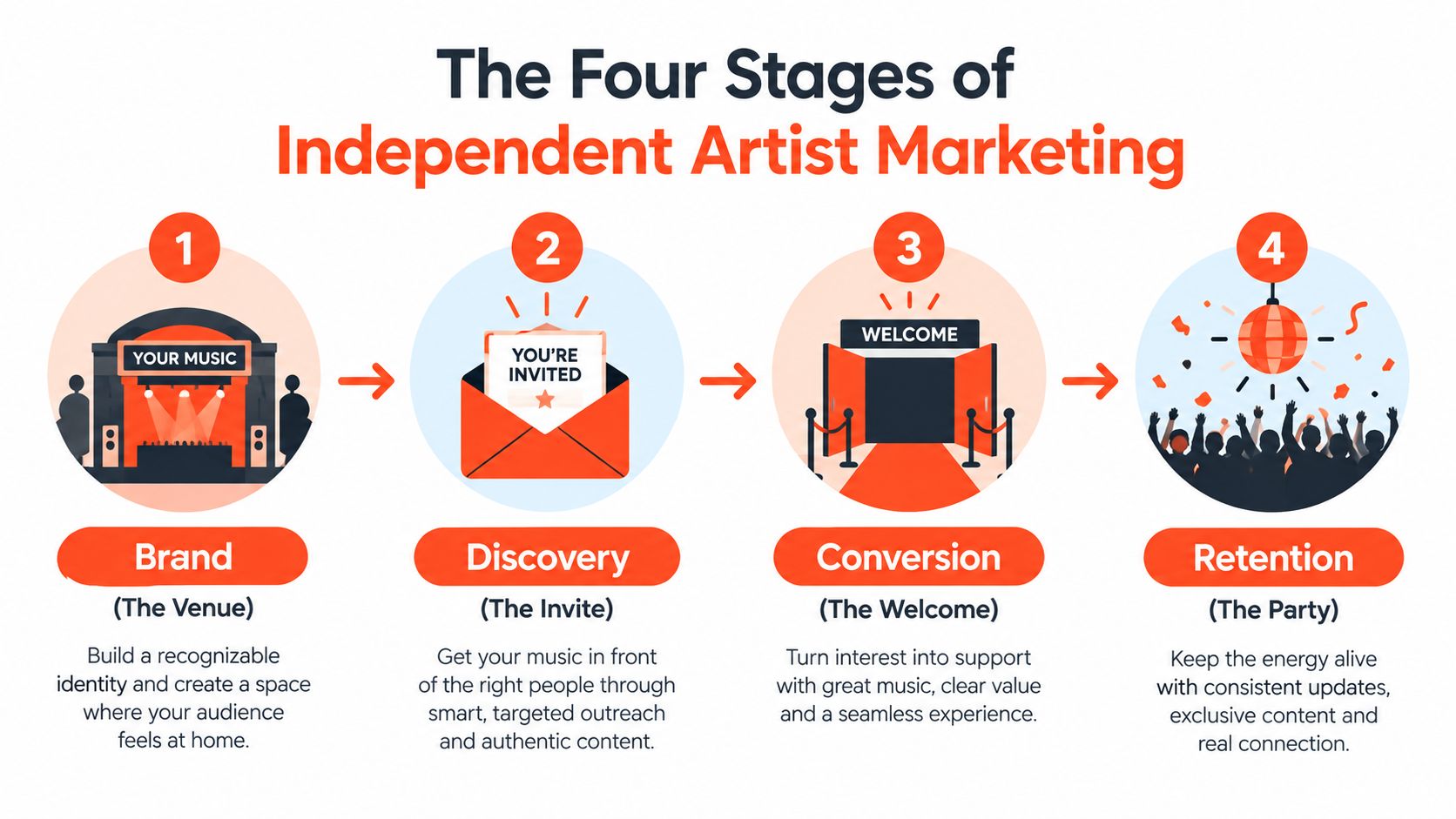
Brand is the venue
Brand is what a visitor notices before they hear a full song. Your visuals, name, bio, and pinned tracks tell people whether they're in the right place. If those pieces feel random, the listener leaves before the music gets a fair shot.
Discovery is the invite
Discovery is how the right people hear about you in the first place. That can come from a similar-artist search, a playlist, a repost, a blog mention, or a community post, but the point is always the same, someone has to decide your name is worth clicking. The Spotify data showing 274,000 artists earned more than $1,000 while more than 11.7 million uploaders earned less than that amount shows how wide the top of the market is and how many people never get past the first step Musically's Spotify summary.
Conversion is the welcome
Conversion happens when the visitor follows, saves, or plays another track. At this point a profile either does the job or wastes the click. A strong release can still underperform if the profile doesn't give the listener an obvious next move.
Retention is the party
Retention is everything that keeps the room from emptying out. Repeat listeners, profile revisits, comments, reposts, and direct contact all matter because they turn a one-time discovery into a relationship.
The order matters. If you push discovery before the venue looks right, you waste traffic. If you convert before you retain, you keep starting over.
Making Your Profile Worth Following
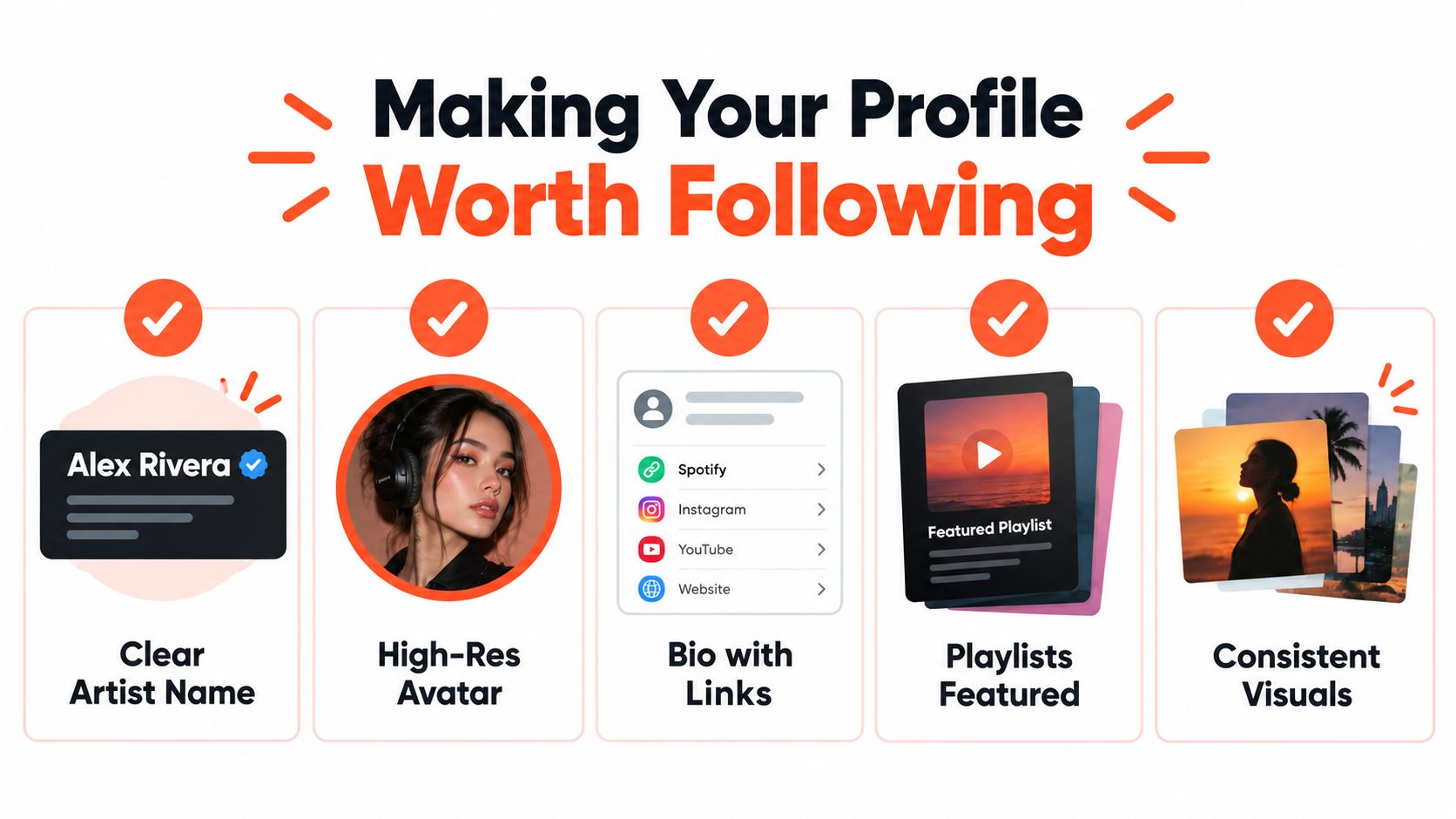
A profile doesn't need to look expensive. It needs to look intentional. A listener usually decides fast whether the page feels coherent enough to follow, so the basics have to do real work.
Start with the profile surfaces people actually notice
Your artist name should be easy to read, your avatar should be sharp, and your header image should match the sound instead of looking copied from a different project. If the profile mixes styles from three eras of your career, visitors won't know what lane to place you in.
The bio needs to say something useful. Genre, city, scene, and a simple line about the project are often more valuable than a poetic paragraph with no orientation. The point isn't to sound corporate, it's to make the page legible.
Choose proof over decoration
Pinned tracks, featured playlists, and the order of your top content matter because they tell a visitor what you want them to hear first. Put the song that best represents the current sound at the front, not the one you personally like most. Those two choices are often different.
If you're building a more recognizable visual identity, Simply Merchandise custom solutions is the kind of resource people use when they need consistent physical branding across merch or event materials. That won't fix a weak profile, but it can help the visual side of the project feel unified once the page already makes sense.
A follower usually isn't asking, “Is this artist good?” They're asking, “Do I understand this enough to want more?”
For SoundCloud specifically, a focused setup matters before you start pushing traffic. I'd use the same logic as the practical checklist in this guide to getting more SoundCloud followers, because promotion works better when the profile can catch the visit instead of letting it bounce away.
Planning a Release That Stays Alive
Most release campaigns die because all the energy gets spent on one day. The post looks active, the link gets shared, and then everything drops off because nobody planned the next two weeks. That pattern is fixable.
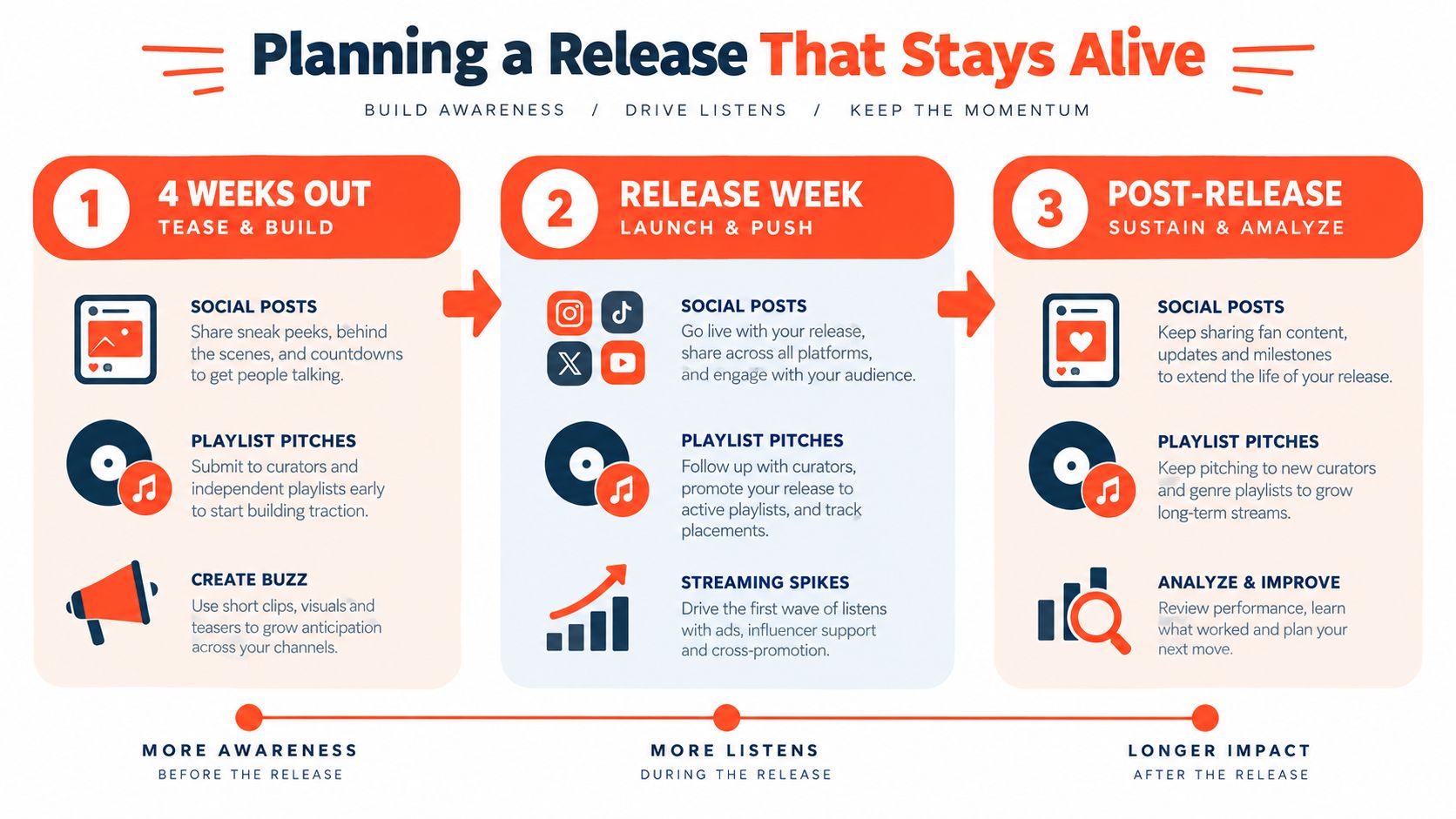
Four weeks out, build attention without exhausting it
The first stage is light but deliberate. Tease the sound, show the cover, preview the hook, and ask for interest before the release date arrives. If you're targeting SoundCloud listeners, the basic logic in this comparison of SoundCloud and Spotify helps because it reminds you that discovery behavior differs by platform, so the same post won't perform the same way everywhere.
Keep the message simple. One song, one visual identity, one main action. If you scatter attention across too many clips and too many calls to action, you dilute the release before it even lands.
Release week should feel focused, not frantic
Release week is for concentration. Put your best posts where they can do the most work, send the direct outreach that fits your scene, and make sure the profile, links, and top tracks all point toward the new release. The goal is not to “announce” the song and move on, it's to create repeated chances for the same listener to interact in a few different ways.
A useful rule is to stagger the touchpoints. One post isn't a campaign. Three or four different angles around the same release can be.
Post-release is where most artists stop, and they shouldn't
After launch, keep the song alive with new contexts. Share the writing story, a performance clip, a listener reaction, or a stripped version. The point is to give new visitors a reason to engage after the first wave passes.
The reference page on music promotion tools for independent artists is worth a look if you're trying to turn release activity into a repeatable workflow instead of a one-off burst. That's the difference between a campaign that flares and one that compounds.
Turning Casual Listeners Into Real Fans
The conversion path is usually shorter than people think, but it has to be designed. A person sees the track, visits the profile, follows, saves, plays again, and maybe reaches out or shows up somewhere else later. If that sequence isn't intentional, the listener can like the song and still disappear.
A 2025 audience survey found that casual listeners mainly use Spotify, YouTube, and social media, while superfans and music professionals lean more on SoundCloud, Beatport, blogs, and DJ recommendations. The same survey said 70% of users who pre-saved an album streamed it during the first week AMT Lab's audience survey summary. That tells you two things. First, different audiences behave differently. Second, conversion mechanisms matter because they move people from interest to action.
Build the next step into every surface
Every track description, profile bio, and pinned post should answer the same question, what should this listener do next? Sometimes the answer is follow. Sometimes it's save. Sometimes it's join the mailing list or check the next track. The worst setup is one that gets attention but never gives direction.
Match the effort to the listener type
Casual listeners usually live on the big discovery platforms. Superfans and working music people are often easier to reach in niche spaces where context is stronger and attention is more deliberate. That's why the same promotion tactic can look successful in one place and dead in another.
Practical rule: if the click doesn't lead somewhere clear, you're not building fans, you're collecting distractions.
Pre-saves, follows, and repeat listens are not glamorous metrics, but they're much closer to actual fan behavior than raw impressions. If you want real growth, make the listener take one simple action at a time, then measure whether that action led to the next one.
Low-Budget Promotion That Targets the Right Listeners
When the budget is tight, broad outreach gets expensive fast. Relevance becomes the whole game. If the listener has no obvious reason to care, even free promotion can waste your time because every minute still has a cost.
SoundCloud-related reporting summarized platform data showing that tracks discovered through another user's “Liked By” playlist were more than three times as likely to generate engagement, meaning likes, reposts, or comments, than tracks found through other discovery routes LinkedIn post on SoundCloud discovery patterns. I'd treat that as a targeting signal, not a promise. It says adjacent listeners matter, and that's enough to change how you spend your time.
Compare tactics by fit, not hype
| Tactic | Cost | Audience Fit | Main Risk |
|---|---|---|---|
| Similar-artist outreach | Low | High | Reaching too many near-matches too quickly |
| Community comments and replies | Low | Medium | Slow to scale |
| Short-form clips | Low to medium | Medium | Lots of views, weak conversion |
| Bot-style follower growth | Low upfront, high downside | Poor | Vanity metrics, weak retention |
A controlled workflow can help here. One option is a system like ShortGenius AI UGC video ads, if you need a way to produce ad-style content without rebuilding your process every time. That kind of tool only works if the target audience is already well chosen, though. Otherwise you just make more content for the wrong people.
Use daily limits instead of random bursts
The best low-budget approach is usually a small batch of relevant discovery work, followed by real review. That means checking whether the listeners you contact actually resemble the audience you want, excluding accounts you've already touched, and moving only when the fit looks real. A daily rhythm is slower than spray-and-pray tactics, but it's safer and more measurable.
The broader point is simple. Relevance beats volume because relationships, not raw list size, are what eventually create repeat listening.
Measuring What Actually Works
Marketing gets cleaner when you stop asking, “Did this post do well?” and start asking, “Did the right listener move forward?” That sounds small, but it changes everything. A campaign can look busy and still produce almost no real fan growth.
A study of 181 albums released by 158 artists in Canada found that prerelease social engagement had a small positive effect on sales overall, but it worked much better when the music had high product–audience fit. For newer artists with very low fit, engagement could even relate negatively to performance the Canadian album study. That's the clearest evidence I know for why volume without fit can mislead artists.
Track the right ratios
The weekly numbers that matter most are simple:
- Profile visits per qualified interaction, because it shows whether your targeting is relevant.
- Follows per visit, because that tells you whether the profile converts curiosity into commitment.
- Saves and reposts per listener, because those are stronger signals than passive exposure.
- Repeat plays, because one good click isn't a fan.
Those ratios tell a more honest story than follower counts alone. A profile can grow followers and still fail if the new audience never comes back.
Compare like with like
Don't compare a targeted listener batch against a random blast and call the result objective. Compare similar-artist audiences against untargeted audiences over the same release window, then wait several days before judging. Immediate clicks can flatter weak targeting, while delayed behavior usually shows whether interest was real.
Simple weekly review: if the right people aren't following, saving, or returning, the problem is usually fit, not effort.
That is the operating standard for independent artist marketing. Promotion should reveal what resonates, then concentrate effort where the listeners respond. If you keep doing that every week, your campaign gets sharper even when the numbers are modest.
Your Next Thirty Days of Marketing
The strongest independent artist marketing campaigns aren't the loudest. They're the ones that keep showing up, with a clear profile, a focused target list, and a repeatable way to turn visits into follows and follows into repeat listening. That's how small actions start to compound.
Spend the next thirty days cleaning up the profile, choosing similar artists or scenes to target, and running a controlled daily discovery routine instead of a random burst. Build the next release around sustained engagement, not one launch day, and check the conversion ratios weekly so you can see what moved people forward.
SCHelper is built for SoundCloud artists who want a controlled daily workflow for finding listeners who already follow similar artists and engaging them in a structured way. If you want a practical way to turn discovery into follows and repeat listening, visit SCHelper and see whether that approach fits your release plan.