
Music Artist Promotion Strategies: 7 Options for 2026

You've spent the week finishing your release, checking the artwork, uploading the master, and telling everyone it's coming. Release day brings a burst of plays. By Friday, the graph is flat, and you're wondering whether to buy ads, pitch playlists, or start teasing another track.
That's why most artists promote backwards. They prepare for the upload rather than the listener's next move. The problem isn't necessarily the music. It's often a plan built around a single push, with nothing ready for people who discover the track afterward.
Music artist promotion works better as a sequence: create interest before release, give the track a focused launch, then keep introducing it to relevant listeners during the quiet weeks. Discovery also happens beyond streaming profiles. In IFPI's 2023 Engaging with Music study, 31% of respondents identified video streaming as a music-discovery route, while 27% cited social media.
These seven options serve different moments, from SoundCloud's own advertising tool to managed publicity. Choose for the job you need done, not the longest feature list.
Table of Contents
- 1. SCHelper
- 2. Promote on SoundCloud
- 3. RepostExchange
- 4. Groover
- 5. SubmitHub
- 6. SoundCampaign
- 7. Music With Depth PR
- How the Seven Promotion Options Compare at a Glance
- Match Each Tool to the Stage of Your Release
1. SCHelper
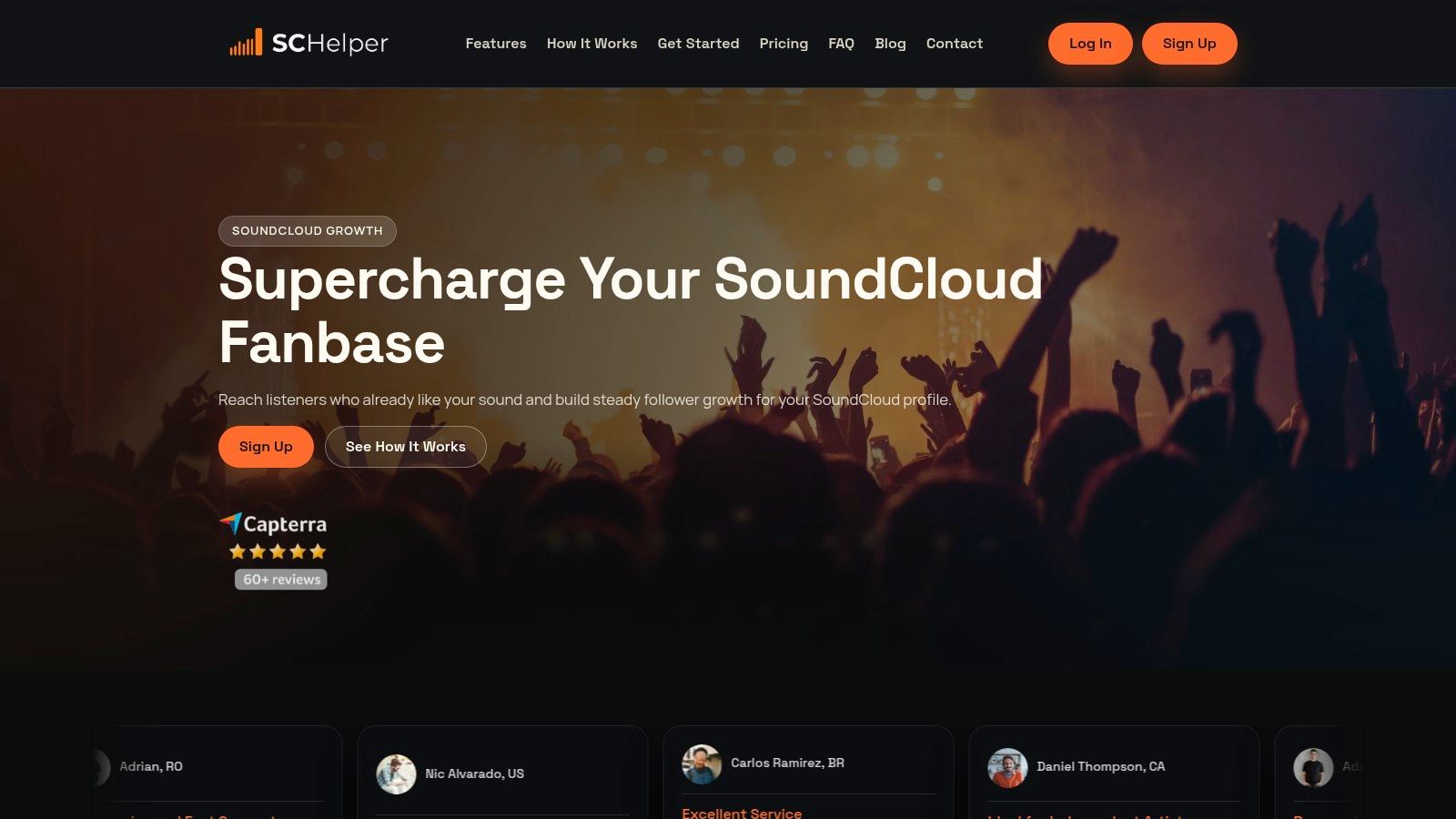
The weeks between releases decide whether a profile keeps growing or goes quiet. Best fit: ongoing listener discovery before releases and during the slow stretch afterward. SCHelper suits independent SoundCloud artists, DJs, producers, and small labels that know their scene but don't want audience research to consume their working day.
The workflow starts with your choice of target artists. Each day, SCHelper gives you a focused batch of recommended listeners built around those artists, your genre, and your scene, and a daily reminder prompts you to review them. That makes target selection the creative decision: an artist with a closely related audience is more useful than a famous name with only a loose connection to your sound.
What You're Paying For
Every plan includes audience research, organized listener recommendations, and account-management tools. Plans are available for one, three, or six months; the three-month plan costs $26.99 and is recommended for steady follower growth, with payment through PayPal or Stripe and volume discounts available on request.
- Account access: Secure SoundCloud OAuth means no password storage and clear account controls.
- Working flexibility: Desktop and mobile-browser access supports daily review, and you can connect and manage multiple profiles.
- Subscription limit: Each connected SoundCloud account needs its own active subscription.
- Support policy: Responsive support and a refund if the service fails to function properly.
The trade-off is participation. You still judge relevance, keep the profile inviting, and give visitors worthwhile music to explore. Listeners report real gains from that pairing. "The daily curated recommendations save me so much time, and I've connected with real fans who appreciate my music," says Carlos, a SCHelper user.
2. Promote on SoundCloud
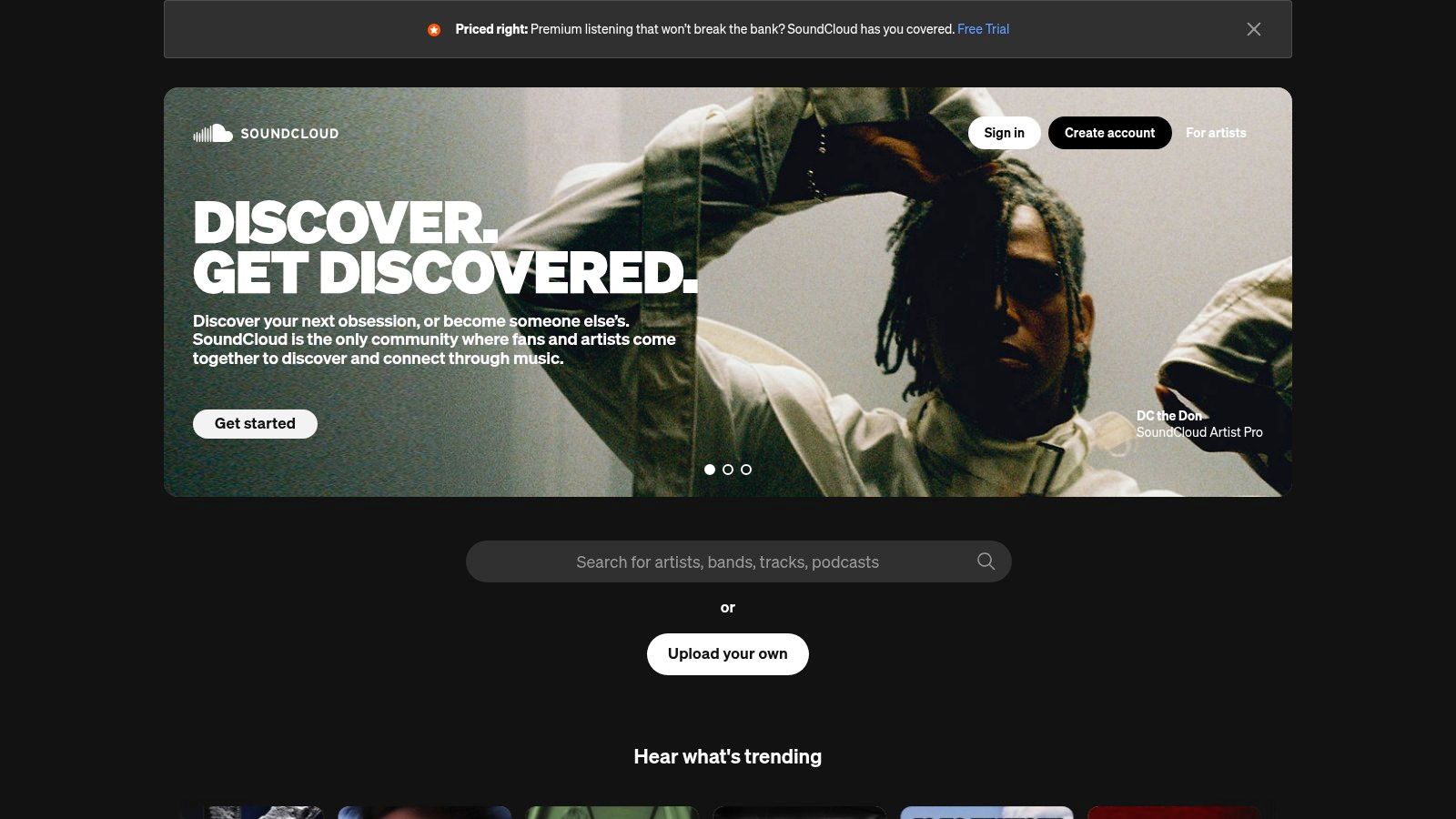
A release-week visibility problem calls for a different tool than an audience-research problem. Promote on SoundCloud places eligible tracks in prominent areas of listeners' feeds, with controls for audience, location, campaign budget, and schedule.
The advantage is straightforward: listeners are already on SoundCloud. You aren't asking someone scrolling another app to switch services before hearing your track. That makes it a practical option for an artist whose main listening destination is SoundCloud and whose release is ready for paid exposure.
Eligibility matters before you budget. The service requires Artist Pro and track monetization through SoundCloud for Artists. Its Simple and Advanced campaign options use CPM-based buying, so your spend purchases advertising exposure rather than a promised number of committed fans.
Budget rule: Buy a test you can learn from, not a burst large enough to make the graph look impressive.
Prepare the destination before launching. Check the artwork at feed size, make the track description useful, and put a relevant next listen where profile visitors can find it.
- Strength: You control targeting, spending, and timing around a specific release.
- Cost: Campaign costs vary with targeting and settings, alongside the required account eligibility.
- Limit: Exposure doesn't guarantee saves, followers, or repeat listening.
I'd use this for a finished release with a clear audience hypothesis. I wouldn't spend heavily just because release day is approaching. If visitors arrive but don't explore the music, improve the destination or reconsider targeting before extending the campaign.
3. RepostExchange
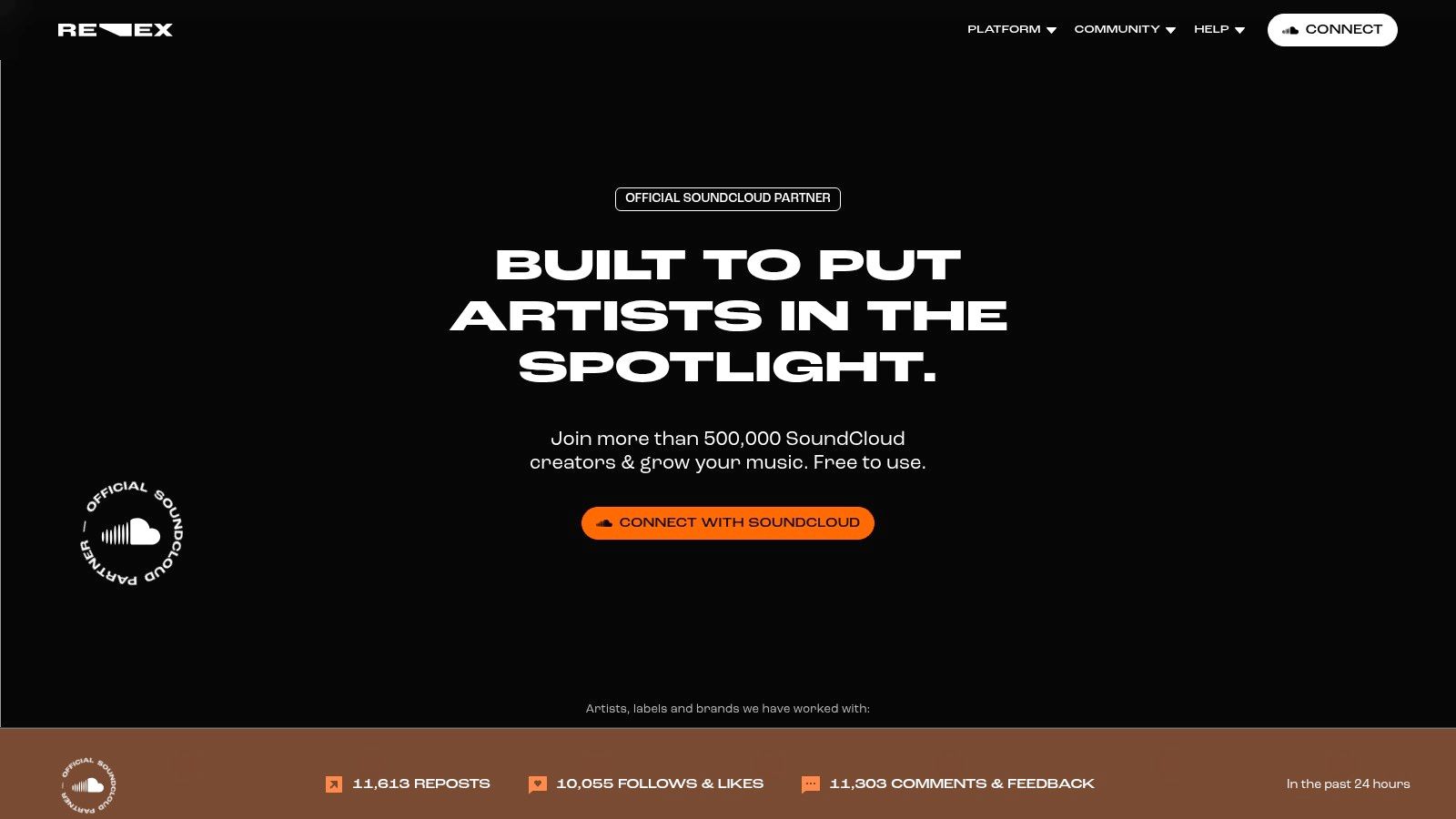
A producer with more available time than advertising money has a useful starting point in RepostExchange. Its community model lets artists earn credits by engaging with other music, then spend those credits promoting their own tracks.
Best fit: release-week community discovery and continued circulation after launch. The service offers credit-based campaigns, repost requests, genre-targeted options, feedback, and managed campaigns. It describes itself as an official SoundCloud partner.
The free entry point is attractive, but free doesn't mean effortless. You're contributing listening and attention to earn promotional capacity. Paid tiers and purchased credits reduce that time requirement, while adding a financial cost that should stay separate from your recording budget.
Judge the Audience Behind the Repost
A repost can introduce your track through another account, but the account's audience matters more than the notification. A producer community may offer useful feedback and connections without necessarily reaching the listeners most likely to return to your catalog.
For practical selection advice, use this guide to getting reposts on SoundCloud before committing credits broadly.
- What works: Supporting music you like and targeting campaigns toward compatible genres.
- What takes time: Earning credits, listening thoughtfully, and reviewing campaign quality.
This option suits artists who enjoy participating in a scene, not just broadcasting into it. Keep community activity running beyond launch, but review whether new listeners explore another track or leave meaningful comments. If you only count reposts, you can mistake distribution activity for audience development.
4. Groover
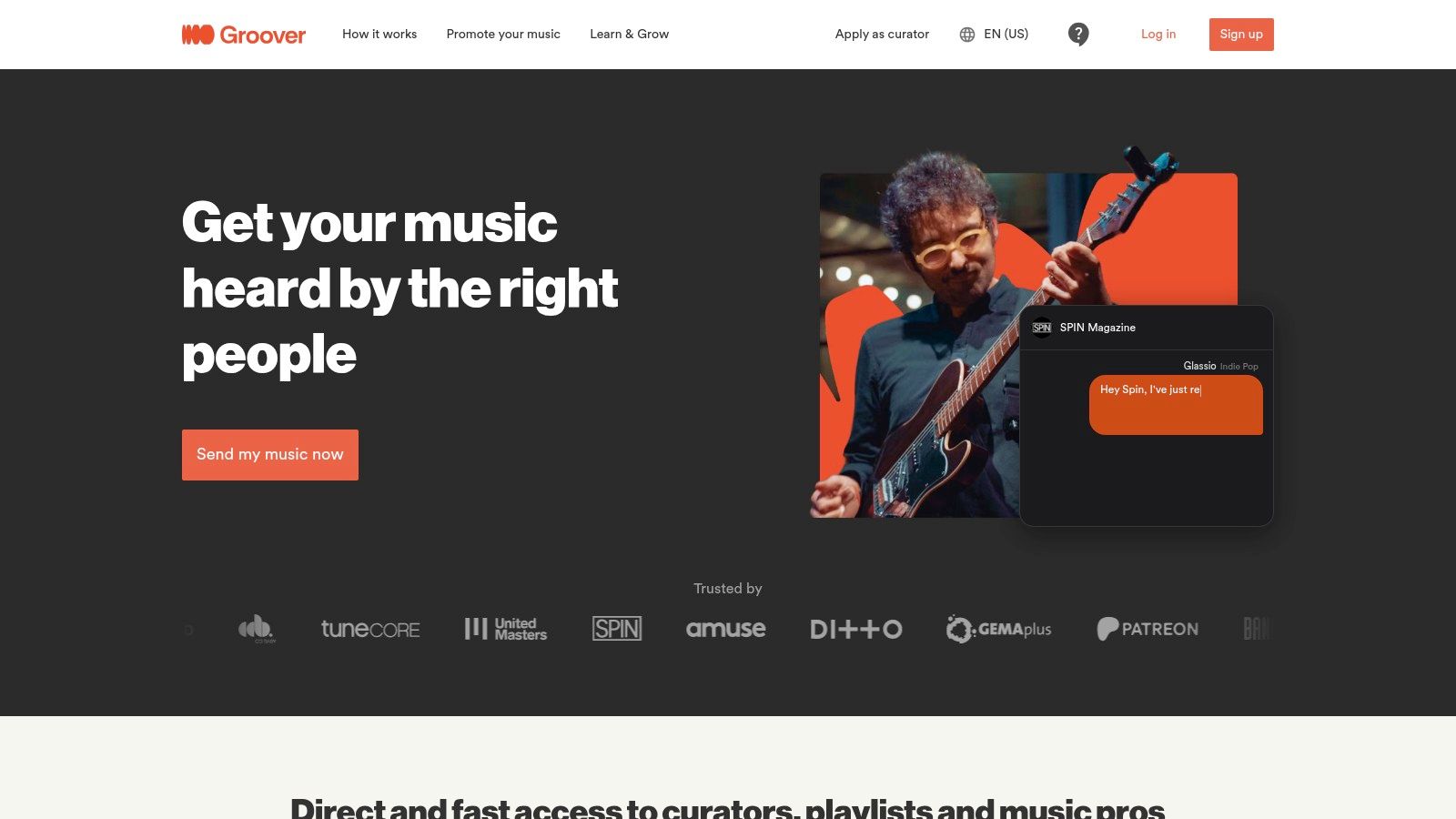
Use Groover when your release needs consideration from people who select music for an audience. Groover lets artists pitch blogs, radio, playlists, channels, labels, and other music professionals, with recipient filters for genre, country, and contact type.
Its strongest release-cycle role is pre-release pitching, especially when you have a finished track but don't want to publish it yet. The platform accepts SoundCloud links, including private or unreleased tracks, so you can share the music while keeping the public rollout intact.
Prepare more than a link. Give recipients a concise description of the sound, the release context, and why the track fits their outlet. A radio presenter, label contact, and playlist curator have different decisions to make; sending them an identical generic pitch wastes the control you're paying for.
Paying for consideration buys access to a decision, not control over that decision.
Groover's stated policy returns credits if a curator doesn't respond within seven days, as described on its platform. That's a response remedy, not a promise of publication, airplay, or a signing.
Costs accumulate with the recipients you select. Set a submission budget before browsing, and judge candidates by recent output rather than a broad genre label alone.
Groover suits artists who have a clear release story and can use feedback constructively. It's less suitable for someone seeking immediate SoundCloud follower growth. Leave space before launch for replies and scheduling, and don't make your public announcement dependent on a curator saying yes.
5. SubmitHub
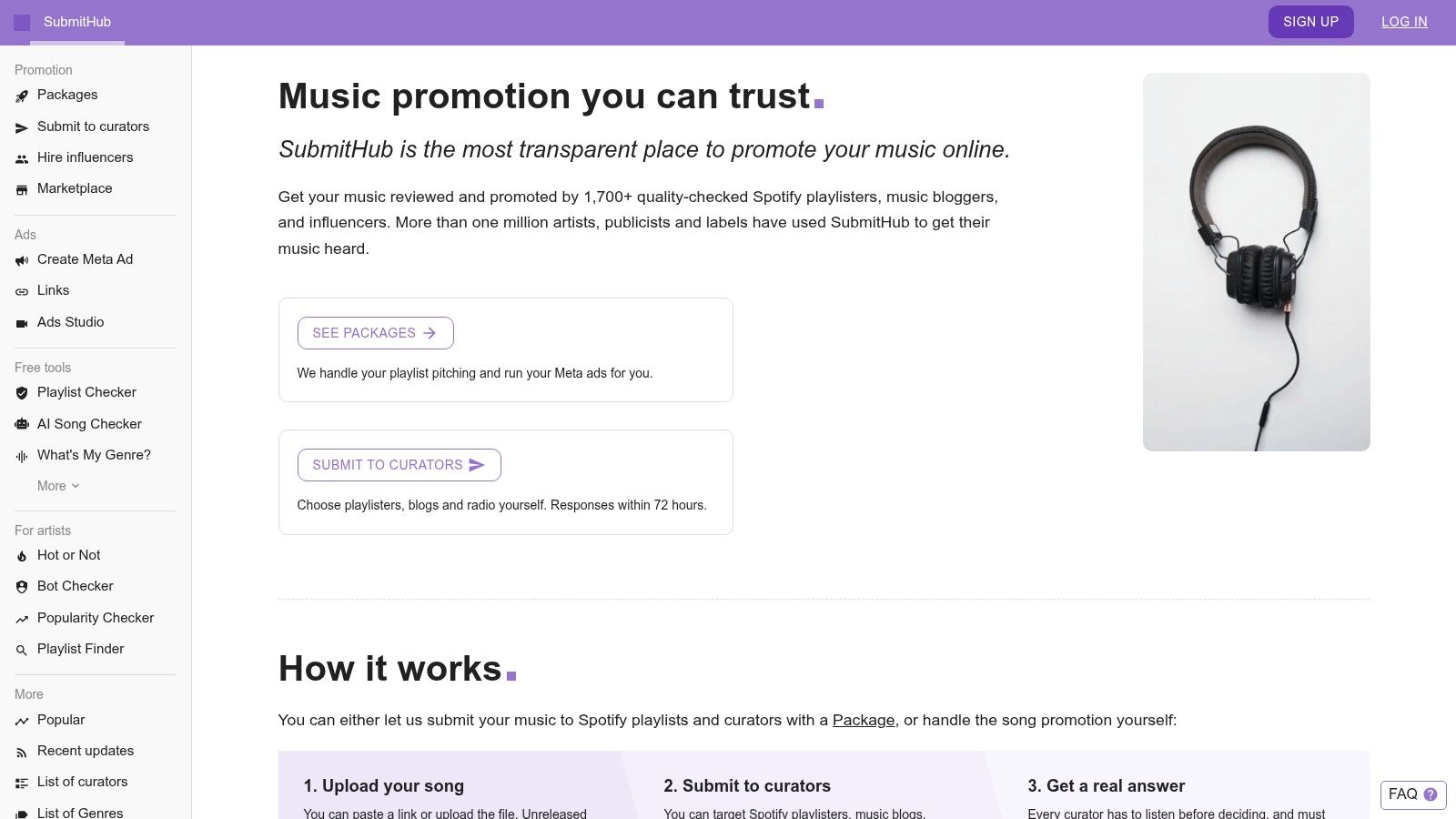
Curator pitching becomes expensive when you treat every available recipient as a reasonable prospect. SubmitHub is better approached as a selective pitching workspace: review curator profiles, inspect what they support, and decide whether your track belongs.
Best fit: testing editorial interest before release and extending a launch through relevant coverage afterward. The platform supports submissions to playlists, blogs, labels, and other curators, with standard and premium credit options.
Free-credit routes let you explore the service before spending. Premium submissions have stated listening and response conditions, with credits returned for eligible submissions when those requirements aren't met. Those conditions concern the submission process, not a guarantee that anyone will feature your song.
Use Rejections to Refine the List
A curator declining your track doesn't automatically mean the production needs changing. The outlet may prefer a different vocal style, energy level, or arrangement. Read feedback alongside the recipient's published music before treating it as creative direction.
A focused playlist-pitching approach helps you distinguish a weak match from a weak pitch.
- Advantage: You can choose recipients rather than delegate every targeting decision.
- Cost control: Explore free options, then cap paid-credit spending before submitting.
- Limitation: Finding suitable outlets requires research, and paid consideration still permits rejection.
SubmitHub suits artists who want hands-on control and can tolerate candid feedback. It isn't a direct SoundCloud audience-building service, even if coverage later sends listeners there. Track useful outcomes separately: a relevant article, a suitable playlist, or a curator relationship can each matter without producing the same listening behavior.
6. SoundCampaign
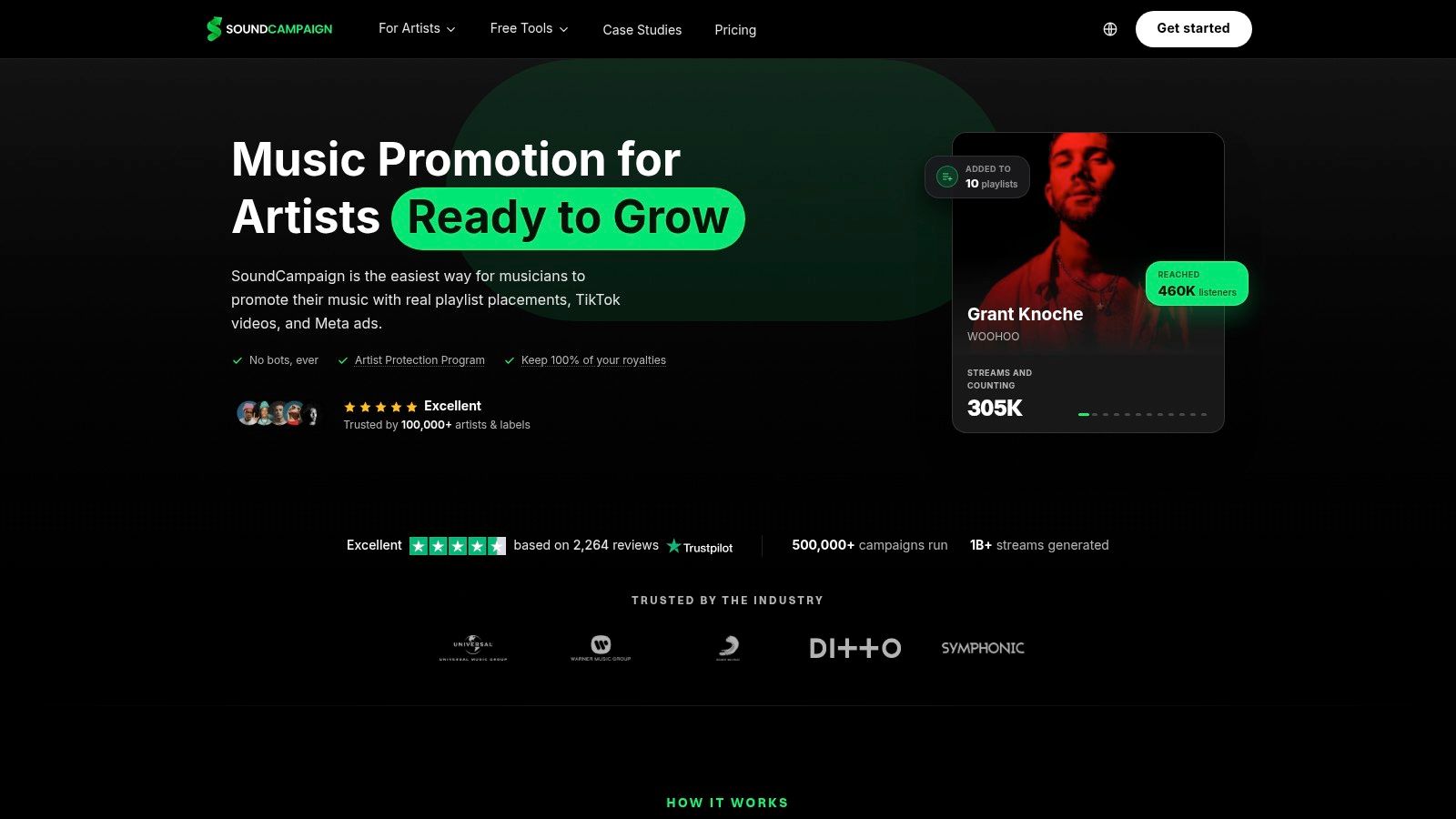
SoundCampaign fits a cross-platform release plan. It offers Spotify playlist-curator campaigns, TikTok creator campaigns, and Meta advertising campaigns, so it serves a defined release-week push better than the slow work of building SoundCloud followers between drops.
Match the format to the asset. A TikTok creator campaign needs a track that still lands when clipped under video. A Spotify playlist campaign needs a streaming-ready release and patience after placement. Meta advertising needs creative, a destination, and one clear action for the click.
Discovery volume is the reason to stay narrow. Across artists tracked by Chartmetric, 6.7 million YouTube videos were posted during 2024, according to Chartmetric's Year in Music 2024 report. Scale argues for choosing one job per campaign rather than buying every available format.
Pick a Channel and a Measurable Next Step
SoundCampaign describes budget selection, campaign tracking, and an Artist Protection Program that credits artists when a curator or creator doesn't review a track. It also says the service doesn't take a share of artists' royalties.
Costs depend on campaign type and setup. Credit-back protection for an unreviewed submission still leaves the larger risk: weak conversion after the click, placement, or post.
I'd choose it when an artist already knows which channel needs support during launch. Judge playlist campaigns by listening that continues after the add, creator campaigns by relevant audience response, and ads by the action people take after clicking.
7. Music With Depth PR
An album with a distinctive story, finished visuals, and an artist ready for interviews needs a different campaign from a standalone beat upload. Music With Depth PR, formerly Independent Music Promotions, provides managed publicity for independent artists.
Best fit: a substantial release that justifies coordinated work before launch and continued pitching afterward. Campaigns can combine press outreach, reviews, interviews, radio and podcast pitching, social sharing, and playlist pitching.
The agency publishes package descriptions and rates, allowing artists to compare scope and duration before applying. It's selective, and its managed packages are a higher-cost commitment than self-service discovery or submission tools. Don't treat the fee as purchasing a guaranteed editorial response.
Publicity test: Have a reason an editor should cover the release beyond the fact that you've uploaded new music.
A useful story might connect the recording process, a local scene, a collaboration, or the project's subject matter. General press coverage tips for founders offer a transferable lesson: understand the outlet's audience before pitching your announcement.
- Strength: A managed campaign can coordinate several publicity channels.
- Commitment: You still need to supply assets, approve materials, and be available for opportunities.
- Limit: Press attention isn't the same outcome as targeted SoundCloud listener discovery.
Compare the deliverables with your actual objective before selecting a music promotion service. PR can help develop an artist narrative and generate coverage worth sharing. It's a poor emergency purchase when the only plan is to rescue a release that has already lost attention.
How the Seven Promotion Options Compare at a Glance
The seven options split into four pricing shapes: a running subscription, credits spent per submission, campaign budgets you set yourself, and fixed-price packages. That difference matters more than any feature list, because it decides whether a tool suits a one-off push or months of steady audience work.
| Item | Best For | Pricing Model | Free Entry Point | SoundCloud Focus |
|---|---|---|---|---|
| SCHelper | Finding and engaging listeners connected to similar artists | Subscription per connected profile: 1-, 3-, or 6-month plans; three-month plan at $26.99 | No free tier stated | High; audience discovery and user-confirmed engagement |
| Promote on SoundCloud | Promoting eligible tracks to SoundCloud listeners | CPM-based campaigns with adjustable budget and schedule | No free entry point stated | High; native SoundCloud feed advertising |
| RepostExchange | Community promotion, reposts, and artist feedback | Free plan, paid tiers, and credit-based campaigns | Free plan | High; SoundCloud-focused promotion |
| Groover | Pitching tracks to curators and industry professionals | Paid credits per submission | No free entry point stated | Moderate; accepts SoundCloud links |
| SubmitHub | Pitching tracks to blogs, playlists, labels, and curators | Free and paid credits | Free-credit options | Moderate; pitching service, not focused on SoundCloud growth |
| SoundCampaign | Campaigns across Spotify, TikTok, and Meta | Budget-based campaigns | No free entry point stated | Low; not SoundCloud-focused |
| Music With Depth PR | Managed publicity across press, radio, podcasts, and playlists | Paid packages with published rates | No free entry point stated | Low; broader publicity, not SoundCloud-focused |
Only two rows let you test the workflow before paying: RepostExchange's free plan and SubmitHub's free credits. The other five ask for money up front, so judge them on where the spending goes. A subscription earns its keep through continuous activity, while credits and packages concentrate spend on individual tracks that need attention now.
SoundCloud focus is the second dividing line. SCHelper, Promote on SoundCloud, and RepostExchange all operate inside the platform. Groover and SubmitHub accept SoundCloud links but send your music to outside curators. SoundCampaign and Music With Depth PR direct most of their effort at other platforms and press outlets, which suits artists whose goals reach beyond SoundCloud.
Match Each Tool to the Stage of Your Release
No single option covers the whole release cycle. Paid ads can support a specific track when you need controlled exposure. Curator submissions test editorial interest, managed PR supports a broader story, and community participation helps keep music circulating after the launch announcement has passed.
Before release, prepare the destination and the pitch. Finish your profile, choose the track visitors should hear next, organize artwork and background information, and identify recipients whose audiences fit. Start publicity and curator conversations while there's still room to respond, rather than assuming everyone can act on release day.
Give Each Stage a Different Job
- Pre-release buzz: Use Groover, SubmitHub, or managed PR when there's a finished track and a credible reason for editorial attention.
- Release-week push: Consider Promote on SoundCloud for eligible tracks, or a suitable SoundCampaign format when the release spans other platforms.
- Quiet-week continuity: Keep relevant community participation and listener discovery active, then review whether newcomers return.
The strategic priority is a loyal audience, not a succession of isolated spikes. MIDiA Research's independent-creator report emphasizes building a dedicated fanbase rather than relying on algorithmic reach alone.
Measure accordingly. Record where listeners arrived from, whether they explored another track, and whether comments or reposts suggest genuine interest. You won't always be able to attribute every action precisely, so avoid claiming that every play during a campaign came from the campaign.
Review each service's terms before starting. You remain responsible for activity on your account and the recommendations you choose to act on. Choose a manageable sequence you can sustain, then expand only when the results justify the extra work.
SCHelper offers curated SoundCloud listener recommendations based on similar artists, genres, and scenes, helping you make audience discovery part of your release routine. For a longer working window, our three-month plan costs $26.99; visit SCHelper to choose your target artists and begin reviewing relevant potential listeners.