How to Promote Music in 2026 — A Practical Playbook
Stop treating music promotion like a laundry list of platform tasks. Posting everywhere, begging for shares, and chasing follower counts is how artists burn time and still miss the point. How to promote music in 2026 is about building repeat contact with listeners who already like adjacent music, then converting that attention into follows, saves, profile visits, and deeper listening.
The market makes that blunt. In 2024, streaming generated US$20.4 billion, which was 69% of the US$29.6 billion global recorded-music market, and paid subscription accounts grew to 752 million worldwide, so streaming-platform presence isn't optional for independent artists, it's core infrastructure (global music report). That's why loud promotion without audience fit falls flat. You don't need more noise. You need a cleaner funnel.
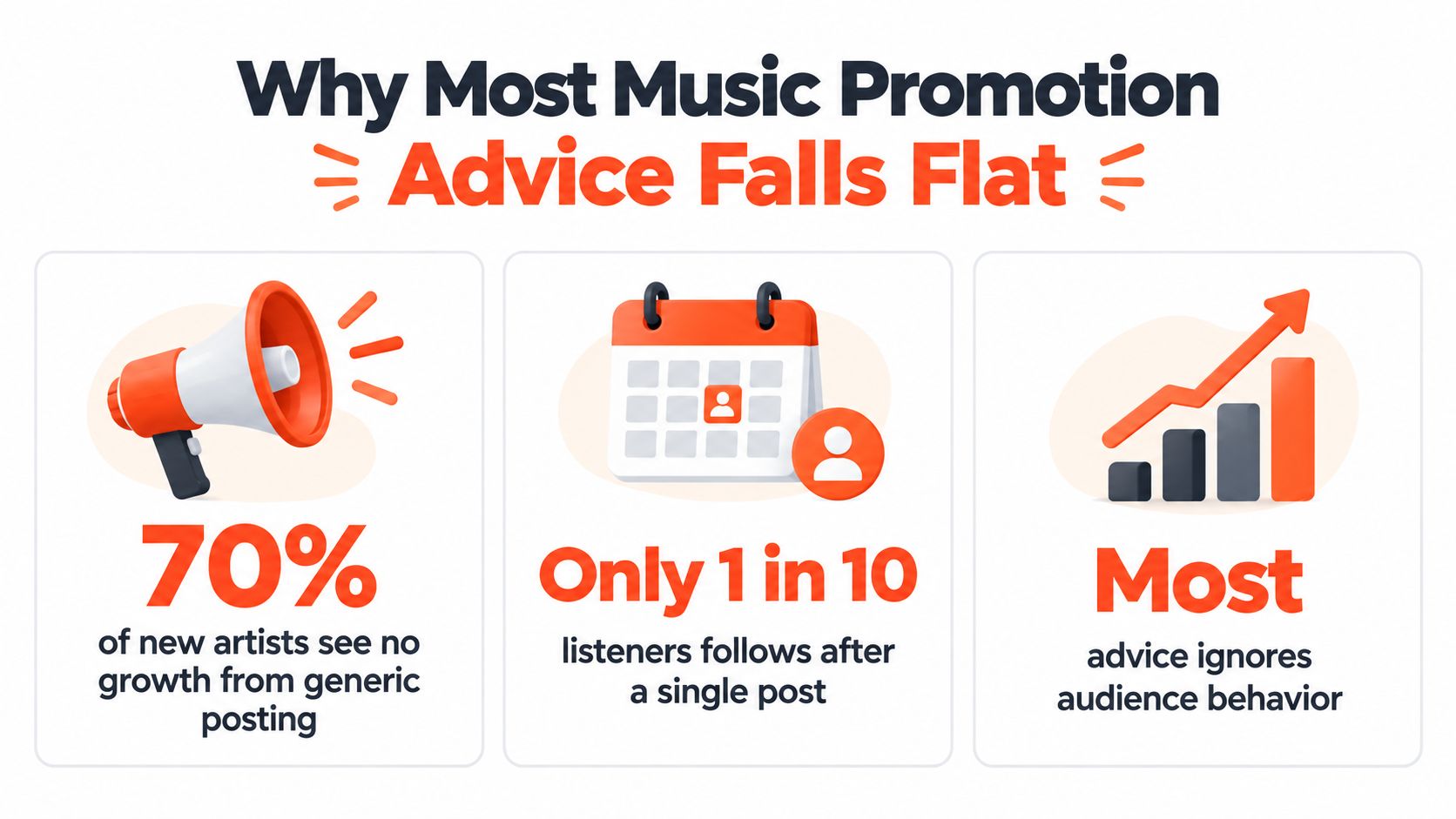
Table of Contents
- Why Most Music Promotion Advice Falls Flat
- A Release-Phase Playbook for Independent Artists
- A SoundCloud Daily and Weekly Workflow That Builds Real Listeners
- Choosing the Right Channels Beyond SoundCloud
- Measuring Promotion the Right Way
- Your Operating Rhythm and Mistakes to Avoid
Why Most Music Promotion Advice Falls Flat
The usual advice in music marketing is lazy. Post more. Stay consistent. Hit every platform. Hope something sticks. That creates activity, not memory, and activity without audience fit just burns time. A post that reaches the wrong listeners is still noise, even when it earns likes.
Qualified discovery works better. MIDiA's consumer research found that 87% hear music on social media, but more than half first encountered that music elsewhere, with YouTube named by 52%, streaming services by 40%, and TikTok by 37% as main discovery sources. Discovery moves across channels before anyone commits.
Practical rule: promote to listeners who already have context for your sound. If they follow adjacent artists, your odds are better than if they are random scrollers.
Awareness is rarely the problem. The work is moving a listener from one impression to a profile visit, then to a follow, a save, and another play. Streaming-heavy promotion fails when it stops at reach, because reach alone does not build a catalog audience. Every touchpoint needs a next step.
A Release-Phase Playbook for Independent Artists
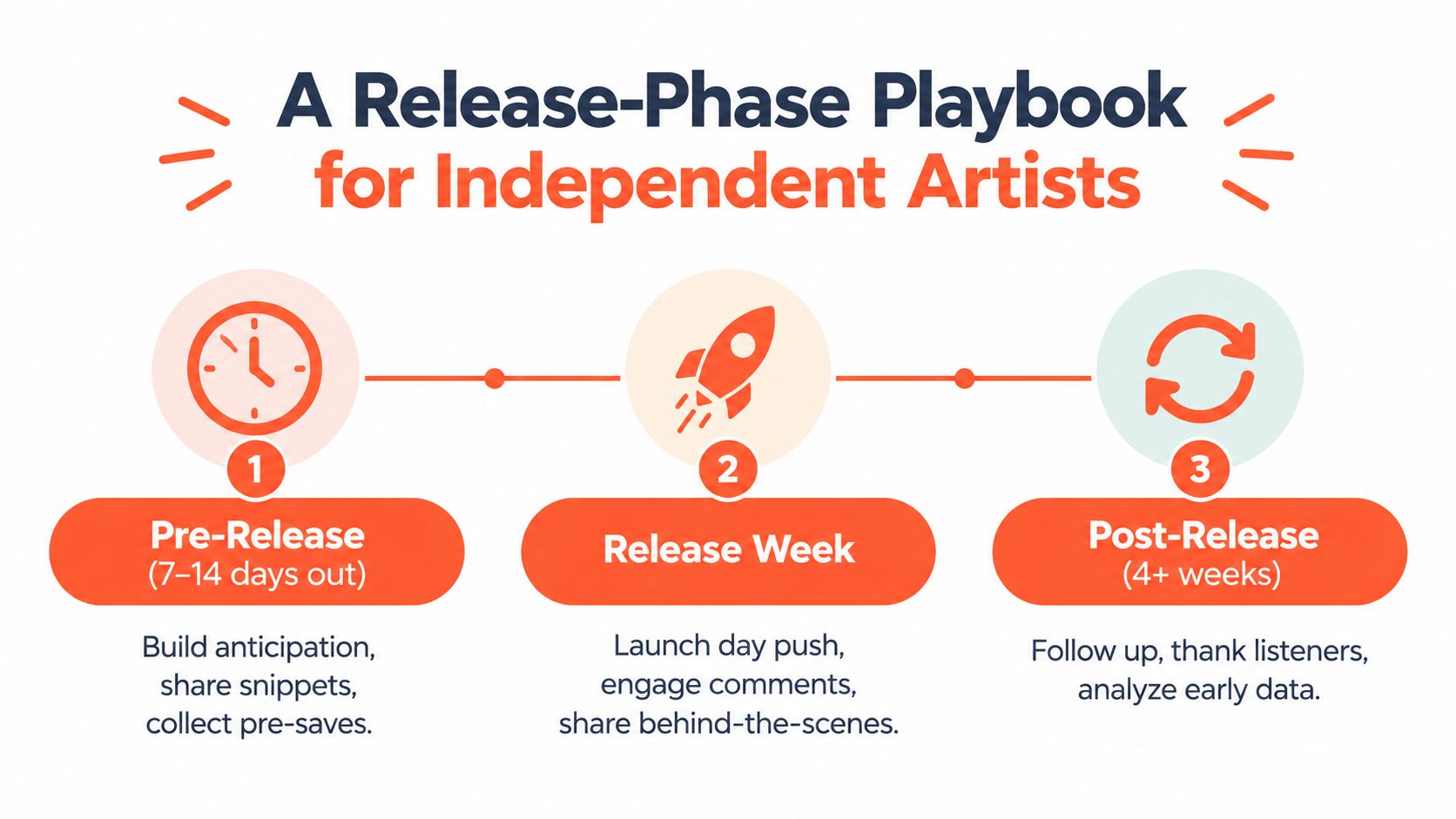
Promotion should follow the release cycle, not your mood. Start with one audience segment, one destination link, and one action you want people to take. That keeps the campaign readable, which matters more than volume.
Pre-Release
Seven to fourteen days before release, define the listener you want. Don't write for everyone who likes music. Write for the people who already follow the scene around your track, then build one smart link with tagged sources so you can see where clicks come from. Short previews, snippets, and teaser clips should point to a follow, pre-save, or profile visit, not just another empty view.
Release Week
This is coordination week, not panic week. Send creator outreach to people who already engage with similar artists, post in your own communities, submit to playlists, and message listeners who are already warm. If you want a deeper step-by-step companion on release visibility, the guide to promoting tracks for karaoke channels is useful because it shows how to match a track to an audience without guessing.
Use the first week for momentum, not invention. The track is done. Your job is to keep qualified people moving toward it.
Post-Release
Don't go quiet after the drop. Spotify reports that 75% of a release's first-year streams happen after the first month, and artist profiles get 77% more visits when new music drops, which makes the following weeks a real acquisition window (Spotify new releases study). Keep retargeting, keep clipping content, and keep sending listeners back to the same release path. For a workflow template, the independent artist marketing guide is a good companion if you want to turn that timing into repeatable operations.
A sane release calendar looks simple. Build anticipation before the drop, execute hard during the week, then extend the conversation for at least four weeks after. That's where the listeners are still deciding whether they care.
A SoundCloud Daily and Weekly Workflow That Builds Real Listeners
SoundCloud rewards active, relevant behavior, not passive uploads. That matters because music released in the previous 18 months accounted for 46.5% of SoundCloud listening, compared with 26.7% across the wider industry, so the window for new uploads is short and real (DIMA streaming report). If you're using SoundCloud, act like timing matters, because it does.
Start With the Profile, Then Work the Scene
Audit the profile before the campaign starts. The artwork, bio, links, and pinned track should make sense to someone who has never heard you. Then pick target artists based on genre fit and active community, not just fame. Big names attract casual curiosity, but active scenes attract listeners who follow through.
A controlled routine beats random clicking. A tool like SCHelper can be one option here because it uses SoundCloud OAuth, curated listener recommendations, and manual confirmation for batch actions, which keeps the workflow closer to human behavior than to aggressive automation. That matters, because speed without relevance just bloats your numbers.
A 20 to 40 Minute Daily Routine
Use the same block every day, because repetition is what makes the data usable.
- Review fresh recommendations from listeners who already follow similar artists.
- Check each account quickly for relevance, recent activity, and fit.
- Batch follow only the best matches, then stop.
- Leave comments and reposts on tracks that sit close to your sound.
- Exclude accounts you've already touched, so your list stays fresh.
If your platform routine is a mess, the weekly content system article is helpful as a planning reference because it shows how to keep creative work from eating the whole week.
Daily guardrail: don't blast out mass actions. Short, confirmed batches are easier to track and safer to evaluate.
Weekly Cleanup and Review
Once a week, clear out the dead weight. Remove unresponsive follows, check which target artists produced profile visits, and note which comments got replies. Multi-account users should keep profiles separate and reviewed separately, because mixed activity makes it hard to know what's working.
This is a human-paced game. You're not trying to look busy, you're trying to look relevant to the right listeners over and over again. That's what turns SoundCloud from a dumping ground into a discovery channel.
Choosing the Right Channels Beyond SoundCloud
Stop forcing every release through the same outlet. Each channel has a job, and mixing those jobs burns time. SoundCloud is built for scene discovery and relationship-building, short-form video is built for reach, streaming profiles are built for catalog conversion, and email or Discord is built for ownership.
Keep the stack small. Two or three channels is usually enough, especially if you have only a few hours a week. Your genre and your capacity should decide the mix, not your ambition. Here is the simplest way to split the work.
| Channel | Best For | Typical Time Cost | Key Metric to Watch |
|---|---|---|---|
| SoundCloud | Genre-specific discovery and real-listener growth | Daily short block | Follows and repeat plays |
| TikTok, Reels, Shorts | Fast awareness and hook testing | Clip creation and posting | Profile visits and saves |
| Spotify for Artists, Apple Music | Catalog depth and saving behavior | Release setup and profile upkeep | Saves, playlist adds, and profile taps |
| Email, Discord | Owned relationships and direct updates | Weekly writing and replies | Opens, replies, and clicks |
Short-form video opens the door, but it rarely closes the deal on its own. The audience may see a clip and still discover the artist later through another channel, which is why the clip needs a clear destination. For artists who want video to pull listeners deeper, the how to boost YouTube views guide is useful because it shows how discovery and search can support each other instead of fighting for attention.
Read the SoundCloud vs Spotify comparison once, because the two platforms serve different use cases. Use SoundCloud for active scene contact and faster feedback. Use Spotify and similar streaming profiles for catalog depth, saving behavior, and profile-based conversion.
Pick the channel that matches the listener behavior you need. If you want depth, build around streaming profiles and owned communities. If you want scene contact, stay close to SoundCloud and keep the workflow human-paced, the kind of controlled routine SCHelper is made for. If you want reach, use short-form video, then send people somewhere you can keep them.
Measuring Promotion the Right Way
If you only look at plays, you're reading the wrong report. Plays tell you someone clicked. They don't tell you whether that person cared, saved the track, or came back later. The better question is whether your campaign moved listeners down the funnel.
What to Track and When
Build a weekly dashboard with reach, unique listeners, average plays per listener, saves or likes, playlist additions, reposts, comments, profile visits, and follows. Then check it in three passes, after 24 hours, after 7 days, and after 28 days. The point is not to worship the biggest number. The point is to see where the drop-off starts.
Spotify says saves and playlist adds are associated with a 2.5x increase in streaming six months later, which makes them stronger long-term signals than a temporary spike in plays (Spotify campaign results guide). Treat that as the serious metric. A quick view spike is nice. A save is a clue that someone may come back.
Measure intent, not noise. If a campaign gets attention but no saves, no follows, and no repeat plays, it didn't create fans.
How to Read the Numbers
Change only one variable per campaign. Keep the artwork stable, keep the landing page stable, and test one audience segment or one message at a time. That makes the result interpretable. If you change everything, you won't know what caused the lift or the drop.
For SoundCloud and similar workflows, route each discovery source to its own link or landing variant, then compare follower growth with repeat plays and comments. If a source brings lots of clicks but weak retention, cut it. If a source consistently produces profile visits and follows, double down there. The music marketing tools resource is useful as a shopping list only if you already know what metric you're trying to move.
Avoid buying streams, running bots, or blasting untargeted outreach. Those tactics pollute your baseline, and once the baseline is dirty, every future decision gets worse. Clean measurement is the only way to know whether your promotion built an audience or just created a fake bump.
Your Operating Rhythm and Mistakes to Avoid
Keep the rhythm tight. Daily, do a focused discovery block, engage with the right accounts, and route people to one clear next step. Weekly, check profile visits, follows, saves, repeat plays, and source quality. Monthly, reset the release cycle, prune dead tactics, and prepare the next campaign without changing the whole system at once.
The biggest mistakes are predictable. Artists count impressions as fans, send untargeted mass messages, change artwork or links mid-campaign, stop outreach after release day, or optimize only for follower count. The fix is boring but effective, tighter targeting, stable assets, a longer follow-up window, and a dashboard that values repeat listening over vanity.
That boring discipline matters because most artists are working with very little room for error. A 2026 survey of 5,039 artists across 112 countries found that 74% earned under $1,000 in 2025 and 67% said social video platforms were their route to new audiences, which is exactly why repeatable, low-cost workflows matter (artist survey). You do not need a flashier plan. You need a plan you can run again next week without guessing.
If you want a tighter daily system for SoundCloud growth, SCHelper is built around curated listener discovery, manual batch actions, and controlled activity instead of noisy automation. Use it if you want your promotion to look like disciplined audience-building, not random platform churn.