
How to Get More Views on SoundCloud in 2026
More than 400 million tracks and approximately 40 million active creators are on SoundCloud, according to a SoundCloud editorial guide on promoting music. This is the context for how to get more views on SoundCloud. You're not uploading into a quiet room where good music gets found by default. You're placing one file into a crowded catalog and asking busy listeners to stop.
That scale changes the job. A view by itself is a weak result if the listener leaves, says nothing, and never returns. The useful win is a relevant listener who plays the track, reacts in public, saves it for later, or comes back for a second listen. I would build every release around that distinction, especially during the first 48 hours, when early reactions carry more weight than the same reactions dribbled in over weeks.
Table of Contents
- Signals That Earn SoundCloud Views
- Profile Setup That Makes Tracks Findable
- How to Use the First 48 Hours
- Playlists Outreach and Off Platform Shares
- Build a Weekly Repeat-Listener Routine
Signals That Earn SoundCloud Views
Uploading doesn't create an audience. It creates a page that an audience can find, judge, and share. Views grow when people who already like your lane hear the track early and leave evidence that they cared. A play from someone outside your genre might lift the counter for a day, but it doesn't teach SoundCloud who should hear you next, and it rarely brings that listener back.
Think in signals, not just plays. SoundCloud describes plays, reposts, saves, comments, and playlist additions as actions that help determine which tracks receive further exposure. It also points to velocity, meaning strong interaction in the first two days can matter more than the same total spread slowly across several weeks. That gives you a practical target for a release. Don't chase every possible action from everyone. Pick the reactions that fit the track and earn them from the right listeners while the release is fresh.
Engagement signals that support more views
| Action | What it contributes | When it matters most |
|---|---|---|
| Play | Starts the view count and feeds recommendations | First 48 hours |
| Like | Public reaction that supports further exposure | First 48 hours |
| Repost | Shares the track onto another profile | First 48 hours |
| Comment | Public proof someone actually listened | First 48 hours and after |
| Save | Marks interest alongside other engagement | First 48 hours |
| Playlist add | Places the track in another catalog | Ongoing |
| Download | Shows intent beyond a single play | First week |
| Repeat listen | Listener played the track more than once | Week after release |
A play starts the count, but it's the shallowest signal on the list. A like says the listener approved enough to attach their name to it. A repost is stronger still because your track lands on someone else's profile, in front of their audience, with their implied endorsement. A comment proves attention in a way a silent click can't, particularly when someone reacts to a vocal entry, a drop, or a specific lyric.
Saves and playlist adds work differently. They move your track into a listener's own collection, which makes a return visit more likely. A download shows intent past casual browsing, since the listener wants the file close at hand. A repeat listen is the signal I'd protect most after release week. It tells you the track survived the first impression and earned another play without a fresh push from you.
A spike from people who don't like your genre is not momentum. It's noise that looks like momentum in a dashboard.
SoundCloud's Amplify system shows how this logic works in practice. Eligible public tracks get tested with a small group of listeners whose taste appears to match, and a positive response can widen that exposure. Treat that first group as a test cohort, not a guaranteed view total. If matched listeners skip quickly and leave nothing behind, the track has given the system little reason to push it further. If they play, react, and share, you've supplied evidence.
Before your next release, circle two signals to chase on purpose. A club track might aim for reposts and playlist adds from DJs in the same scene. A vocal record might aim for comments and repeat listens, since lyrics and hooks give people something to return to. Then ignore the vanity spike. If a burst of plays arrives from accounts with no connection to your sound and produces no comments, saves, or second plays, don't build your next move around it. Build around the listeners who behaved like future fans.
Profile Setup That Makes Tracks Findable
Your profile is where a curious listener decides whether one play becomes a deeper look. If that page is vague, empty, or hard to read, you'll waste traffic you worked to earn. SoundCloud's audience growth guidance recommends a complete artist profile with a photo, biography, links, and featured content, backed by consistent promotion and genuine interaction. Set that foundation before you share the next track, not after people start arriving.
Start with a clear square photo that still reads at small sizes. A busy group shot or a dark stage photo often turns into a blur in search results and feeds. Use one face, one logo, or one strong visual mark. Then write a three line biography that does real work. Name your genre, your city or scene, and one current release someone should hear first. Skip the life story and the list of every influence you've ever had. A new listener needs orientation, not a memoir.
Add working links and keep them tight. I'd include a mailing list and one social profile you maintain, rather than six destinations that split attention. Test every link yourself, logged out, on your phone. Broken links and outdated handles make an active artist look inactive, and that first impression is hard to undo.
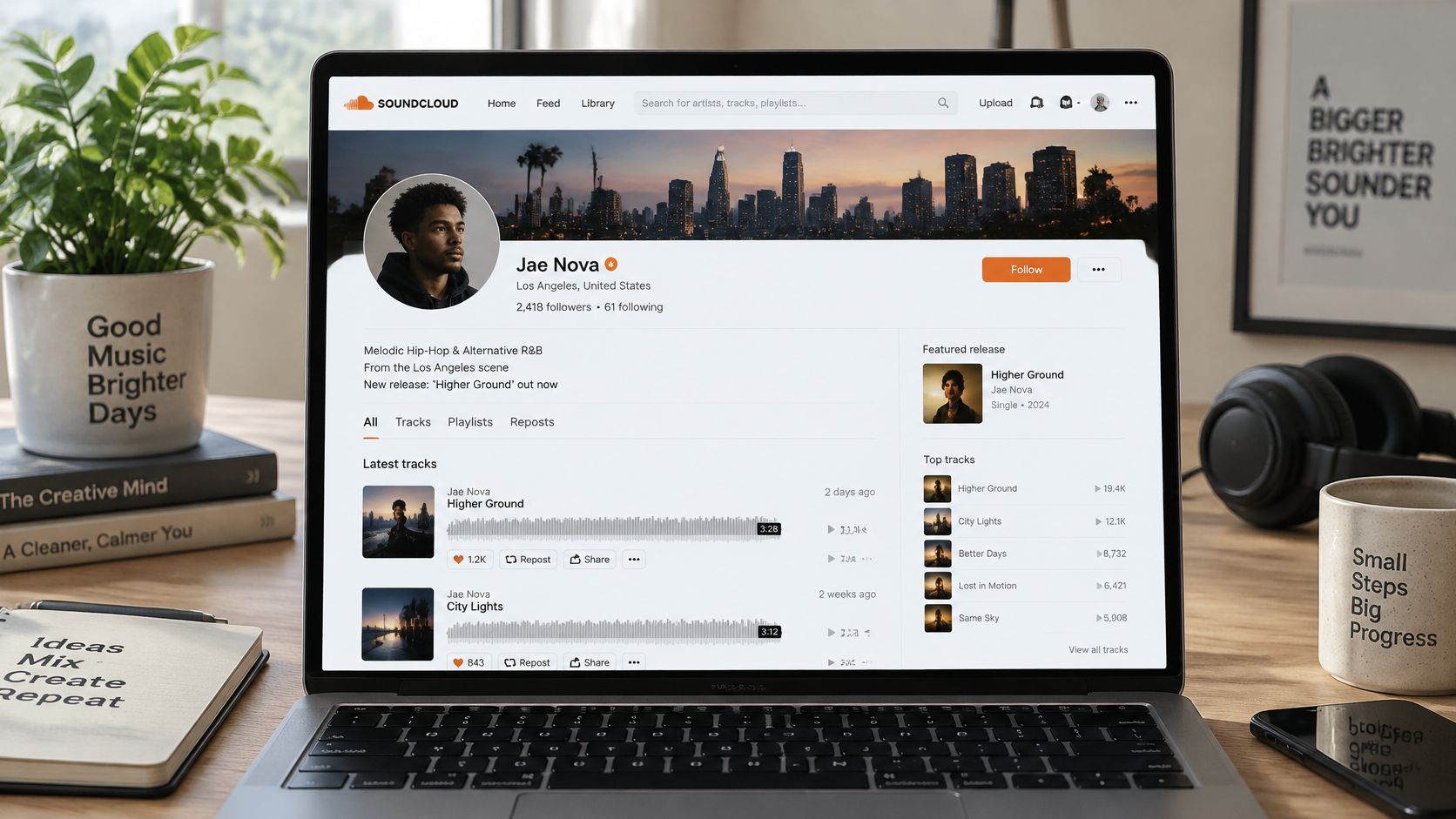
Track pages listeners can actually find
Now set up the track page itself. Your title, tags, and description should use the genres and moods a fan would type into search. If you make UK garage with a soulful house feel, say so plainly. Don't pile on unrelated styles hoping to catch stray searches. Mismatched tags bring mismatched listeners, and mismatched listeners skip. That hurts more than it helps.
Write a description that tells the right person the track is for them. Two or three sentences is enough. Name the mood, the setting, or the kind of set or playlist it belongs in, and credit collaborators properly. A listener who recognizes their taste in your description is more likely to press play and stay. For a broader view of presenting yourself on the platform, our guide to SoundCloud for artists covers the artist side of the setup.
What to feature and what to fix
Say a house producer in Manchester pins a vocal edit that already earns comments whenever it's shared. The bio names the city and the sound, the links point to a mailing list and one active social profile, and the track is tagged UK garage and soulful house. That page tells a stranger exactly where they are within seconds. Compare that with a profile that leads with an unfinished demo, a blank bio, and tags spanning five unrelated genres. The second page asks the listener to do the work, and most won't.
Check the audio presentation too. Trim the opening seconds if the track takes too long to say anything. A long, quiet intro can end the session before the hook arrives, and you'll never get the second play you're hoping for. Look at your artwork at thumbnail size, on a phone, in bright light. If the title disappears or the image turns muddy, simplify it.
SoundCloud's guidance also points artists toward their numbers, including listener locations, how fans found the music, and which tracks generate the strongest engagement. Use Insights after each push to confirm your setup is working. If listeners arrive but don't move to a second track, your featured pick or bio may be the problem. Finish with a simple pre-share pass every time. Photo, bio, links, featured track, genre and mood tags, and a description that says who the track is for. That five minute check protects every view you earn later.
How to Use the First 48 Hours
Treat the first two days as a measurement window, not a waiting room. You're not hoping the catalog notices your file. You're running a small, controlled test with the listeners most likely to care, then reading the result with clear insight. That mindset is the difference between a release plan and an upload.
SoundCloud states in its recommendations transparency report that its systems use listener interaction history, including plays, likes, and reposts, and can recommend tracks to people with similar listening behavior. Amplify starts with an initial cohort of approximately 100 listeners whose profiles align with the track, and autoplay also draws on activity and listening history. Neither figure is a promised play count. Both tell you the same thing. Early behavior from the right people shapes who gets matched with you next.
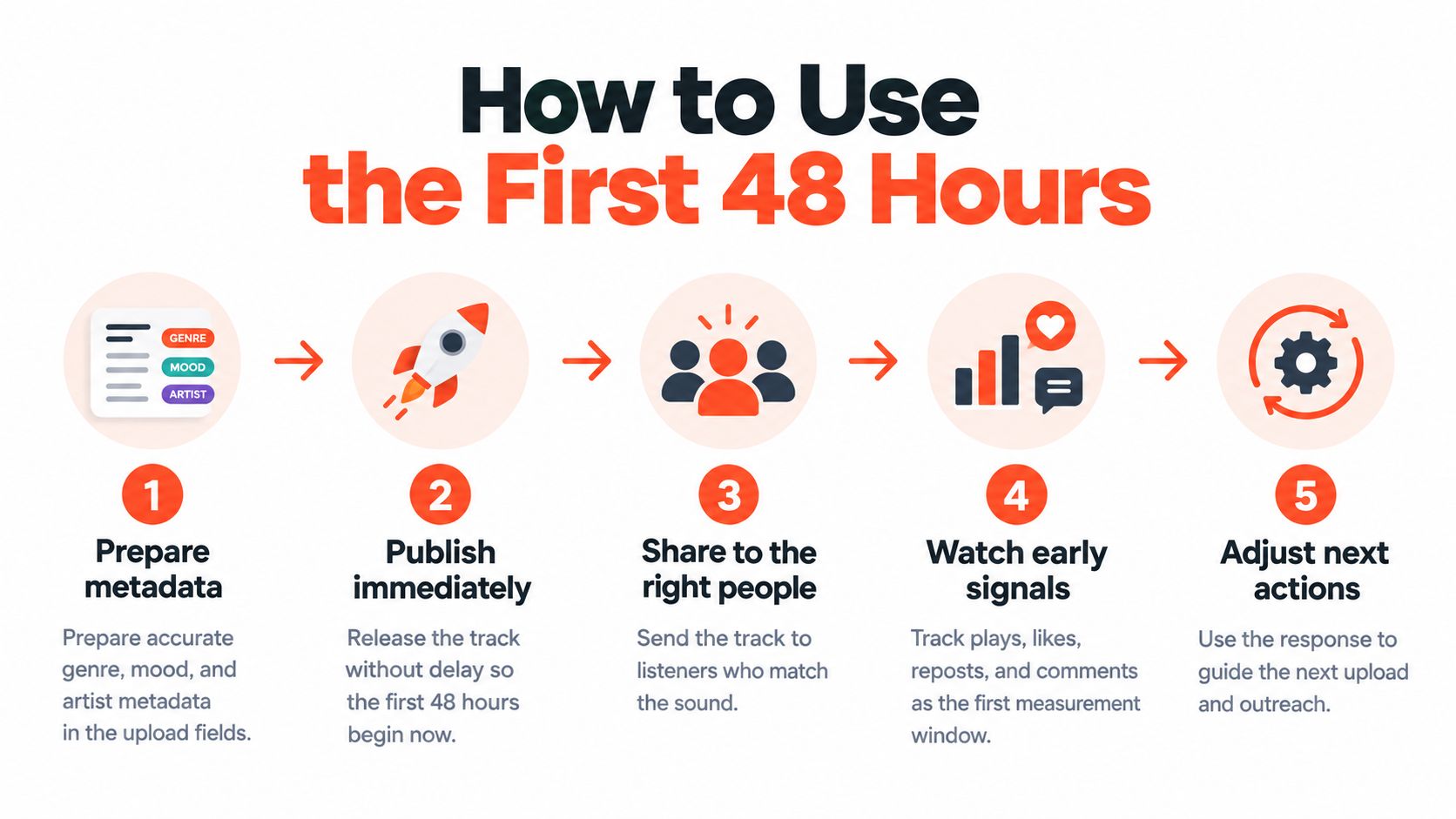
The five step release workflow
Prepare your metadata first. Put accurate genre, mood, and artist details in the title, tags, and description before the track goes public. This is how search and recommendations place you. The common slip is uploading in a rush and fixing tags three days later, after the window has already closed.
Release when you can work the release. Pick a time when you can stay available to share the link, reply to comments, and talk about the track. Don't drop it at a random quiet hour because the file happens to be finished. If you're about to disappear into a shift, a flight, or a weekend offline, wait.
Send it to matched listeners in the first 24 to 48 hours. Go to people who already fit the sound and the scene. Your mailing list, past commenters, DJs who play this style, and fans of nearby artists are worth more than a general blast. A small group that likes this kind of record gives you cleaner signals than a large group that doesn't. Our breakdown of music release strategy goes deeper on timing a release around your availability.
Ask for a real reaction, not a favor click. Once someone has heard the track, it's fair to ask for a genuine like, repost, comment, or playlist add. Ask people who listened, and make the ask specific. What did you think of the second drop. Would this fit your warm up playlist. Skip untargeted blasts to people who've never shown interest in your sound. They produce silence, and silence in this window is data you don't want.
Review before you repeat. After the window, look at play through and engagement before running the same plan on the next track. Compare reactions, not just totals. A track with fewer plays but more comments and saves per play is telling you something better than a track with a big empty number.
Two ways artists waste the window
The first pitfall is manufacturing attention. Say a producer buys a burst of irrelevant plays on release day. The counter moves, the screenshot looks good, and nothing else happens. No comments, no saves, no second plays, no new listeners who match the genre. Those plays don't create the interaction patterns recommendation systems use, so the track stalls as soon as the purchased burst ends. You've spent money to make your data less honest.
Practical rule: Judge the first 48 hours by qualified engagement, not views alone. Who reacted matters as much as how many arrived.
Close the window with a simple scorecard. Write down plays, likes, reposts, comments, and downloads, and note whether those people came from your target scene. Save that record for every release. After three or four tracks, you'll stop guessing. You'll know which intros hold people, which tags pull the right crowd, and which listeners reliably show up early. That's the start of a repeatable system for how to get more views on SoundCloud, rather than a fresh hope attached to every upload.
Playlists Outreach and Off Platform Shares
Discovery works best in separate lanes, each aimed at people with a reason to care. Mixing everything into one frantic posting spree makes your results impossible to read. Keep playlisting, scene outreach, and off-platform sharing distinct, and you'll know which lane brought listeners who stayed.
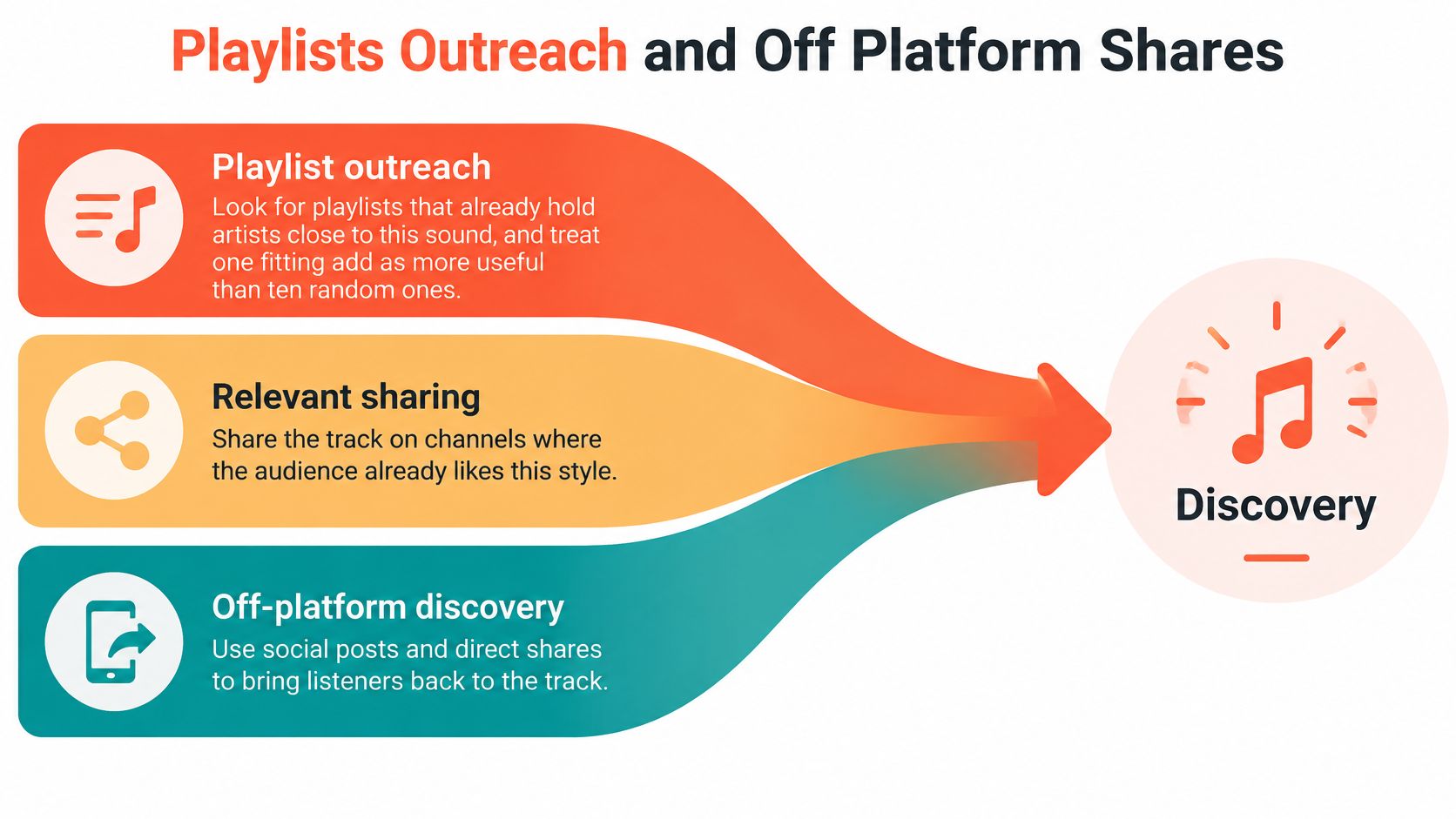
Playlists that fit beat playlists that are big
Look for playlists that already hold artists close to your sound. One fitting add is more useful than ten mismatched lists, because the listeners around your track are already in the right mood and genre. A huge playlist in the wrong lane delivers skips. A modest playlist in your exact scene delivers plays that turn into saves and comments.
Keep the pitch short and specific. Name your track, name the mood, and say why it belongs next to a particular song already on that playlist. That last detail proves you listened. Curators can spot a copy and paste pitch instantly, and most delete them on sight. If you can't explain the fit in two sentences, the playlist probably isn't right for the track.
Scene outreach with a real reason
Your own scene is the second lane. Reply to comments on your tracks promptly and like a person, not a press release. Leave a specific comment on a peer's new release, about the mix, the writing, or a moment that landed. Tell DJs, small blogs, and group chats that already play your style when something new is out. These are relationships, not distribution channels, and they compound when you show up between your own releases too.
Start by choosing a few target artists whose listeners already match your sound and scene. Then look for real people in that audience, the ones who comment, repost, and build playlists around this music. That focus keeps your outreach relevant and your profile credible. Our guide to online music promotion covers how these channels fit together across platforms. For artists who also want a presence beyond a single platform, you can join OohYeah as an artist to put your work in front of listeners through another route while you build on SoundCloud.
Bringing listeners in from outside
The third lane starts off SoundCloud entirely. In 2024, 82% of Gen Z and 70% of millennials reported discovering new artists or music through social media or user-generated video sites, according to Deloitte's Digital Media Trends study. Your next listener is probably scrolling somewhere else right now. Meet them there.
Cut a 15 second hook from the strongest moment of the track. Post it where your kind of listener already watches, with the SoundCloud link easy to reach. Don't post the intro because it's the beginning. Post the part that makes a stranger stop. Then watch whether those outside clicks turn into full plays and reactions, or whether people bounce at the track page.
Say a hip-hop vocalist posts the hook on the morning of release, filmed with the track title on screen. That same day, three playlist curators get a short pitch naming the exact song their list already holds that sits beside this one. Every comment on the SoundCloud track gets an answer before the day ends. None of that is glamorous. All of it is targeted, and each lane can be judged on its own results.
Finish with a source check in Insights. Look at whether new plays came from a playlist, a profile visit, or an outside link. That tells you where to spend next week's effort. If the playlist lane brings listeners who save and return while social clicks bounce, you have your answer. Spend more time on curators and less on clips, or fix the track page those clicks land on. Discovery isn't about posting more. It's about learning which door your real listeners walk through.
Build a Weekly Repeat-Listener Routine
A smaller group that returns can do more for your recommendations than a large burst of low intent traffic. That runs against most advice on how to get more views on SoundCloud, which treats the play counter as the score. But SoundCloud's audience growth documentation distinguishes total plays from deeper signals such as likes, reposts, comments, downloads, and repeat listening, and it identifies repeat listeners as people who played a track multiple times. The second play is where casual traffic separates from an audience.
This matters most for independent artists whose release day produces a busy spike and then silence. If nobody comes back, you don't have momentum. You have a one day event. The fix is a weekly routine that measures return behavior and feeds it, instead of launching each track from zero and hoping the spike lasts longer this time.
Run one experiment a week
You don't need new ads or a bigger budget. You need a notebook, your Insights, and the discipline to change one variable at a time.
Record the basics for each current track. Write down plays, likes, reposts, comments, and downloads once a week, on the same day. Consistency matters more than sophistication here. A simple spreadsheet you've kept for two months beats a dashboard you glance at and forget.
Separate first plays from repeat plays. This is the split most artists never look at. A track can win on total plays and lose badly on returns. Knowing the difference changes which track you promote next.
Flag the quiet overperformers. Mark any track with an unusually high repeat or comment rate, even when its raw play count is lower than your biggest number. That track has found its people. It deserves your next share, your featured slot, and your playlist pitches.
Change one thing only. Adjust the artwork, shorten the intro, rewrite the description, or feature a different track. One change per week. If you alter four things and the numbers move, you've learned nothing you can repeat.
Aim the next outreach at lookalike listeners. Take the track that earned returns and put it in front of listeners of similar artists, the people most likely to react the same way. You're no longer promoting to everyone. You're extending a proven match.
Reading the edge cases honestly
Two patterns will test your discipline. The first is a track with thousands of plays and almost no likes or comments. That's a traffic quality problem, not a promotion volume problem. Don't answer it by posting the same link harder to the same wrong audience. Ask where those plays came from, whether the tags promised the wrong genre, and whether the intro loses people before the hook. Fix the match before you spend more effort.
The second pattern is the opposite. A quiet track that a handful of people replay and comment on looks unimpressive in a screenshot. Promote it anyway. Those few listeners are showing you exactly who the track is for. Find more people like them, in the same scenes and around the same artists, and let the audience grow from a base that returns.
Chase the second play, not just the first view. A listener who returns is worth more than a crowd that passes through once.
The daily habit between releases
Between releases, keep a short daily review instead of going silent. Pick a focused batch of listeners tied to your genre and scene, and spend the session only on people likely to visit your profile and press play. Keep the daily volume modest, so every public like, repost, or comment on your account looks like it came from someone who genuinely likes this music. Your activity is visible. It should read like taste, not effort.
This is the part we built SCHelper to support. Each day, SCHelper gives you a focused batch of recommended listeners selected around your genre, scene, and target audience. You review each batch yourself and decide who fits. It connects through SoundCloud OAuth and doesn't store your password, and SCHelper is not affiliated with SoundCloud. For steady growth, the 3-month subscription costs $26.99 and is recommended for steady audience building. Treat it as support for the release plan you've built here, not a replacement for it. The tracks, the profile, and the first 48 hours still do the heavy lifting.
If you're ready to turn that weekly routine into a daily habit, SCHelper gives you a focused batch of recommended listeners around your target artists each day, so you can review real people in your scene and spend your session where a second play is most likely. Connect securely through SoundCloud OAuth, keep control of every choice, and build the repeat listeners your next release deserves.