
How to Get More Listeners on SoundCloud in 30 Days

Treat each promotion tactic as one step in that journey. A spike in plays can look encouraging, but return plays and saves give you a better test of whether someone wants more than a passing listen.
Table of Contents
- Where Your Plays Leak Before They Become Listeners
- Run Your First 30 Days and Decide What to Keep
- Finding Listeners Who Already Match Your Sound
- Engagement That Keeps Listeners Coming Back
- Planning Releases That Bring Listeners Back
- Diagnosing Plays That Never Become Listeners
Where Your Plays Leak Before They Become Listeners
| Metric | Where to find it | What it tells you |
|---|---|---|
| Stream sources | Insights stream sources breakdown | Whether plays come from new listeners or only existing followers |
| Plays from external visits | Stream sources, external referrals | Which link or post brings people to the full track |
| Followers gained per release | Insights follower conversion | |
| Saves, reposts and comments | Track-level engagement | Signals of listeners who are likely to return |
| Listener geography | Insights location data | Whether listeners match your target scene or market |
Before publishing, give the track a searchable title, accurate genre and mood tags, and a descriptive summary. Then share a short preview elsewhere that points directly to the full SoundCloud track. SoundCloud's promotion guidance recommends reviewing where plays originate, which tracks earn engagement, and whether listeners become followers. Use the same tracking window for each release so the comparisons mean something.
Two checks are especially useful. If almost all plays come from existing followers, you have a discovery gap. If new sources bring plays but saves and reposts stay flat, look at the track and profile: the sound may not be connecting, or a new visitor may not see what to listen to next.
Run Your First 30 Days and Decide What to Keep
A month-long workflow works best when each change has a job. Don't overhaul your profile, tags, and promotion channels at once, or you won't know what made the difference.
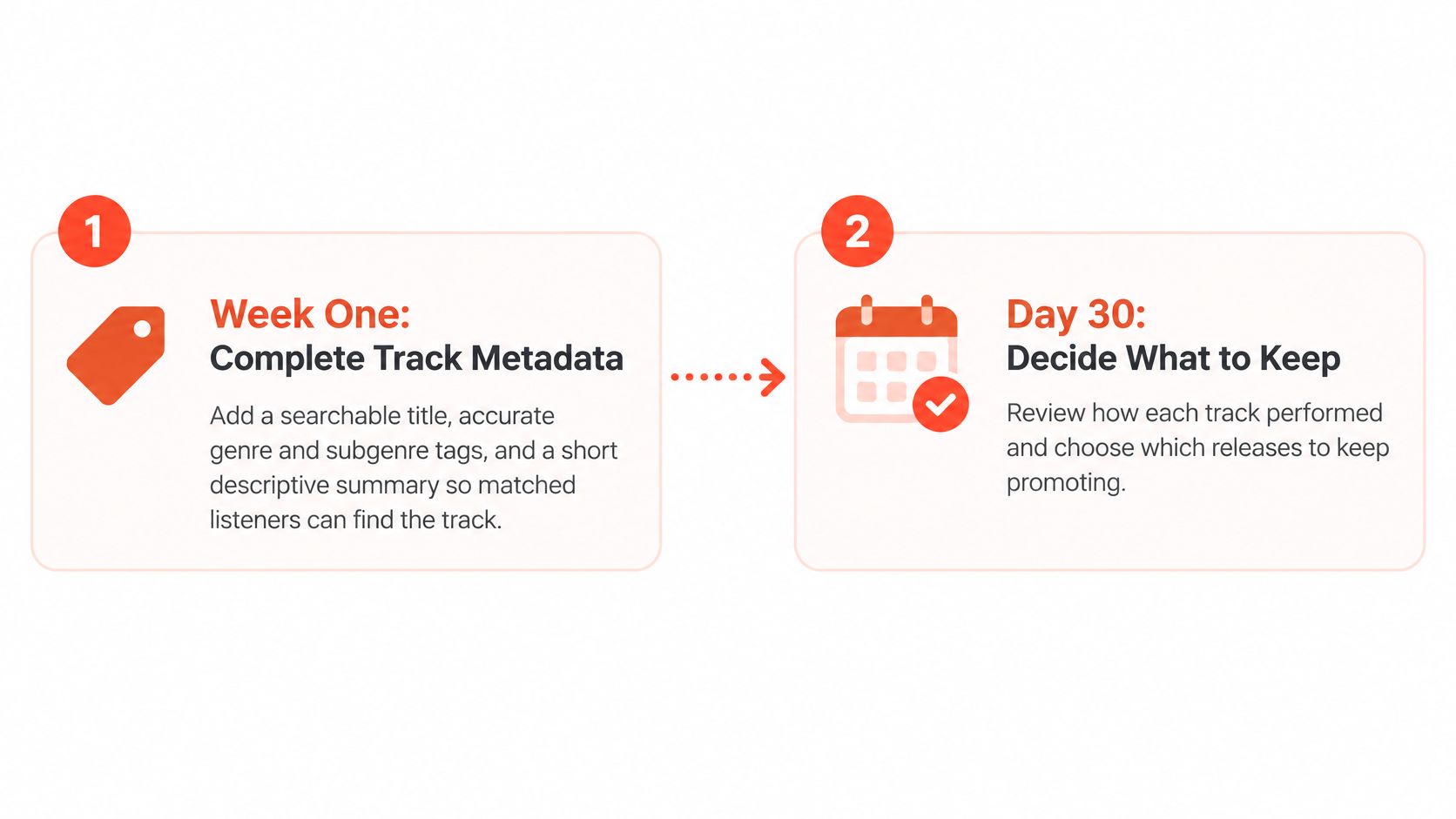
Week one, finish the track page. Use a searchable title, accurate genre and subgenre tags, and a short summary that describes the music plainly. Vague tags make it harder for the right listener to recognize the track. A common mistake is adding broad or fashionable tags that don't fit the sound.
Set your baseline before changing anything. Record plays, followers, saves, and external visits for the two weeks before your new approach. Keep those figures separate by track and channel. If you skip this step, you won't have a meaningful comparison at the end of the month.
Week two, build a reference shortlist. Choose six to ten artists whose music and audiences are relevant to yours. Include a few larger names, but prioritize peers whose listeners could realistically connect with your profile. The next section covers how to qualify them.
Weeks two and three, review a small batch each day. Keep the session under an hour. Listen to a full track before interacting, and leave a specific comment only when you have something genuine to say. Generic praise can make a real visit feel like a pitch rather than a conversation.
Share a short preview outside SoundCloud. Point the post to the full track, not a general profile page where the listener has to search for it. Check that the destination opens correctly on mobile. A preview that attracts clicks but leaves people unsure where the song is can waste the attention you earned.
Day 30 rule: Keep a channel that brings new listeners and repeat plays. Adjust one that produces plays without saves, and stop one that sends almost entirely existing followers. The point isn't to preserve every tactic; it's to keep the work that leads to a second listen.
This approach can support a fresh profile, promotion for mixes, or audience-building between releases. If you use SCHelper, each connected SoundCloud account needs its own active subscription. SCHelper connects through SoundCloud OAuth and doesn't store your password.
Finding Listeners Who Already Match Your Sound
Targeting only headliners is an easy way to spend time reaching listeners who won't recognize your sound or visit your profile. Choose six to ten reference artists whose audiences overlap with yours, mixing a few larger names with several peers. A peer's smaller but more focused audience can be more useful than a broad audience with little connection to your scene.
Use three checks before adding an account
- Did the listener play a full track? A full listen is a stronger clue than a passing profile visit.
- Do they share your scene? Look for related artists, sounds, and conversations, not just a matching broad genre.
- Does their profile show consistent listening? A focused pattern is more useful than a scattered mix with no clear connection to your music.
The best places to look vary by role. A DJ can check mix comments and label-run accounts. A hip-hop vocalist can look at playlist curators and producers who feature vocalists. A producer can explore remix threads and other producers' comment sections.
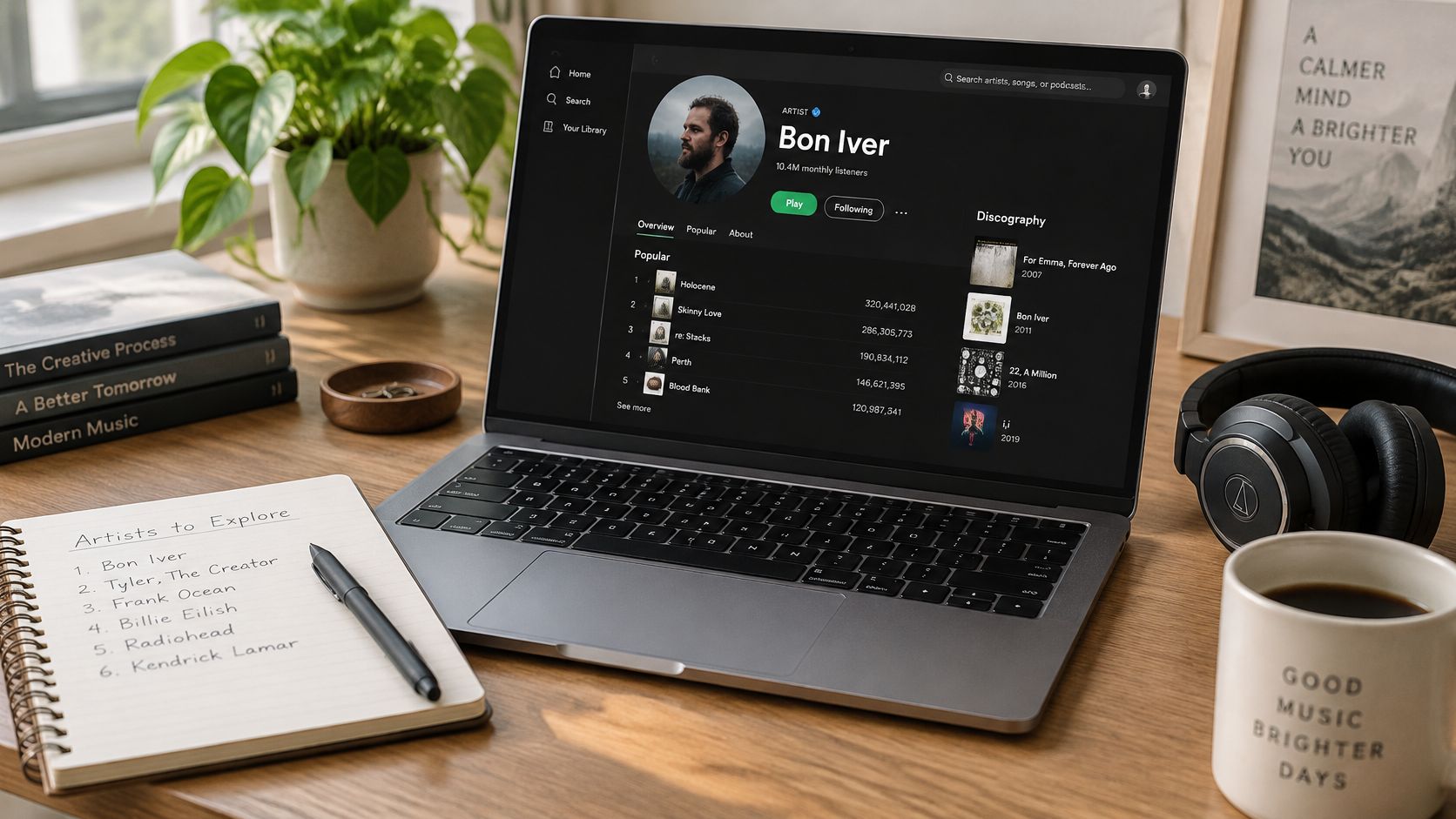
Keep a private list of accounts you've already engaged with so you can focus your attention on fresh, relevant listeners. Refresh the shortlist monthly. If a reference artist changes direction, their audience may no longer be a good fit. The useful target isn't the biggest name you can find; it's the set of listeners most likely to enjoy what you make next.
Engagement That Keeps Listeners Coming Back
A comment that names a real moment in a track is more likely to start a conversation than a generic compliment. The distinction is simple: specific feedback shows you listened; copy-pasted praise doesn't.
| Interaction | Good version | Version that reads as spam |
|---|---|---|
| Comment | Names a specific moment in the track and asks a real question | “Great track, love it,” pasted across many accounts |
| Repost | Shares only music that fits your audience | Reposts everything from a scene to get noticed |
| Direct message | Sent once, after a real interaction, naming their work | Template pitch sent to accounts you've never engaged with |
| Reply to comments | Answers within a day with a specific detail | Ignores comments or sends one-word thanks |
| Feedback on a track | Short, honest, and specific, given when asked | Generic praise that says nothing about the music |
A good comment could mention a drop or vocal line, then ask a question about that moment. Repost music only when it belongs beside your own work; your profile should still make your sound clear. Send a message only after an actual interaction, and mention the other artist's work by name. A pitch to someone who's never engaged with you often feels like an interruption, not an invitation.
The same principle applies to your own tracks. Reply to comments within a day when you can, and include a detail that makes the exchange feel human. For practical ideas that carry across platforms, Crowbert's guide to improve engagement across social channels offers a useful broader perspective. For a fuller view of how promotion fits into an independent artist's work, see this guide to independent artist marketing.
- Listen first: Hear the track before you reply or comment.
- Keep feedback honest: Make it short and specific when someone asks for it.
- Use your own judgment: Skip any interaction you wouldn't make by hand.
Ten specific interactions with listeners close to your sound beat fifty generic ones.
Planning Releases That Bring Listeners Back
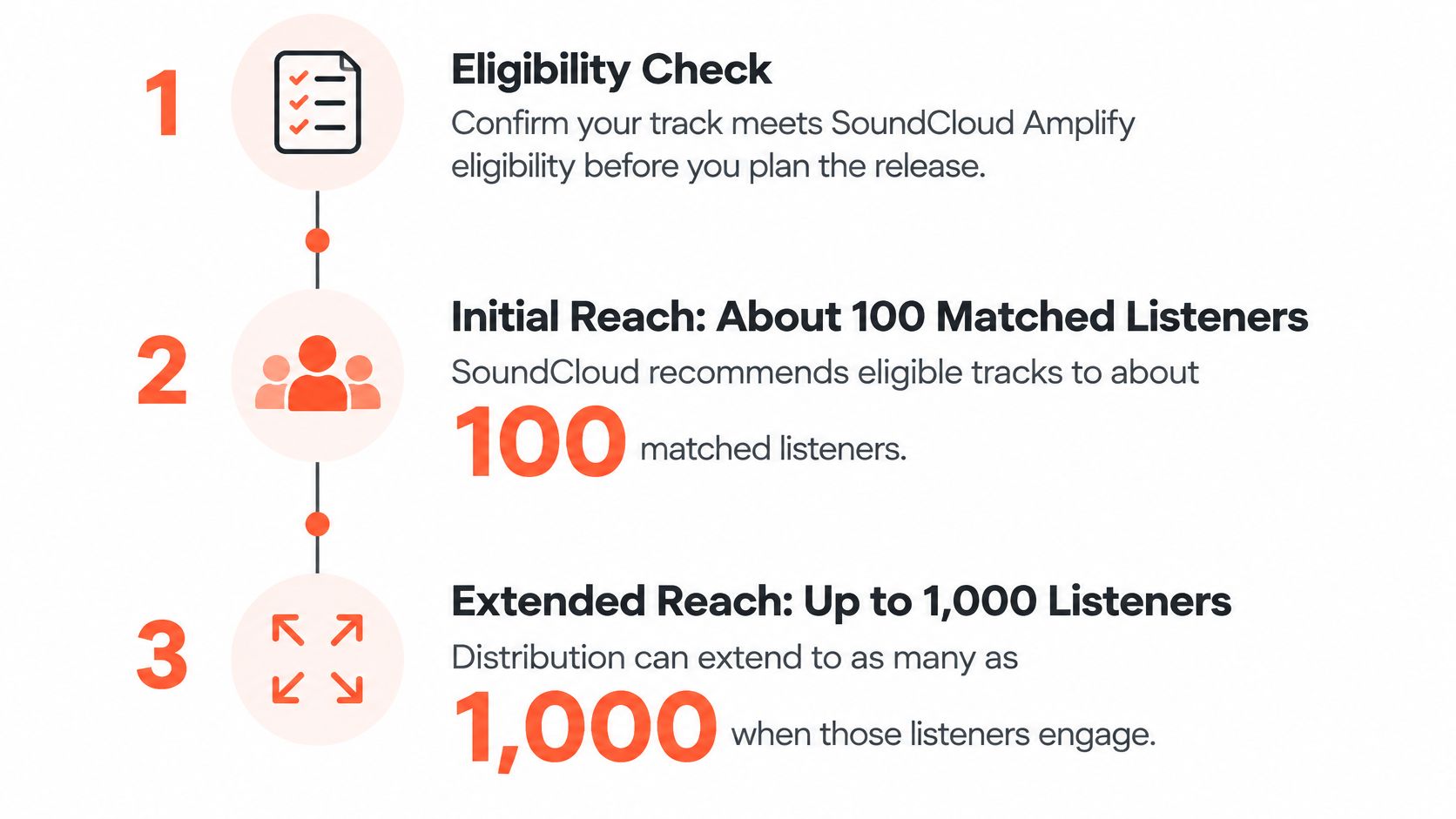
SoundCloud's Amplify discovery program recommends eligible tracks to approximately 100 matched listeners and can extend distribution to as many as 1,000 when those listeners engage. Eligibility requires an Artist Pro subscription and an eligible public track, according to SoundCloud's Amplify discovery guidance. Treat the paid tier as a decision to weigh against how your previous release performed, not a promise of a spike.
Build a release cycle around return plays
Two weeks before release: Send a teaser and a short preview to the audience around your reference artists. Make the path to the full track clear, and avoid sending the same broad announcement to people who haven't shown interest.
Release day: Publish the full track and make it the first thing visitors see on your profile. A new listener shouldn't have to guess which track represents you.
Days one to seven: Reply to comments and pay attention to saves and other responses. Those signals help you decide which audience is responding, rather than treating every play as equal.
Days eight to thirty: Check return plays against the first week. Before your next release, use listeners who saved or commented to inform the next shortlist. For more detail on sequencing and release preparation, see this guide to music release strategy.
Make returning easier. Use a consistent title pattern or series name so listeners can find the next track, and put one representative track where profile visitors will encounter it first. Pitch playlists only when your music fits their themes; a placement that brings the wrong audience may add activity without adding listeners who stay.
Diagnosing Plays That Never Become Listeners
A release-day spike that fades within a week often means promotion reached existing followers or relied on one post. Don't respond by adding more channels immediately. First identify which step failed, then change the smallest part of the path you can test.
| Symptom | Likely cause | Fix |
|---|---|---|
| Plays spike on release day, then fall within a week | Promotion reached only existing followers or one post | Shift to similar-artist listeners and post again one to two weeks later |
| Profile doesn't show a clear sound or a next listen | Put your most representative track first and sharpen genre tags and bio | |
| External clicks but no SoundCloud plays | Preview doesn't lead clearly to the full track | Link directly to the full track and check the link works on mobile |
| Followers rise, plays drop | New listeners sit outside your sound | Tighten reference artists and cut channels with low play-through |
| Saves and comments rise, no return plays | Audience is attached to one track only | Release a companion track in the same style within the next cycle |
| Responses fall after outreach increases | Volume has outrun relevance | Cut batch size, return to the closest reference artists, and pause outreach for a week |
Use one release to test fixes that are easy to change, such as moving the representative track or correcting the destination link. Give changes to your artist shortlist or release cadence a longer review, then compare results over the same window. If you're reviewing how SoundCloud fits into your wider presence as an artist, this guide to SoundCloud for artists can help you assess the profile and release workflow.
When conversion quality falls, cut volume and tighten targeting before you try a new channel.
SCHelper helps SoundCloud artists discover relevant listeners through daily curated recommendations based on their chosen artists, genre, and scene. If you want a more focused way to review potential listeners and build activity between releases, visit SCHelper.