
Build a SoundCloud Engagement Schedule That Lasts
An Engagement Schedule is simply a repeatable plan for when you connect with SoundCloud listeners. It's not about being online all day.
It gives audience work its own slot alongside recording, rehearsals, and releases.
Table of Contents
- What an Engagement Schedule Does for Artists
- Keep Your Engagement Schedule Manageable
- A Sustainable SoundCloud Engagement Schedule
- The Burst Trap Many Producers Fall Into
- Build a Rhythm You Can Recognize
- Judge Progress in Weeks, Not Sessions
- Favor Relevance Over Raw Numbers
- Compare Periods, Not Activity Counts
- Release Day Is the Start, Not the Finish
- Leave Room to Stretch
- Run a Daily Review You Can Sustain
What an Engagement Schedule Does for Artists
Think of it like studio time, but for listener relationships. You decide in advance when you'll introduce music, check reactions, and circle back to conversations.
That beats trying to cram everything into release night.
Say you're a DJ dropping a mix on Friday. You might scope out relevant listeners beforehand, then answer comments over the weekend. The same structure works if you're a producer with a three-track EP, a vocalist building a profile, or a small label running a campaign.
- Introduce new music with a clear reason to listen
- Stay present after release day by checking comments and profile activity
- Keep quieter weeks purposeful while you work on the next track or mix
Your weekly shape can stay simple. Do a short daily review of comments on your tracks and messages from active listeners.
Then add lighter checks for comments and activity on your own profile.
Keep Your Engagement Schedule Manageable
Pick a session you can actually finish on a busy recording day. Review new comments after breakfast, for example, then glance at recent plays before evening rehearsal.
SCHelper fits around that routine with guides for audience research and planning your daily listening review. Each plan covers one connected account, so a label should plan separately for each artist profile.
The goal is a repeatable habit, not the largest possible activity count.
That boundary matters. Your schedule is never permission for spam, fake engagement, abuse, or unauthorized access to someone else's account.
A Sustainable SoundCloud Engagement Schedule
Here’s a quick-reference view to keep your efforts steady from release week through the quiet stretches:
| Phase | Main Focus | Useful Horizon |
|---|---|---|
| Release week | Introduce the track and check responses | Launch through the first week |
| Later weeks | Continue manual listener outreach | Until the next campaign |
| Quiet stretch | Maintain profile and mix activity | Between releases |
Use it as a loose template, not a rigid rule. Open your calendar today and block one realistic daily listener review, with plenty of room left for making music.
One loud day of posting almost never builds anything that sticks. Research from Buffer on posting consistency found that the most consistent accounts earned roughly five times more engagement per post than the inconsistent ones.
That same study also found staying consistent for more than 20 weeks was linked to the strongest results, even if returns started to level off after that.
That research wasn’t done on SoundCloud, so take it as a pattern, not a guarantee. Still, the takeaway carries over well: listeners pick up on rhythm, and rhythm takes weeks to set in.
The Burst Trap Many Producers Fall Into
Think of the producer who drops a clip every day for a week, then goes silent. A month later the track has stalled. And to anyone landing on the profile, it looks abandoned.
It’s not a lack of effort. It’s the shape of it. A big push plus silence gives people no reason to check back.
A steady weekly system is what keeps an engagement schedule actually sustainable, and this weekly social media content workflow is a solid example of how to structure those repeatable blocks.
Build a Rhythm You Can Recognize
Forget the bursts. A better move is a short daily review of comments, reposts, and listener messages. That small session creates a pattern people can feel, while leaving most of your day open for making music.
SCHelper supports that kind of rhythm with planning tips matched to your genre, scene, and target audience. You show up, reply and listen, then get back to the studio.
Consistency is the signal. A recognizable rhythm beats one loud day, every time.
Judge Progress in Weeks, Not Sessions
This is where that 20-week finding actually helps. Use it as a planning window, not a final judgment.
Watch profile visits, active listeners, and repeat listening over several weeks before you decide what’s working. One quiet day doesn’t tell you much. Even one good week doesn’t tell the full story.
Whether it’s a brand-new profile, a mix you’re pushing, or that slow stretch between releases, the approach is the same:
- Show up on a steady cadence
- Keep your activity visible
- Skip the one-time spike
Set your timeframe, hold the pace, and let the pattern build.
More posts don’t equal more meaningful responses. In a large Facebook analysis of more than 43 million posts, pages sharing less than once a day averaged 3,127 engagements per post. Pages posting one to four times a day averaged 2,990.
The drop gets sharper from there. Five to nine posts a day pulled 2,466 engagements per post, while accounts pushing past 10 posts a day fell to just 1,202.
Those figures come from Facebook, not SoundCloud, so take them as context rather than a hard rule. Still, the underlying lesson carries over: simply increasing output doesn’t make each interaction more valuable.
Favor Relevance Over Raw Numbers
For artists, what moves the needle is relevance, spacing, and deliberate selection. On release day, that could mean one clear announcement plus a listening session. Then keep it up with smaller, manual sessions answering comments from people who already enjoy similar artists or spend time in your genre.
That’s how SCHelper is designed to work. You get planning ideas for each day, you review replies in your own voice, and every message stays personal.
The goal is a routine built around real listeners, not fake engagement or spam.
To get more mileage out of those interactions, check out our guide on getting more reposts on SoundCloud. A well-placed repost can keep a good connection working long after the first play.
Compare Periods, Not Activity Counts
Evaluate your schedule by what builds up over time. Look at full weeks or months and track:
- Profile visits and how they trend week to week
- Listener relevance, or whether new listeners actually fit your sound
- Activity after releases, beyond just the day-one spike
Chasing high activity totals usually backfires. A slower week with the right listeners will outperform a busy week of random outreach, because it’s about who sticks around — not how much you did.
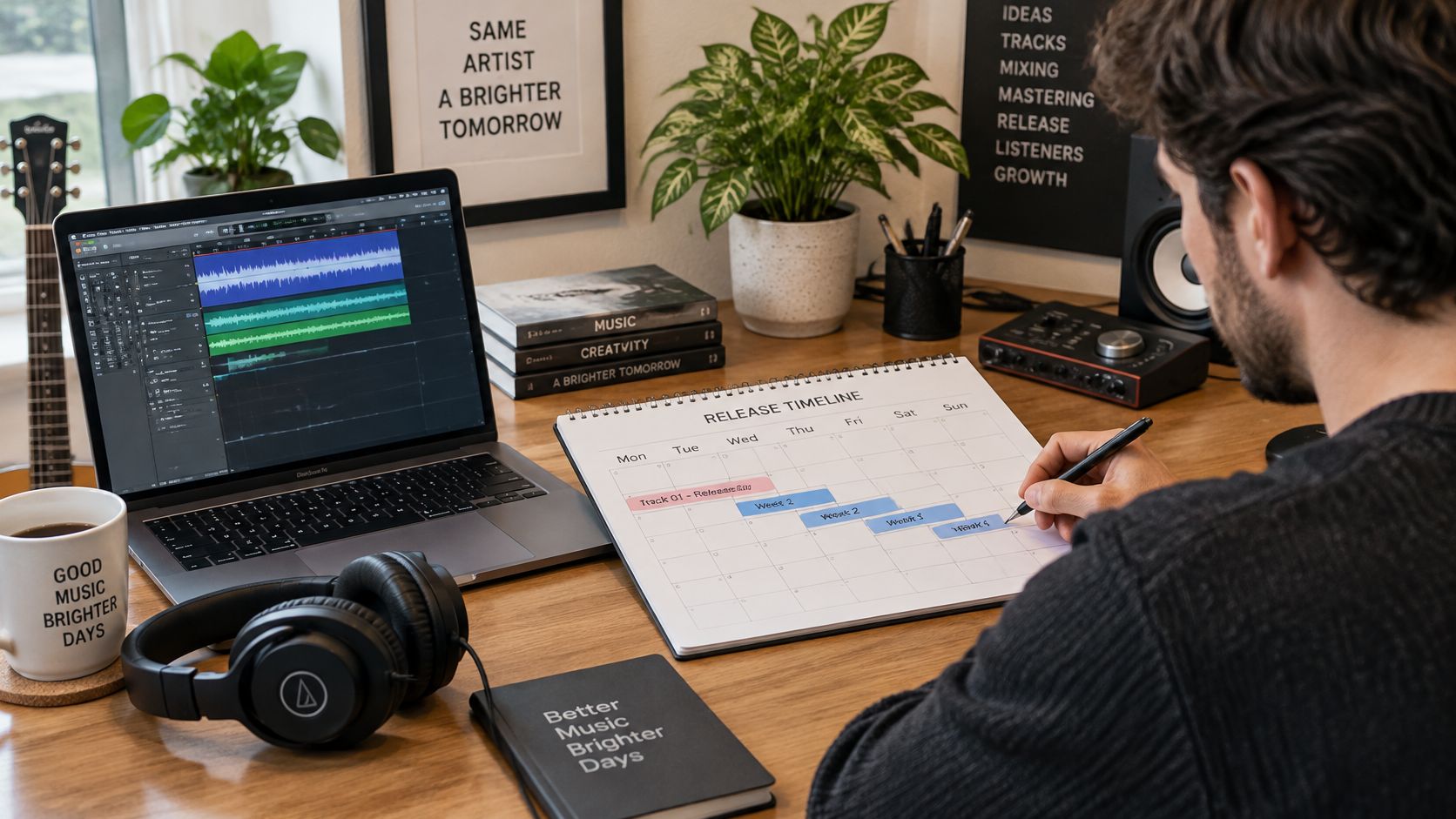
Planning your releases well is what holds an engagement schedule together. For most SoundCloud artists, four to eight weeks between releases is a healthy rhythm to aim for, though you should adjust it to fit your own pace.
A few things should shape that timing:
- Production speed, or how quickly you can finish music you actually feel good about
- Genre, because some scenes move fast while others expect more polish
- Audience size, since a larger audience can carry a release further on its own
- Budget and the scope of the campaign you can realistically pull off
Release Day Is the Start, Not the Finish
It’s easy to treat release day like the finish line. In reality, that’s when the real work begins.
Use the first week to introduce the track and spot who’s actually paying attention. After that, keep your profile moving with steady, daily manual check-ins and pay attention to whether new listeners stick around or come back.
SCHelper helps keep that momentum going with planning checklists and ideas around similar artists, genres, and scenes. It’s useful whether you’re building a new profile, pushing mixes, or just staying visible between drops.
A release gives people a reason to visit. Your schedule gives them a reason to stay.
Leave Room to Stretch
Try not to stack releases so close together that they fight each other. When two tracks are chasing the same attention, neither one wins.
Build in some breathing room instead. If a song is still picking up plays, or your time and budget get tight, let the campaign run longer rather than cutting it off early. For a fuller breakdown of the rollout, take a look at our guide on building a music release strategy.
And stick with the same 28-day window every time. Keeping that window consistent makes it much easier to compare local and international response, so every release teaches you something useful for the next one.
Keep your Engagement Schedule tight enough that you can wrap it before getting back to the music.
Run a Daily Review You Can Sustain
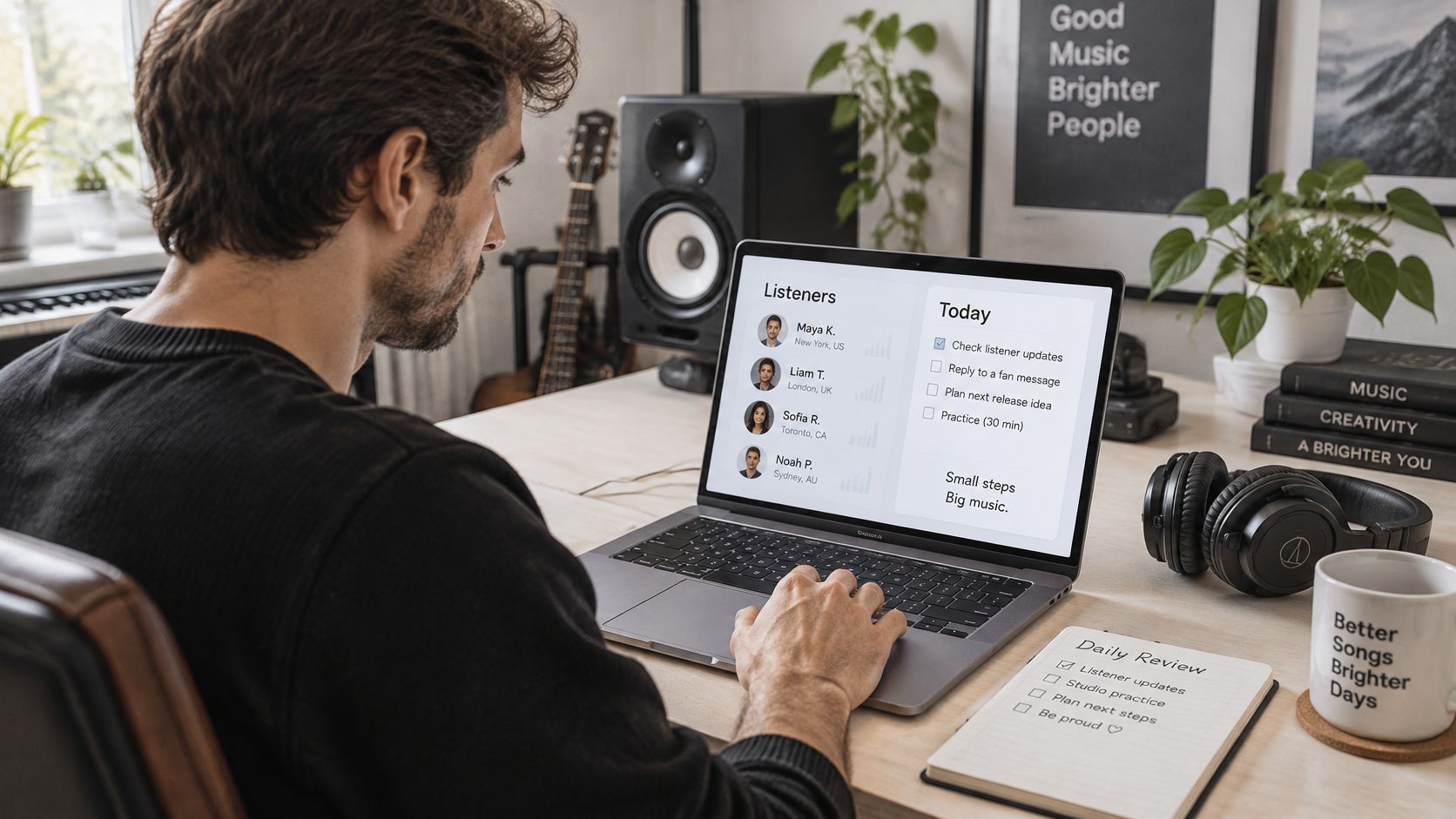
When your calendar block starts, open your comments and inbox in SCHelper. Look for conversations tied to your genre, scene, and neighboring artists instead of treating every notification as equal priority.
Say you've got a studio session in an hour. If you're making garage, a quick scan can tell you whether those new listeners are actually into UK club sounds around it. No real connection? Just move on.
- Reply to genuine listeners where their likes and playlists point to a real match
- Keep your inbox fresh by archiving older chats you already answered
- Prioritize personal replies to paid SoundCloud users and long-time supporters
Every reply goes out in your own words. And once that planned review is done, close it out. Don't tack on an extra round just because you have five minutes.
A finished review is your stopping point, not an invitation to keep expanding the task.
That hard line is what stops audience work from eating into the recording time you were trying to protect.
Set Up Access Before Your Next Review
SCHelper's account connection runs on secure SoundCloud OAuth, with no SoundCloud password storage. It works in both desktop and mobile browsers, so stick with whatever fits your workflow.
Pick a 1, 3, or 6 month plan. Pay with PayPal or Stripe for instant access. After checkout, you'll hit the login page to set your password.
The 6-month plan costs $53.99 for longer-term building. Managers will need a separate subscription per connected account, with volume discounts available on request.
Before your next studio day, review your message templates, pick your review device, and set aside one focused sitting for tomorrow's replies.
Judge your Engagement Schedule by lasting curiosity, not one hectic afternoon.
Measure Results Over Matching Windows
Line up every release across the same 28 days. Check in on the same weekday between drops and stack the numbers against your last track, not just launch day.
This keeps you honest. It’s easy to feel great after release day, then miss the slow fade in week two.
Signals to Compare Across 28 Days
Jot these down for each release so you’re comparing apples to apples:
| Signal | What to Record | Why It Matters |
|---|---|---|
| Profile visits | Window total | Discovery |
| Active listeners | Genre fit | Audience relevance |
| Repeat listeners | Returning audience | Continued interest |
| Saves | Window total | Lasting interest |
| Playlist activity | Adds and placements | Listening context |
| Geographic shifts | Changing locations | Audience direction |
When those rows move in the right direction over a few cycles, your routine is working.
SCHelper’s planning resources support more profile visits, activity, and relevant listeners over time, including steadier listening around releases. Think of that as a trend to track, not a promised outcome.
A steady routine is meant to soften the post-release dip, not erase every slow week.
If a mix is still pulling returning listeners, let it breathe before you replace it. Review our guide to engagement events when you map out check-ins.
Adjust Without Chasing Spikes
Real life gets in the way of perfect timing. Adjust the plan instead of panic-posting:
- Keep the cadence while a track is picking up steam.
- Widen release gaps when production starts slipping.
- Don't flood the account just because last week was quiet.
Personal daily time limits work best as guardrails against spikes.
SCHelper offers explicit billing and renewals, straightforward cancellation at plan end, support, and a refund if the service doesn't function properly. It isn't affiliated with SoundCloud.
Set your next review date today.
What Happens if You Miss a Day or a Week
Just pick up with your next planned session. Don’t try to double up to catch up, even if a weekend gig pulled you away from SoundCloud.
That calendar block is there to get you back into rhythm, not to pile on backlog. Look at progress across a few weeks instead of treating a missed session like debt you owe.
Restart your engagement schedule without increasing the workload.
How to Stay Active Without a New Release
Yes, you can keep momentum going between drops. Use those quieter stretches to stay visible, test out mixes, and see if new visitors are actually sticking around as listeners.
A DJ between releases, for example, might dig into comments on an existing mix rather than rushing to upload another one.
Which Plan Fits Your Campaign
Match the commitment to what you’re trying to accomplish.
- 1 month works well for a short promotional push.
- 3 or 6 months are better for steady audience building.
- The 6-month plan costs $53.99, payable through PayPal or Stripe via SCHelper.
Manage Multiple SoundCloud Profiles
Does each profile need its own plan? Yes. Each subscription covers one connected account. If you manage several artists, reach out to SCHelper about volume discounts before you buy multiple plans.
Pick your campaign length, lock in your next review session, and start with SCHelper to make listener engagement part of your week.