
Best Music Promotion for SoundCloud Artists in 2026

Most artists assume the best music promotion is the option that pushes the most plays. But a play from someone who doesn't care about your sound may do little for your profile or your next release. Streaming now accounts for most recorded-music revenue worldwide, which makes discovery important, but it doesn't make every kind of reach valuable (IFPI's Global Music Report).
This roundup compares seven approaches by who they put in front of you, what you pay for, and what they explicitly don't guarantee. Some reach SoundCloud listeners directly. Others put your track in front of curators, or help you make more of the fans you already have. Pick the method that fits your release stage and budget, then judge it by what listeners do after the first play.
Table of Contents
- 1. SCHelper
- 2. SoundCloud Artist and Artist Pro
- 3. RepostExchange
- 4. Groover
- 5. SubmitHub
- 6. Hypeddit
- 7. Feature.fm
- Starting cost, free options, and best use case for each music promotion method
- Match Each Method to Your Release Stage
1. SCHelper
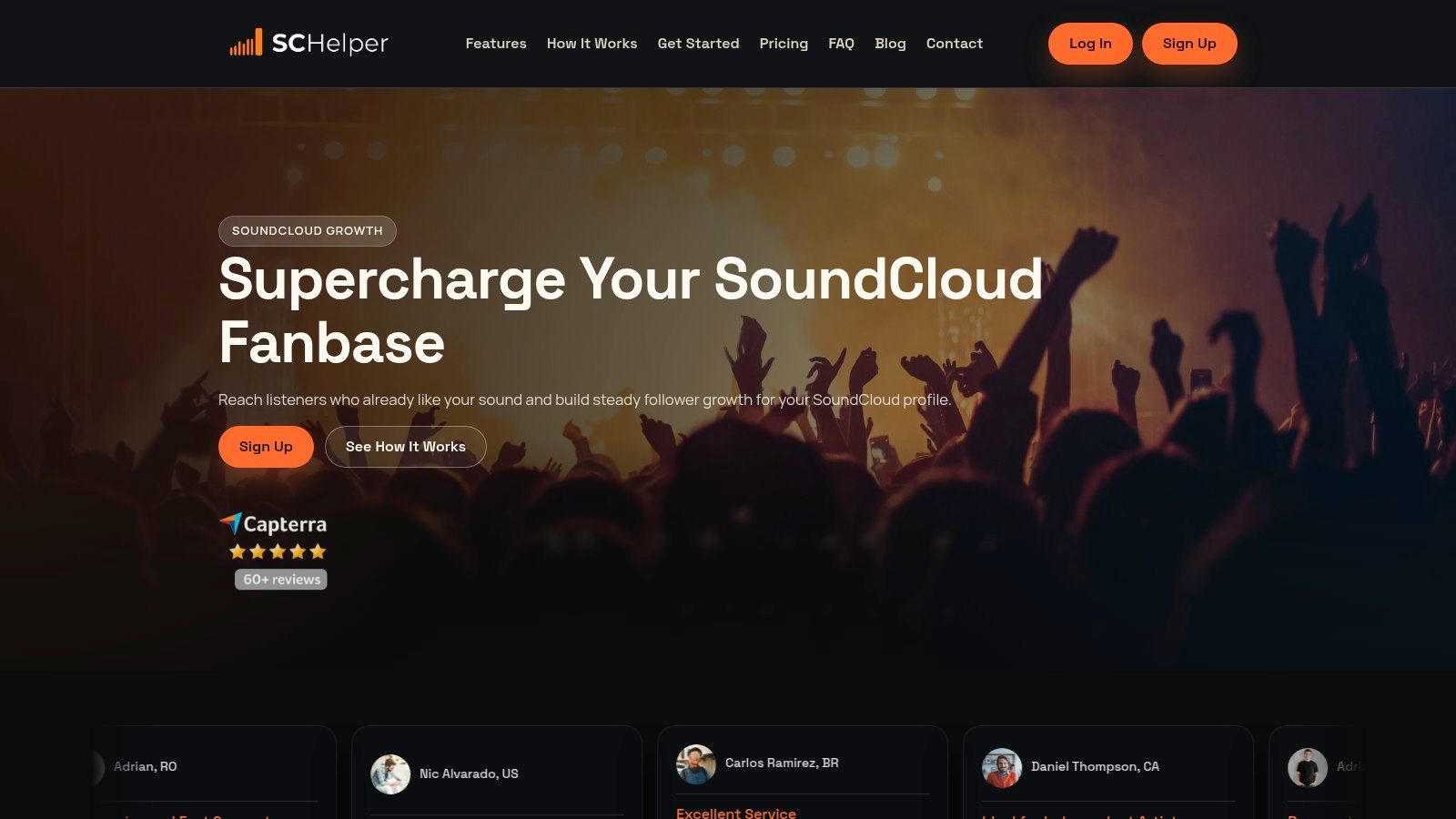
Who it puts in front of you
People already engaging with music like yours. That makes it a fit for a fresh profile, a new mix, or the quiet stretch between releases when you want steady listener activity rather than a one-week spike. Done consistently, this kind of targeted discovery leads to more profile visits and more relevant followers over time. Skip the daily review and nothing happens.
Plans run $9.99 for one month, $26.99 for three months, or $53.99 for six months, paid through PayPal or Stripe. Each SoundCloud account you connect needs its own subscription, though you can manage multiple accounts from one place. If you need several plans, or expect to run past six months, you can contact SCHelper about discounts. Updates are included at no extra charge. One caveat worth knowing: SCHelper is not affiliated with SoundCloud, and you are responsible for the activity on your account and the recommendations you act on.
Pros
- Safer login: SoundCloud OAuth, with no password stored.
- Repeatable routine: daily reminders turn promotion into a habit instead of a launch-week scramble.
- Straightforward pricing: three subscription lengths, with discounts on request for multiple plans or longer use.
Cons
- No guaranteed growth: results depend on your ongoing review and activity.
- Per-account billing: every SoundCloud profile you connect requires its own paid plan.
Customer feedback backs the workflow angle. Carlos says the daily curated recommendations save him time and have connected him with real fans; Daniel credits the service with reaching listeners who actually like his style; Adrian reports being satisfied after more than two years of use. Useful context, not a promise of similar results.
If you would rather run listener discovery yourself than hand it to a promoter, this is the most hands-on option in the list.
2. SoundCloud Artist and Artist Pro
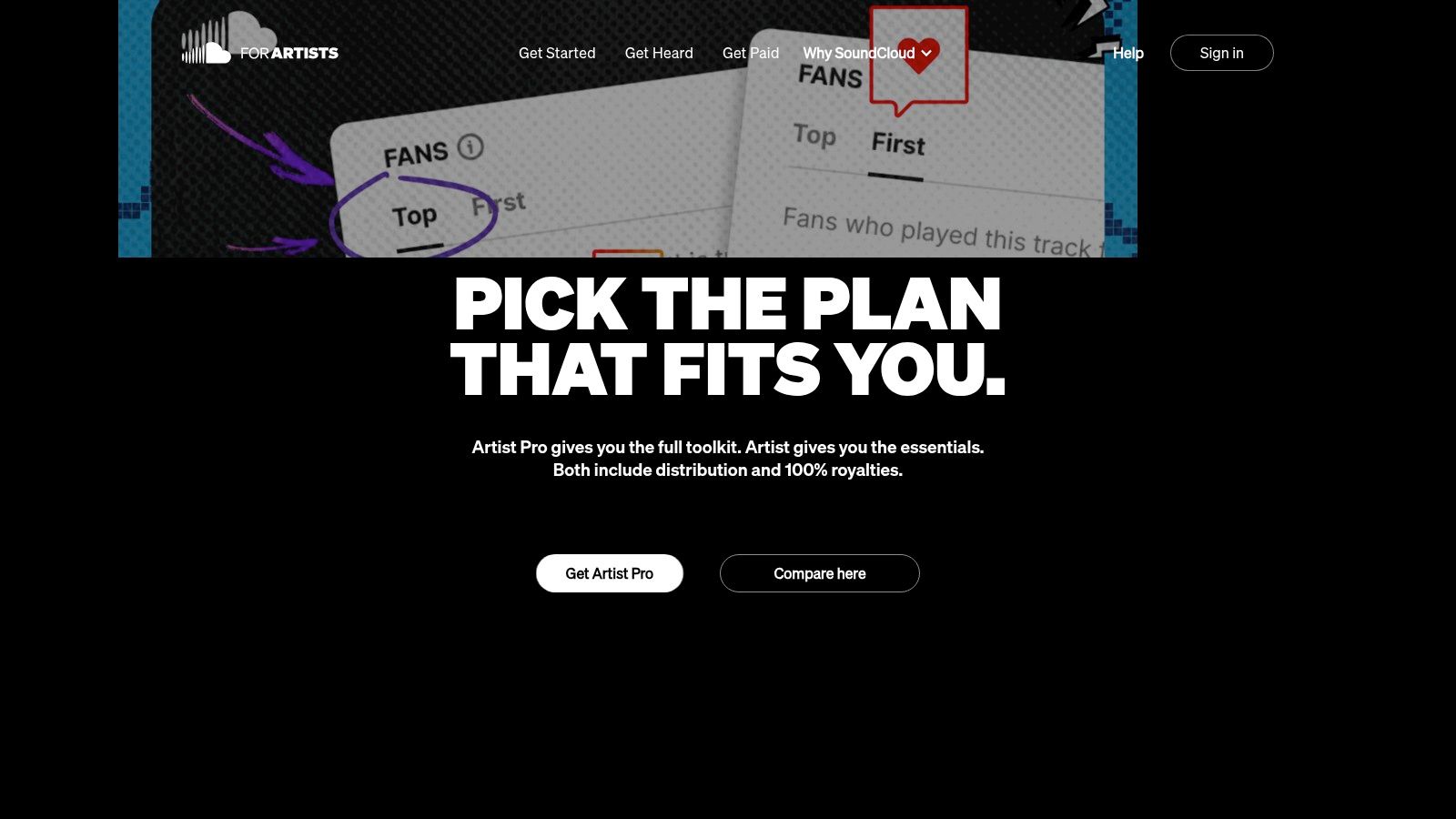
If your release is staying on SoundCloud, the platform's own creator plans are a direct place to start. Artist and Artist Pro combine creator tools with native track-promotion and playlist-related features. You're working inside the service where you want listeners to hear the music, without routing them through a separate growth provider.
Who it puts in front of you
SoundCloud lists Artist at $3.25 per month when billed annually, or $39 per year, with two track promotions per month. Artist Pro is listed at $8.25 per month when billed annually, or $99 per year, with unlimited promotions and uploads. The platform's Artist and Artist Pro pricing is the place to confirm current details and eligibility before subscribing.
The main advantage is direct access to SoundCloud promotion and artist-management features in one account. The Artist plan's promotion limit may suit an occasional release, while Artist Pro offers more room for artists uploading regularly. Neither plan promises that promotion will turn into listeners, saves, or repeat plays. SoundCloud's separate self-serve Promote on SoundCloud program is invitation-only and excludes some content, including mixes and DJ sets.
Trade-offs
- Direct platform fit: Promotion reaches SoundCloud audiences.
- Straightforward plan pricing: You can compare the listed annual-billing options before checkout.
- Limited certainty: Paid promotion doesn't guarantee meaningful engagement or an ongoing audience.
- Content restrictions: Some releases, including mixes and DJ sets, aren't eligible for the separate self-serve program.
For artists weighing platform-native tools against audience research and other approaches, this guide to SoundCloud for artists can help clarify what fits your release plan.
3. RepostExchange
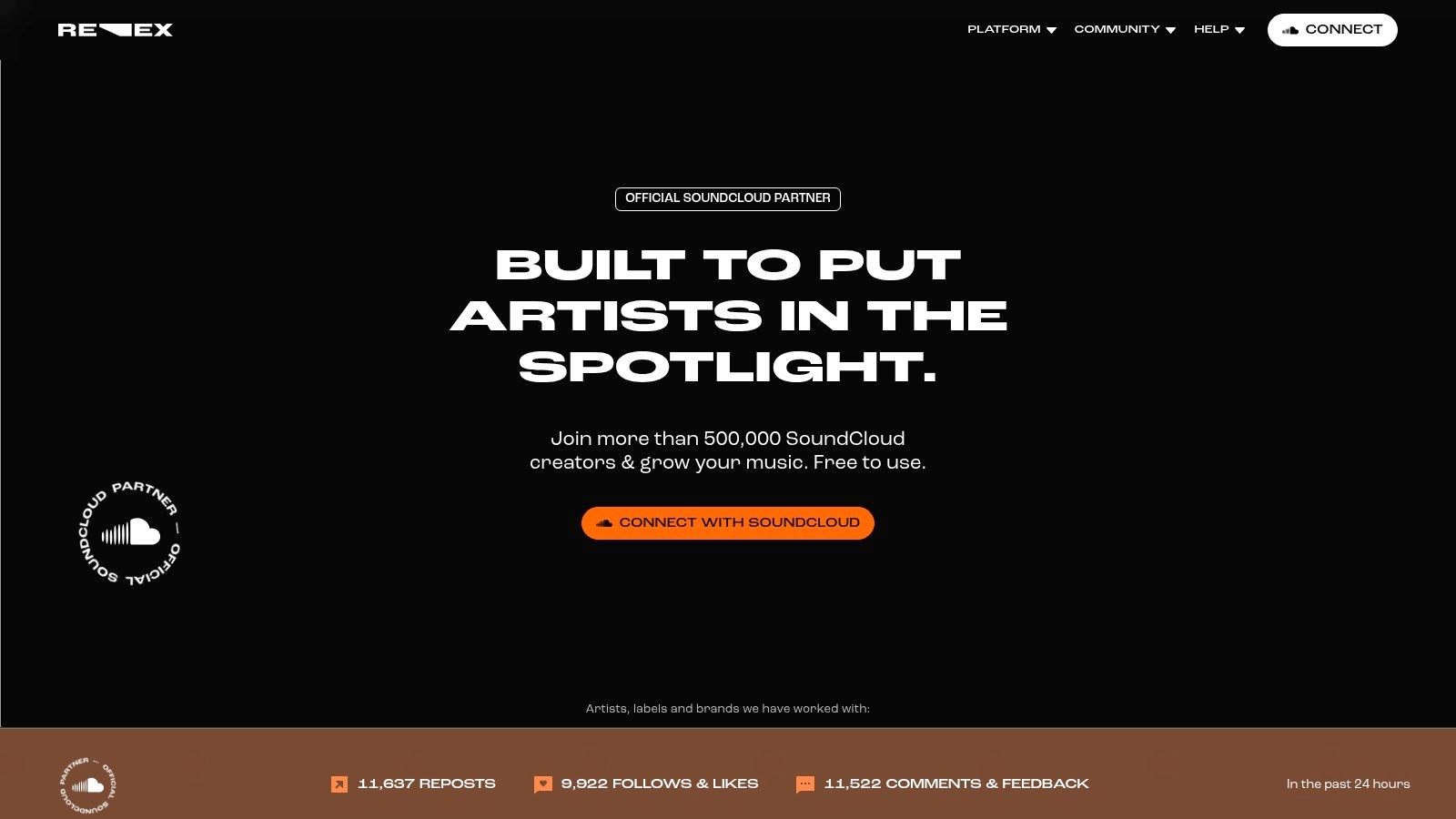
RepostExchange makes more sense as a community and networking option than as a straightforward way to purchase listener attention. Artists can earn credits by sharing or engaging with other members' tracks, then spend those credits on promotion requests or feedback for their own music.
What the credits buy
The core service is free to try. Optional credit packs are listed from $24.99 for 500 credits, and the platform offers repost requests, campaigns, and track-feedback options. It identifies itself as an official SoundCloud partner. Before taking part, review the current RepostExchange service details and SoundCloud's rules for promotional services.
A credit-based community can give a new artist a place to share music and hear from other creators. But community reposts don't automatically mean independent listener demand, and they may not turn into fans who return to your profile. You're also spending attention on other people's tracks to earn credits, so treat the time cost as part of the price.
Good fit if you want
- A low-cost trial: You can explore the core community without buying credits.
- Peer contact: Feedback and networking sit alongside promotion requests.
- A clear boundary: Don't assume repost activity alone proves that a track has found a lasting audience.
4. Groover
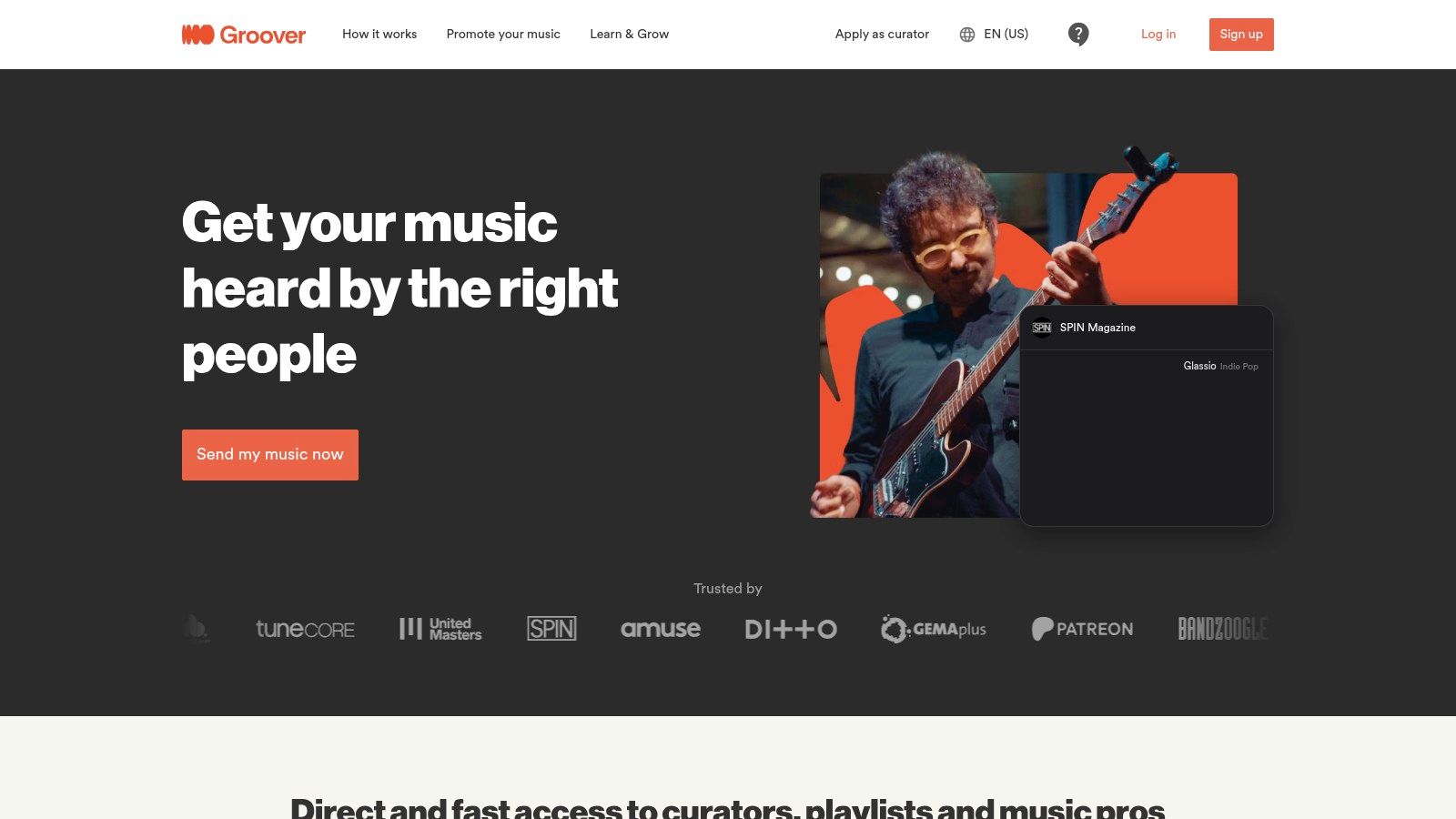
Groover puts your track in front of music professionals, not directly in front of a guaranteed audience of listeners. You choose contacts such as curators, media outlets, radio contacts, labels, and other industry professionals. That makes it a pitch-and-feedback tool, rather than a service where you pay for a fixed number of plays.
What you're paying for
Groover says contacts owe you a written response within seven days. If they don't respond, the credits are returned. Its public page lists prices starting at about $2 per contact, with some contacts costing more and a minimum top-up shown as €10. Check the current Groover pitching options before setting your budget.
The response is the deliverable. A placement, coverage, or deal isn't guaranteed, so select contacts for their fit with your music rather than their apparent reach alone. A curator's feedback may still help you understand how the track lands, even when they decline to feature it.
Trade-offs
- Choice of contact: Search by genre, location, and contact type.
- Useful feedback: A response can be valuable without a feature.
- Costs vary: Your spend rises with the number and price tier of contacts.
- Fit matters: Poor targeting can waste credits even when you receive replies.
Artists comparing curator pitches with broader service models may find this overview of music promotion services useful when deciding what kind of outcome they're buying.
5. SubmitHub
SubmitHub is built for artists who want to choose individual curators, bloggers, and influencers rather than buy an opaque promotion bundle. Curator profiles give you a way to judge potential fit before submitting, which is useful when your genre is specific or your budget is tight.
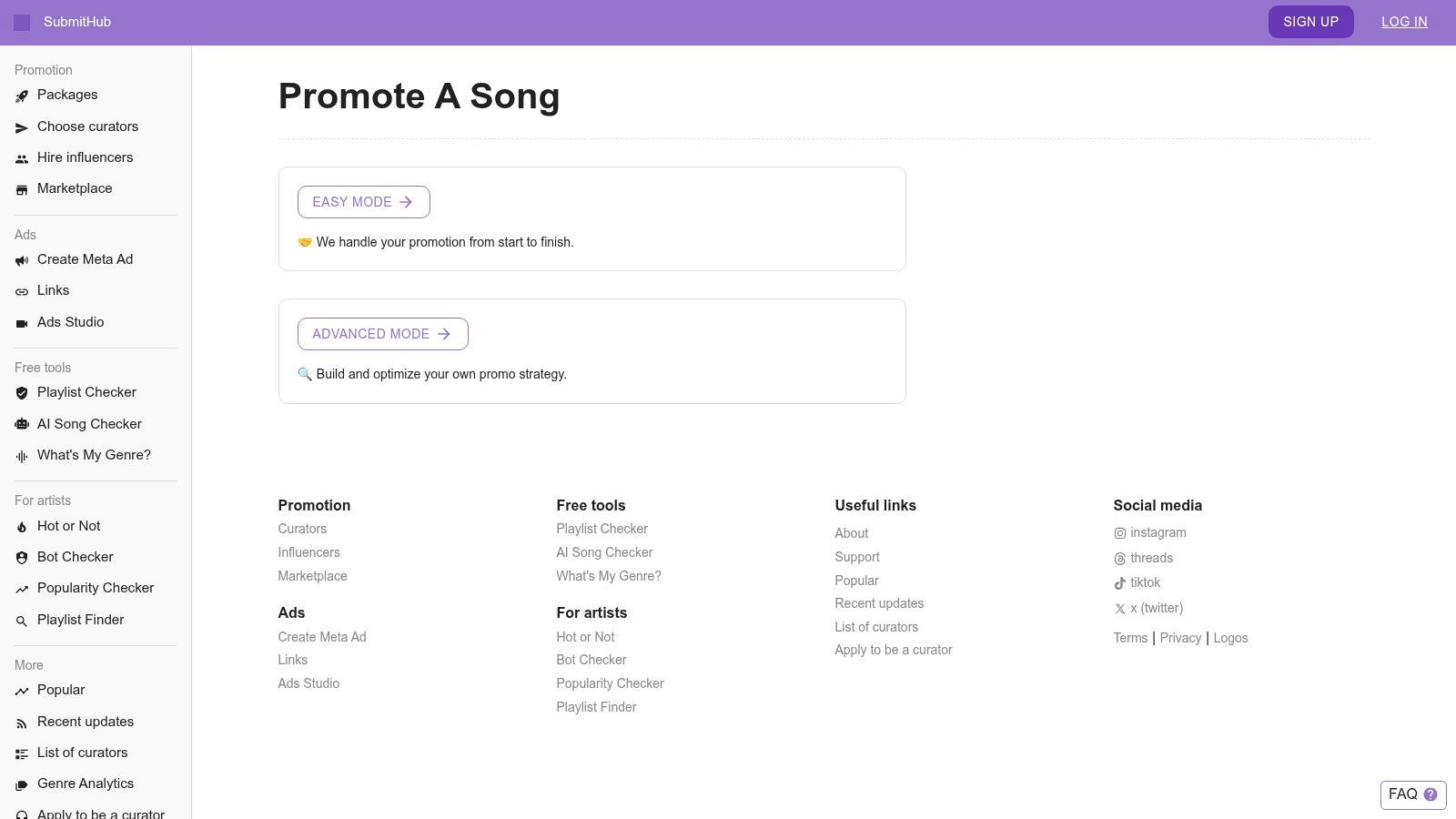
The platform says it has more than 1,700 quality-checked curators and professionals. Premium submissions come with response requirements. A premium credit may be returned if the stated listening time, response, or decline feedback isn't provided. Credit costs vary, so check the amount shown in your account and review SubmitHub's promotion options.
Who it puts in front of you
You're paying for consideration and feedback, not acceptance or playlist placement. Premium submissions provide more explicit requirements than free standard credits, but they still don't make a curator like the track or publish it. Sending your song to a large list can get expensive, especially if you haven't checked whether each contact covers your sound.
Try a small, carefully selected group first. Review the profiles, note which contacts respond usefully, and use that information before expanding a campaign.
What works
- Direct selection: You choose who receives the track.
- Visible fit signals: Curator profiles can help you narrow the list.
- A defined recourse: Premium-credit rules address cases where stated requirements aren't met.
What doesn't
- Assumed placement: Paying for a submission doesn't buy acceptance.
- Broad targeting: More submissions won't fix a poor match.
- Unplanned spend: Credit costs can add up if you submit indiscriminately.
6. Hypeddit
Hypeddit helps artists route attention they already have. It provides smart links, pre-saves, download and link gates, and pages for collecting fan emails. If you're posting a release across social platforms or driving traffic with ads, these tools can give listeners a clear destination and help you track campaign activity.
Who it puts in front of you
Hypeddit doesn't supply SoundCloud listeners or curator consideration by itself. It helps turn a social post, ad, or artist-community mention into a visit to a release page, and it can help you collect fan contact details rather than relying only on platform followers.
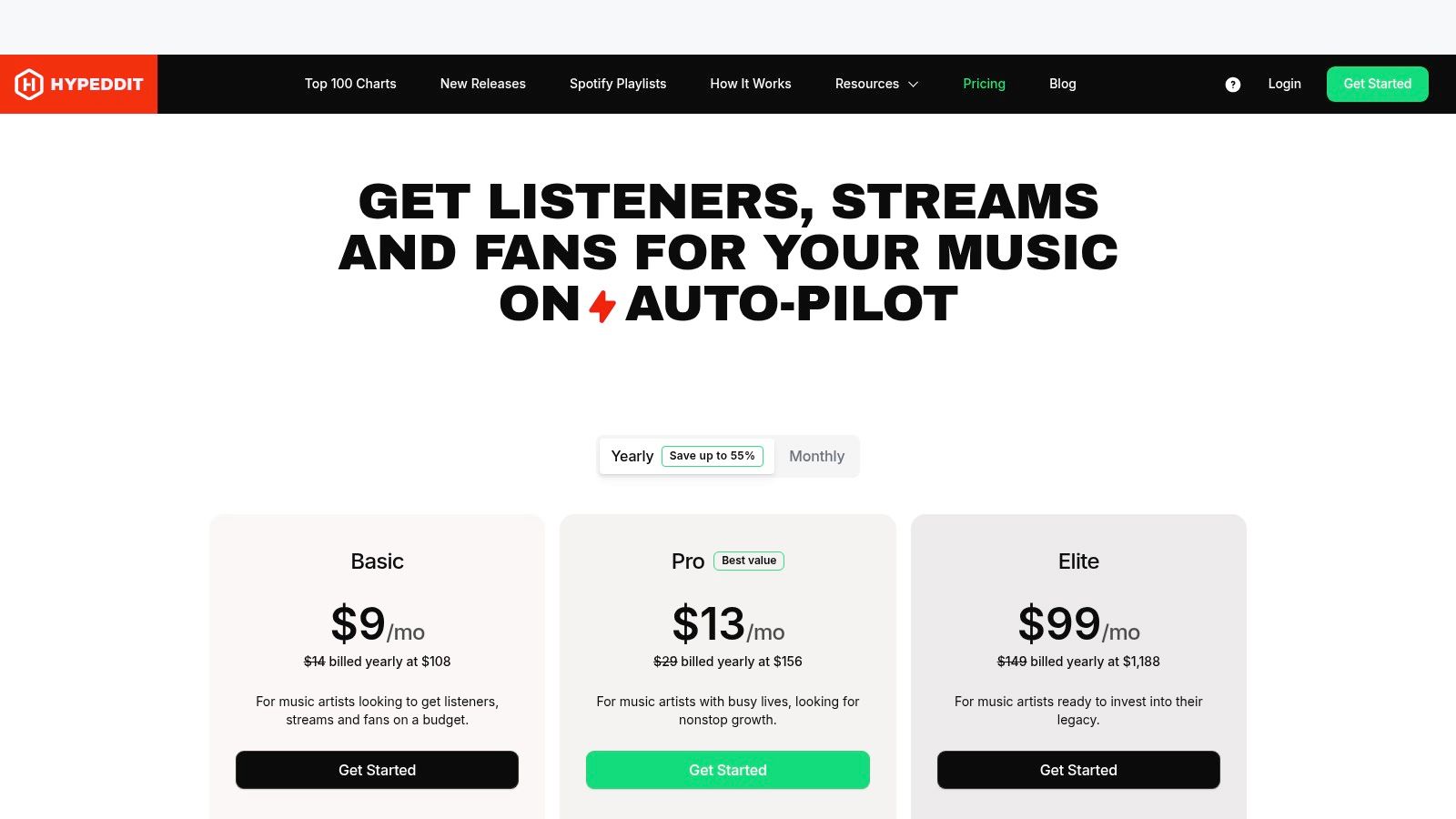
The pricing page lists a free Rookie tier, Basic at $9 per month billed annually, Pro at $13 per month billed annually, and Elite at $99 per month billed annually. Advertising spend is separate. Check Hypeddit's current plans before you budget for a campaign.
Paid plans include tracking pixels and conversion events, while Pro includes AI-assisted music-ad campaign tools for destinations such as Spotify, YouTube, and TikTok. Those features help with campaign setup and measurement, not with the harder work of earning a listener's interest.
Best for
- Capturing fans: Email collection can give you a direct way to reach listeners later.
- Testing a workflow: The free entry tier lets you try basic fan-gate pages.
- Coordinating channels: A central link can support traffic from different platforms.
Limits to keep in mind
- No audience guarantee: A smart link doesn't create listeners by itself.
- Added costs: Paid plans and advertising budgets are separate expenses.
For a broader look at how these tools fit into a release plan, see this guide to music marketing tools.
7. Feature.fm
Feature.fm is a campaign destination for artists releasing across several services. Smart links send fans to their preferred music platform, while landing pages, pre-save tools, email collection, and analytics help organize and measure the campaign.
Who it puts in front of you
Feature.fm serves fans who already encounter your release through social posts, ads, or other outreach. It gives them one destination and helps you see how campaign links perform. It isn't a curator-pitching platform or a SoundCloud discovery service, so it won't independently put your track in front of a new audience.
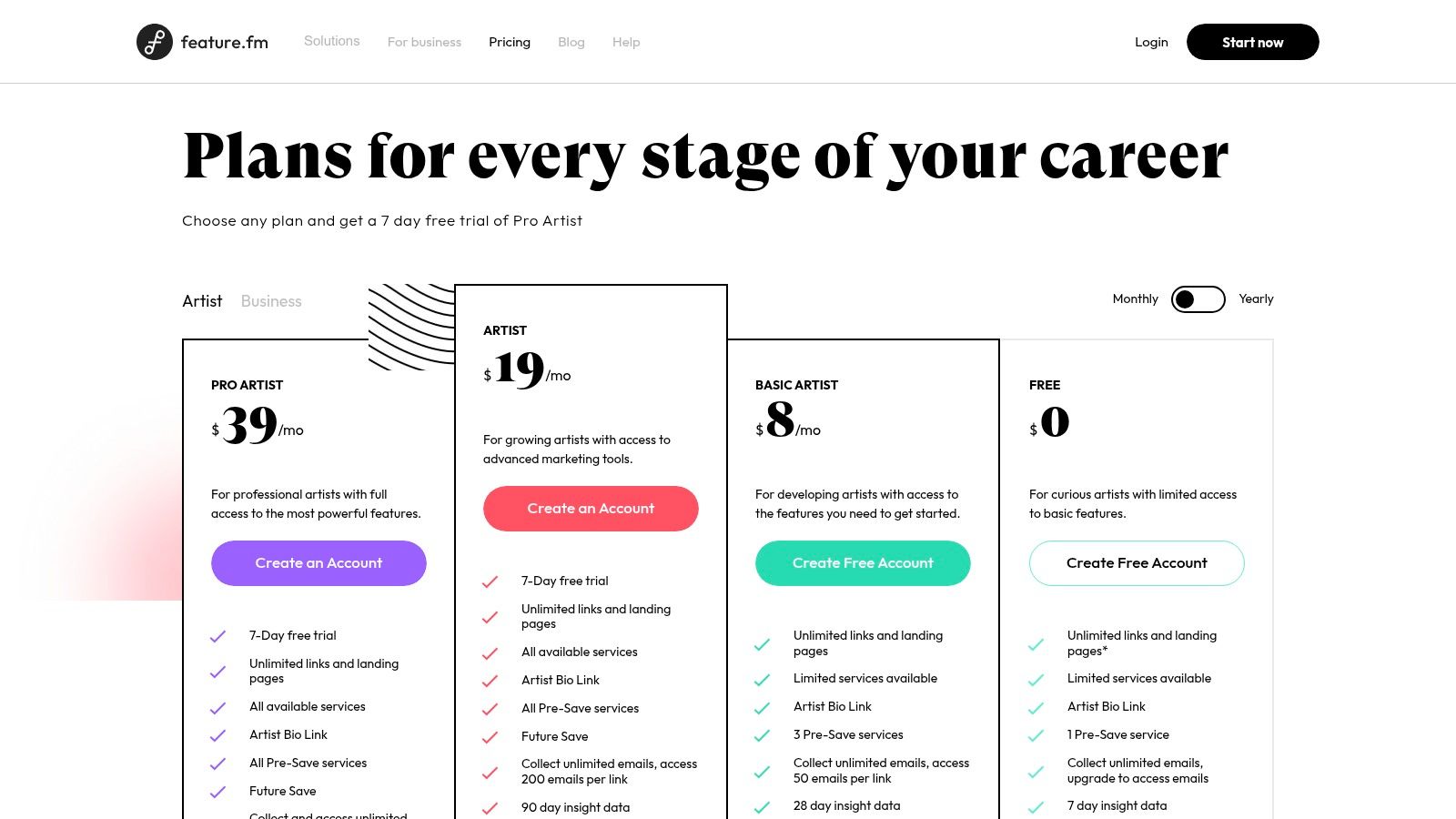
The pricing page lists Artist at $19 per month and Pro Artist at $39 per month, with a seven-day Pro Artist trial advertised. Plan features can change, so confirm current details on Feature.fm's pricing page before subscribing.
Email collection and retargeting-pixel options are available on eligible plans. Those features can help you understand and reconnect with campaign visitors, but they add little if you don't have a plan to bring people to the page in the first place.
A smart link reduces friction between discovery and listening. It doesn't replace discovery.
Trade-offs
- Convenient routing: Fans can choose their preferred streaming service.
- Campaign measurement: Link analytics help track traffic from a release campaign.
- Paid features: Advanced tools require a subscription.
- No built-in audience: You still need to earn attention through music, outreach, or advertising.
Starting cost, free options, and best use case for each music promotion method
| Item | Starting Price | Free Option | Best For |
|---|---|---|---|
| SCHelper | $9.99 for one month | No free option listed | SoundCloud artists seeking relevant audience recommendations |
| SoundCloud Artist and Artist Pro | $3.25/month, billed annually | No free creator plan listed | Artists promoting tracks directly on SoundCloud |
| RepostExchange | Free; credit packs from $24.99 | Yes, core service is free | Artists seeking community promotion and feedback |
| Groover | About $2 per contact | No free option listed | Pitching music to curators and industry professionals |
| SubmitHub | Credit costs vary | Yes, free standard credits | Artists submitting tracks to selected curators |
| Hypeddit | Free Rookie tier; paid plans from $9/month, billed annually | Yes, Rookie tier | Artists creating smart links and fan-capture campaigns |
| Feature.fm | $19/month | No free plan listed; 7-day Pro Artist trial | Artists managing smart links and release campaigns across platforms |
Match Each Method to Your Release Stage
Know what the provider does not guarantee before you pay. Curator platforms sell consideration, not placement, so a declined pitch still costs the credit. Community reposts can inflate play counts without producing followers who return. Smart links do not generate traffic on their own. None of these tools promise saves, comments, or repeat listeners. Judge them on what happens after the first play.
Run a small test before committing a real budget. On curator platforms, send one release to contacts who genuinely fit your genre and see who responds. On landing-page tools, check that the page removes friction instead of adding steps. For direct SoundCloud audience discovery, review your listener recommendations regularly and pick relevant profiles rather than chasing reach. I have wasted money skipping this step, and a week of modest testing usually reveals more than a month of blind spending.
Treat promotion as a mix of distinct jobs. SCHelper, for example, fits the steady between-releases work: a daily batch of recommended listeners you review yourself, priced per connected account. Set a monthly budget, watch which listeners return, and stop paying for activity that does not build the audience you want.