
New Artist Promotion: A Launch Plan for Your First 28 Days

You've finished a track you're proud of, uploaded it, posted the link once, and watched the play count stall after friends and a few strangers clicked. That flatline doesn't mean the song failed. It usually means you treated new artist promotion as a release day announcement instead of a listener-conversion system. I'd build the next launch around 28 days of small, checkable moves. You're not chasing a spike here. You're trying to turn people who already like your sound into listeners who return, save, comment, and visit your profile again.
Table of Contents
- Launch Timeline From Pre-Release to Day 28
- Profile and Visuals to Finish Before Release Day
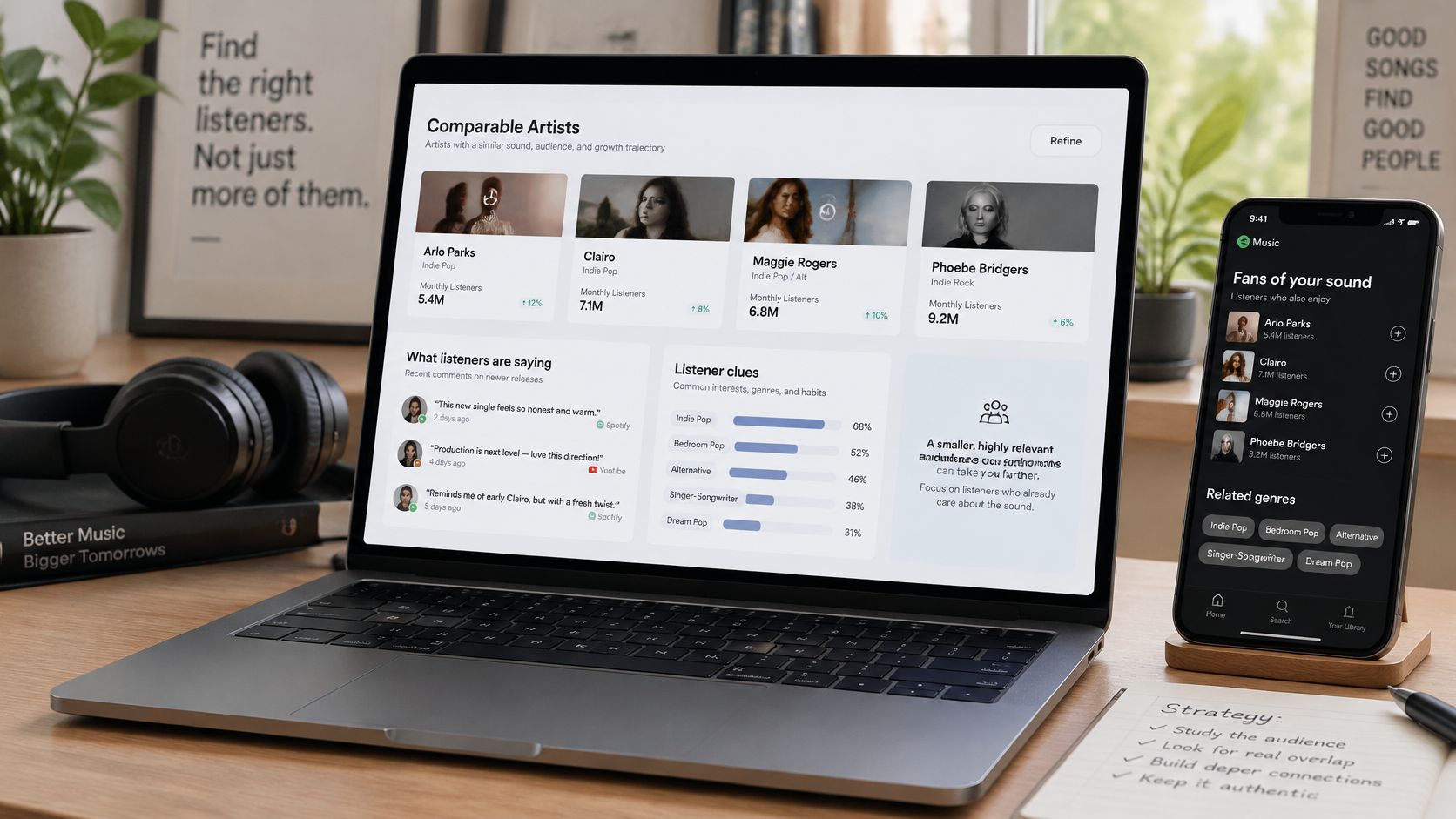
- Finding Listeners Who Already Care About Your Sound
- Low-Cost Tactics and Content Cadence
- Reading Listener Quality Instead of Vanity Numbers
- Daily Routine to Review and Engage Each Day
- Stay Within Platform Rules and Plan Your Next Week
Launch Timeline From Pre-Release to Day 28
| Phase | Timing | Main job | Output by the end |
|---|---|---|---|
| Pre-release setup | Days -14 to -1 | Finish profile, artwork and visuals | Profile ready to convert visits |
| Release day | Day 0 | Publish the track and send qualified listeners to it | Release link with a clear next action |
| Early monitoring | Days 1-7 | Review listener and engagement data | Notes on which segment and message respond |
| Days 8-28 | Keep posting, responding and retargeting | Active-listener share of the release at day 28 |
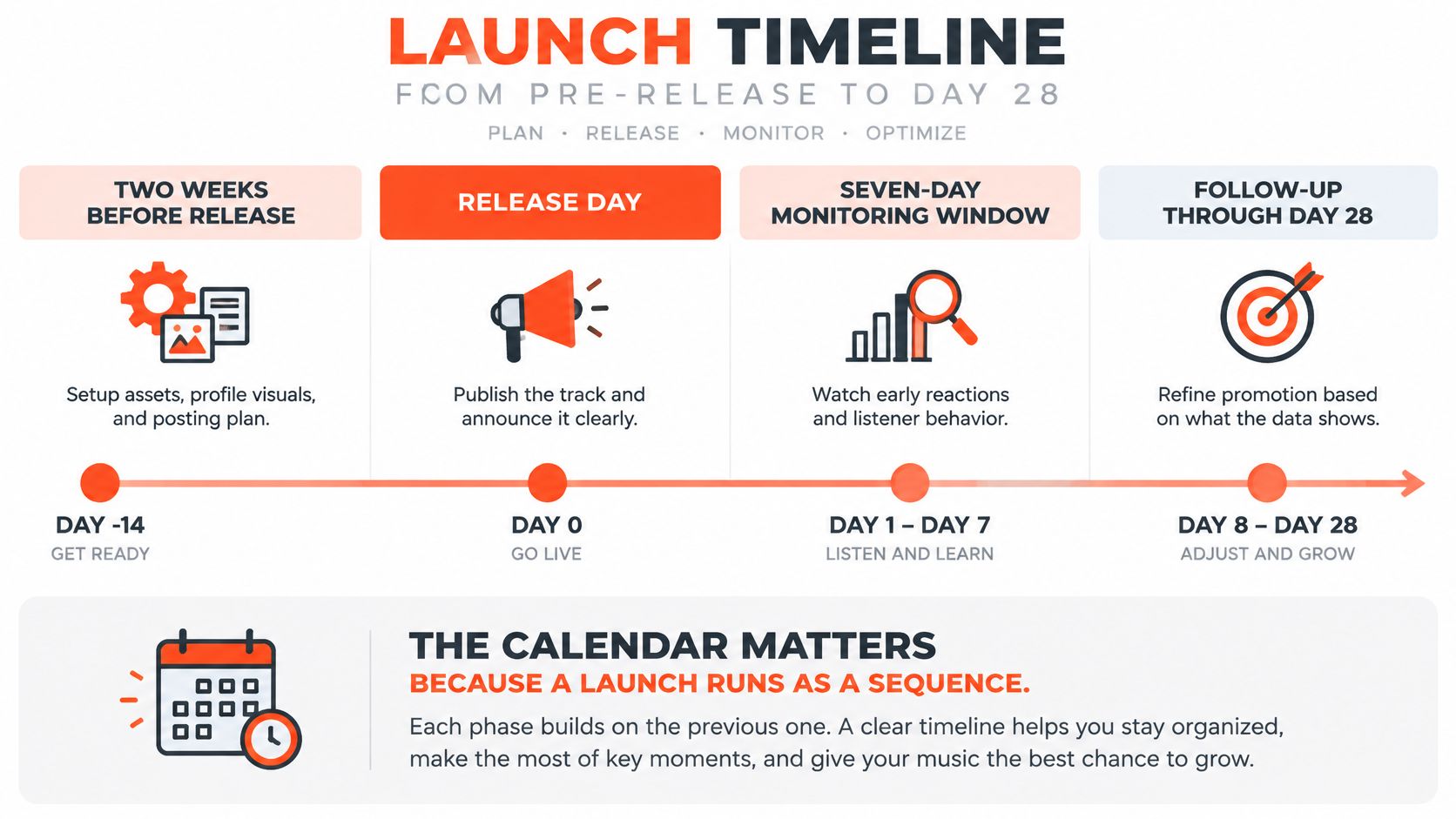
A calendar keeps you from spending all your energy on day one. Spotify's release engagement measure tracks the share of an artist's active listeners who stream the new release during its first 28 days, as described in Spotify's guide to understanding release engagement. That cohort is a better signal than first-day plays because it shows whether the people closest to your sound came back. The first month is also where you learn which message, segment, and asset move listeners. Stopping after week one cuts that learning short.
The Operating Loop
Run these five steps every week, in this order. Keep the sequence fixed so each review compares like with like.
- Choose one segment: Pick a single listener group, not "electronic fans" in general. A tighter segment means fewer people to contact, but the replies are more useful.
- Map comparable artists: List three to five comparable artists and the communities around them.
- Prepare the assets: Finish a short visual, a profile update, and one clear call to action.
- Send qualified listeners: Point those specific listeners to the release. If you want the setup tasks in one place, use a third-party guide to a Spotify music launch workflow.
- Review weekly: Check unique listeners, repeat plays, saves, and profile visits, then adjust one thing.
Your profile is the landing page for every visit, so the setup work belongs before day zero. A profile that is ready to convert makes the promotion effort easier to judge. Before release day, write your day-28 goal in one sentence, for example, "Get repeat plays and profile visits from listeners of these four artists." If a task does not push that sentence forward, cut it.
Profile and Visuals to Finish Before Release Day
A new visitor scans your profile before deciding whether to click play. Make the profile photo and banner match the release artwork so the single reads as one project, not a stray upload. Your bio should name your genre, your city, and one line on how the music sounds. Pin the new release itself, not an older track you're sentimental about.
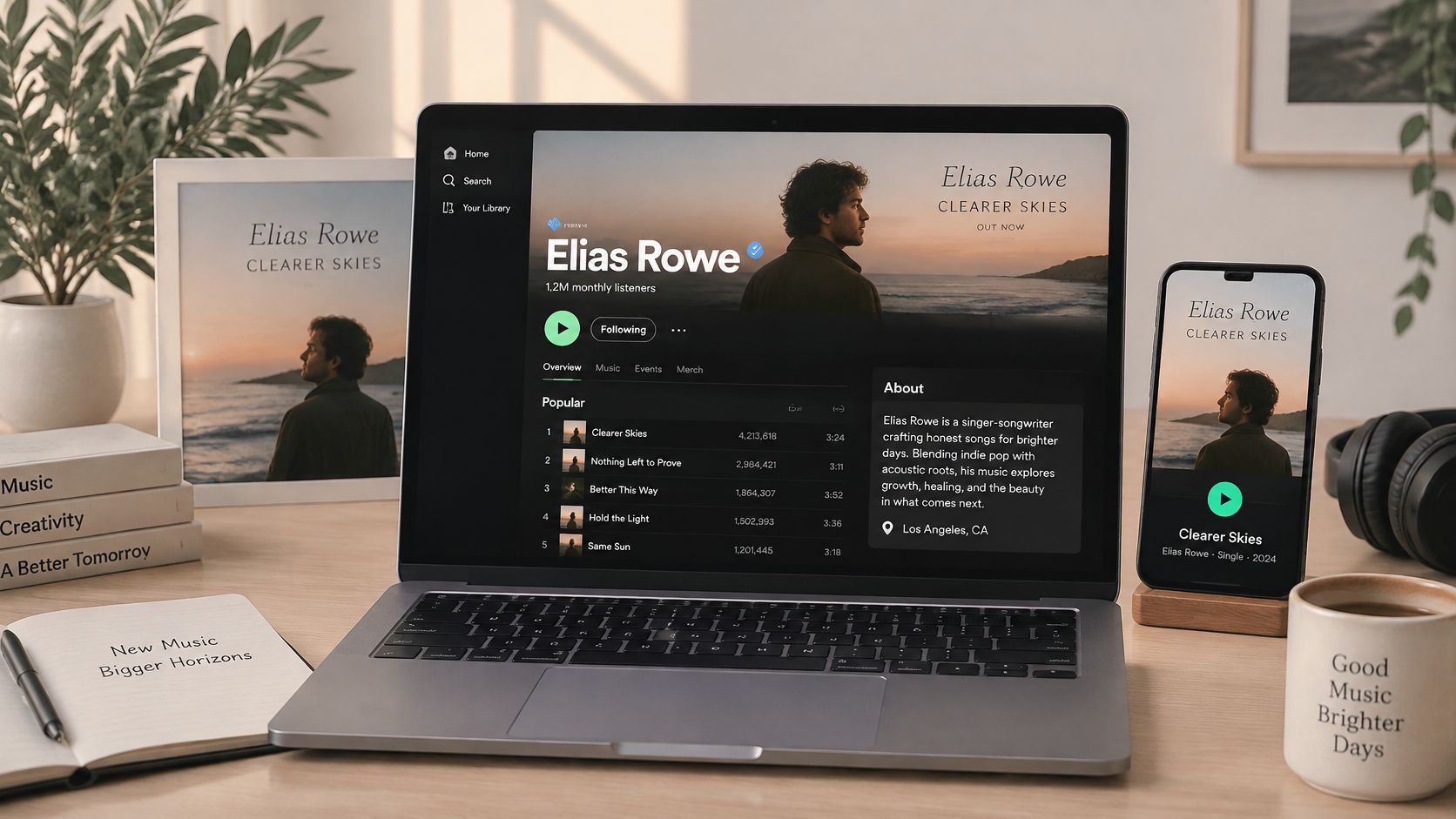
Build One Visual System
Produce four connected assets before release day: a vertical teaser for short-form platforms, a looping visual for platforms that support it, a full video or performance clip, and profile artwork with an explicit next action such as listening to the single or joining a release list. Measure what happens downstream rather than how many assets you post. According to Spotify's promotional engagement best practices, listeners exposed to Canvas are 5% more likely to continue streaming, 145% more likely to share, and 20% more likely to add a track to playlists than control-group listeners.
A full video earns its place the same way. It should push viewers toward the song or the profile, not just collect views. Check whether saves, repeat plays, and profile visits move after someone watches. If they don't, the asset is decoration.
Practical rule: Test the first three seconds of your teaser. If a stranger can't name the artist, the song, and the mood, reshoot it.
Common mistakes waste that attention quickly. Unrelated visuals, describing the song differently on each platform, and sending traffic to a profile with no release on it all break recognition. Make two teaser versions and compare completion, profile visits, and save rates rather than raw views. I'd keep the version that sends more people to the profile, even if the other one gets more passive plays.
Finding Listeners Who Already Care About Your Sound
A Worked Scenario
Say you're a bedroom producer making lo-fi house in Lisbon. Pick three Portuguese artists and two UK artists in a similar tempo range, then review who's commenting on each artist's last two tracks. Write down names that show up more than once. Those repeat commenters, plus the genre communities, local show pages, and playlist curators around those artists, become your first outreach map. If playlists are part of that map, this guide to pitching your track to playlist curators covers how to approach them without a copy-and-paste pitch.
First contact should be short and specific. Reference something real in that listener's taste, such as a track they praised or a mix they shared, instead of dropping a generic line everywhere. Generic comments read as noise and teach you nothing about who responds.
Pace the work in small daily sets of a few personal contacts. Bursts look careless to listeners, and they make your results unreadable. Log each contact's segment, such as "UK lo-fi commenters" or "Lisbon show page," in a simple spreadsheet. At the weekly review you'll see which group visited your profile, and you can run a clean two-segment test next week by changing only the segment, not the message.
Low-Cost Tactics and Content Cadence
Reuse Every Asset
Squeeze each asset across placements instead of making new material daily.
- Teaser first: Cut it into a short clip, a still cover image, and a profile banner.
- Full video second: Pull a 15-second loop for short-form platforms from the strongest moment.
- Behind the scenes: Write one post on how the track was made, which gives early listeners a reason to return.
- Tool choices: If you're comparing options, read up on choosing AI software for artist promotion before paying for anything, and judge tools by time saved, not promised reach.
For venues and curators, keep pitches to two sentences. Name the track and one detail that matters to that specific listener, such as a shared bill or a similar artist they booked. Anything longer usually doesn't get read.
Keep spend at zero for the first two weeks while you're learning which segment responds. After that, test at most one paid variant at a time, holding the track and dates constant, and scale only the version with stronger saves and profile visits. After day 28, keep the same weekly rhythm but point the next visual at an older track that still earns repeat plays. Your back catalogue can carry the audience you just built.
Reading Listener Quality Instead of Vanity Numbers
Plays only prove a track started. They don't tell you whether anyone came back, and that distinction matters when more than 106,000 tracks reportedly reached streaming services every day in 2025, while 88% received 1,000 streams or fewer, according to CD Baby's DIY Musician summary of Luminate's 2025 takeaways. SoundCloud's own Insights separates plays, likes, comments, reposts, downloads, top fans, and listener locations because each answers a different question. Chasing totals without that split is how artists end up paying for empty numbers, a trap covered in this breakdown of how fake followers distort your real audience data.
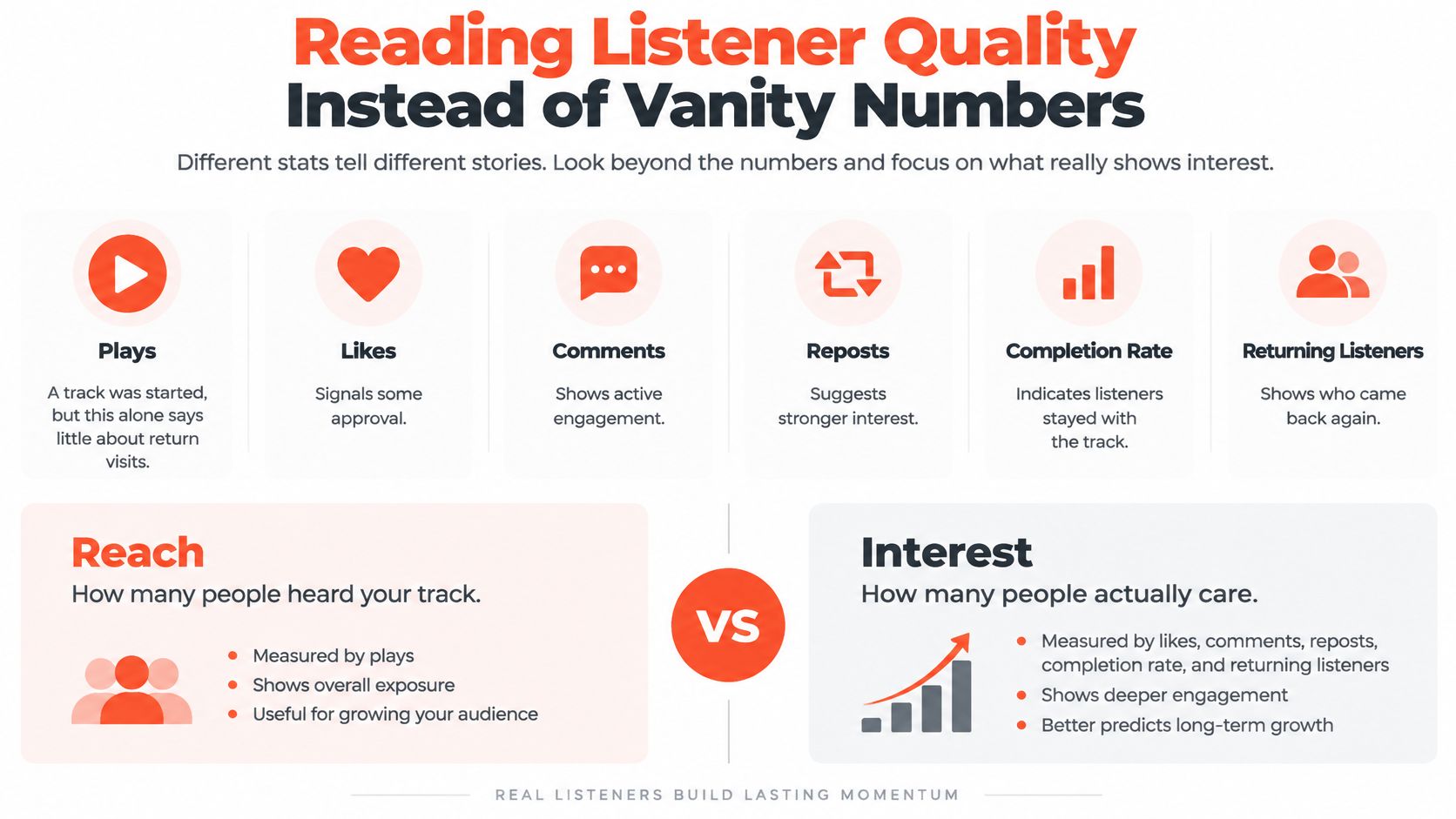
| Metric | What it signals | Change if weak |
|---|---|---|
| Unique listeners | Reach beyond existing fans | Test a new listener segment |
| Repeat plays | Whether listeners come back | Strengthen the second track or visual |
| Saves and likes | Intent to revisit | Review the first three seconds of the teaser |
| Comments and reposts | An active community around the track | Reply to every comment and ask one specific question |
| Profile visits | Curiosity about the artist behind the track | Check the profile call to action |
| Top fans and listener locations | Where engaged listeners cluster | Focus the next outreach or show on those places |
Three Diagnostic Rules
If plays rise but repeat plays stay flat, you're reaching the wrong audience, so go back to segment work. If comments appear but profile visits don't, your call to action is missing or buried. If top fans cluster in one city, plan a local show pitch or a targeted message there instead of spreading effort evenly.
A smaller group of listeners who return every week is worth more than a large spike that disappears in seven days.
To compare two creative variants fairly, hold the track and dates constant and change only the visual or message. Move time and budget toward whichever version produces stronger saves, comments, and profile visits. Views alone don't get a vote.
Daily Routine to Review and Engage Each Day
| Block | Time | Action | Check before closing |
|---|---|---|---|
| Morning review | About 10 minutes | Open the day's shortlist of listeners you found yourself | Profiles match your genre and sound |
| Engagement block | 20-30 minutes | Leave genuine comments or messages on relevant tracks | Note responses and new profile visits |
| Release check | About 5 minutes | Read the last 24 hours of repeat plays, saves and profile visits | Any drop in repeat listening is flagged |
| Weekly review | About 30 minutes | Compare this week's metrics against last week | One variable chosen for next week's test |
Promotion usually fails through inconsistency, not bad ideas. A fixed reminder helps, and with SCHelper you receive a daily reminder to check recommendations and engage with new potential fans. Each day, SCHelper also gives you a focused batch of recommended listeners selected around your genre, scene, and target audience, which you review yourself and skip when a profile doesn't fit.
How the Focus Shifts
During the first week after release, spend more of the engagement block answering responses and less on new outreach. After day 14, shift time toward back-catalogue tracks and outreach in your best-performing segment. In a week with no release, keep the same routine and point it at the catalogue instead.
Keep engagement honest. Only comment on tracks you've listened to, and if a post performs well, answer every comment in the same session while the conversation is live. The whole routine should take under 45 minutes a day. End each session by writing one note on what the audience did, not what you posted. That single line makes your 30-minute weekly review far easier, because you're reading behaviour, not memory.
Stay Within Platform Rules and Plan Your Next Week
Account safety isn't a style choice. SoundCloud states that breaches of its Community Guidelines or Terms of Use can lead to account action, and its published guidance says it may issue a warning, that if more than two warnings are required, the account will be suspended, and that extreme cases may result in suspension without warning, according to SoundCloud's Community Guidelines. Spam and behaviour that falsely creates popularity are named enforcement triggers.
Translate that into plain guardrails. Keep every action something you could do by hand and confirm yourself, pace activity across the day, avoid bulk actions, and never buy engagement. You remain responsible for the activity on your account, so treat engagement quality as an account-safety requirement.
Whether you're trying to grow a fresh profile, promote mixes, or build a listener base between releases, SCHelper is built for that steady work. Its 1-month subscription costs $9.99 and includes 1 month of targeted growth on one account, and SCHelper is not affiliated with SoundCloud. If you want one place to keep this daily routine, SCHelper at schelper.co is one option, and you should review its terms before you commit.
Do one dated step this week. Fill in your phase table dates, choose your three comparable artists, and set the daily reminder before you post anything else.
If you want that daily shortlist and reminder handled in one place, SCHelper gives you curated SoundCloud listener recommendations based on the artists, genre, and scene you select, with a controlled daily workflow you review yourself. Start with your next release or your strongest catalogue track, run the 28-day routine, and let repeat plays and profile visits tell you whether it's working.