Electronic Music Promotion That Actually Works in 2026
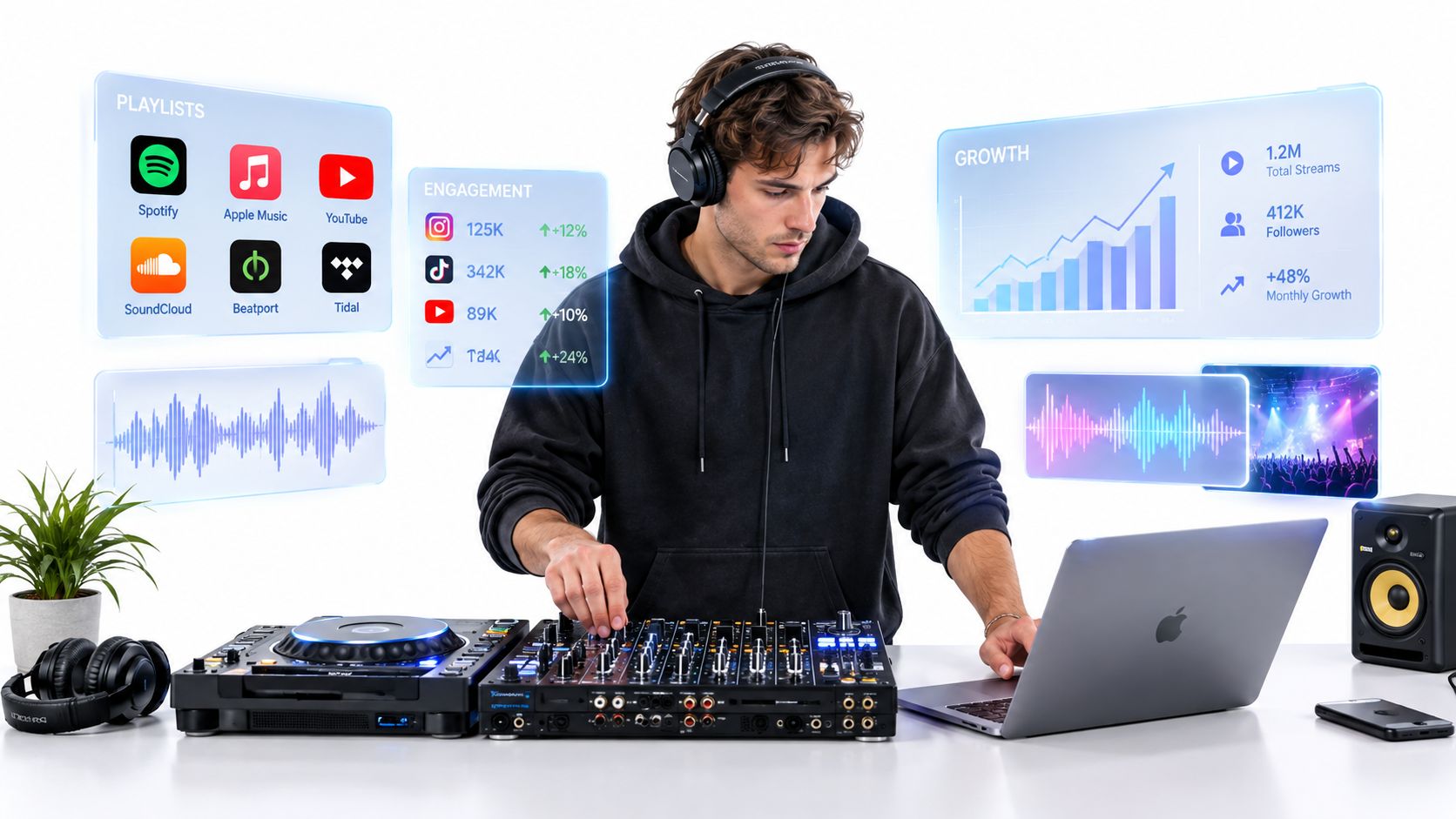
Most electronic music promotion fails for one boring reason, it chases attention instead of listener quality. More plays from random listeners don't help if nobody sticks, nobody comments, and nobody comes back for the next drop. If you want growth that compounds, stop asking how to get bigger reach and start asking how to find the people who already like your lane of sound.
That matters more now because the market is crowded, but still growing. The electronic music business reached an estimated $11.8 billion in 2023, after 17% growth, while global recorded-music revenue hit $29.6 billion in 2024, with streaming making up 69% of that total (IMS Business Report 2024). That's not a reason to spray and pray. It's a reason to be precise.
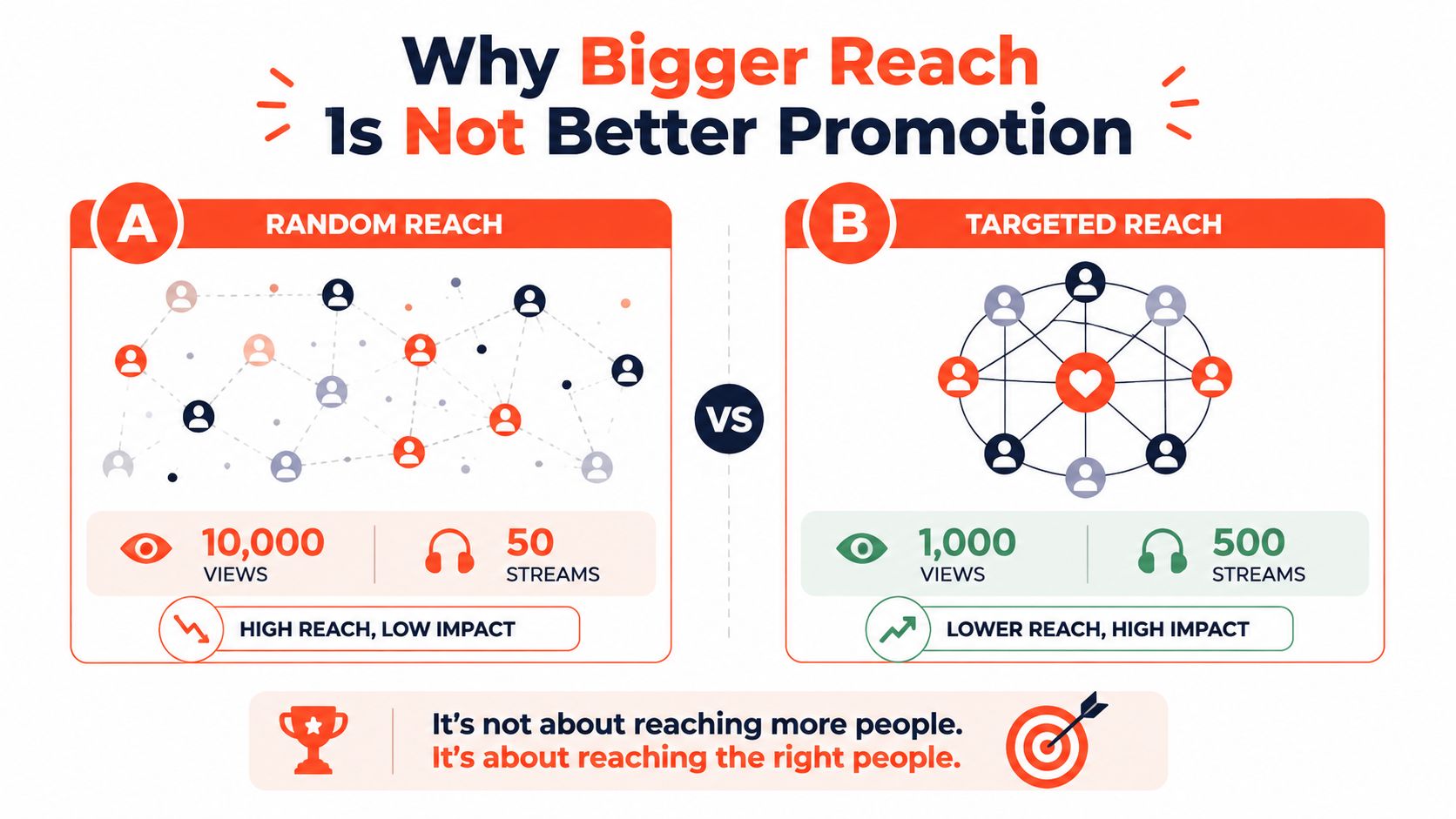
Table of Contents
- Why Bigger Reach Is Not Better Promotion
- Set Up Your Profile and Pre-Release Foundations
- Pick Scenes That Match Your Sound
- Build a Daily Listener Discovery Workflow
- Playlists DJ Pools and Label Routes Compared
- A Realistic Release Week Scenario
- Consistency Compounds More Than Virality
Why Bigger Reach Is Not Better Promotion
The usual advice is lazy. Post more, pitch more playlists, chase more followers, and hope the algorithm notices. That's not strategy, that's noise with a calendar attached. In electronic music promotion, the better move is to reach fewer people who are already aligned with your sound, then convert that attention into real activity.
Reach only matters when it creates behavior
Random impressions don't build a scene around you. Relevant listeners do, because they're the people who save, repost, comment, and return when you drop again. SoundCloud's own research says listeners who discover tracks through Liked By playlists are more than three times as likely to like, repost, or comment themselves, which is exactly why low-quality reach wastes time (SoundCloud Music Intelligence Report 2026).
That's the point most producers miss. They treat promotion like a vanity contest, when it's really a filtering process. If your track hits the wrong crowd, you don't get punished with hate, you get ignored. Ignored music doesn't travel.
Practical rule: if a tactic doesn't create saves, reposts, comments, or repeat plays, it's not promotion, it's decoration.
The smarter frame is simple. Find listeners who already live near your sound, then give them a reason to react publicly. That reaction becomes social proof, and social proof is what keeps the next listener from bouncing. For a producer, that's a lot more valuable than a dead follower count.
Set Up Your Profile and Pre-Release Foundations
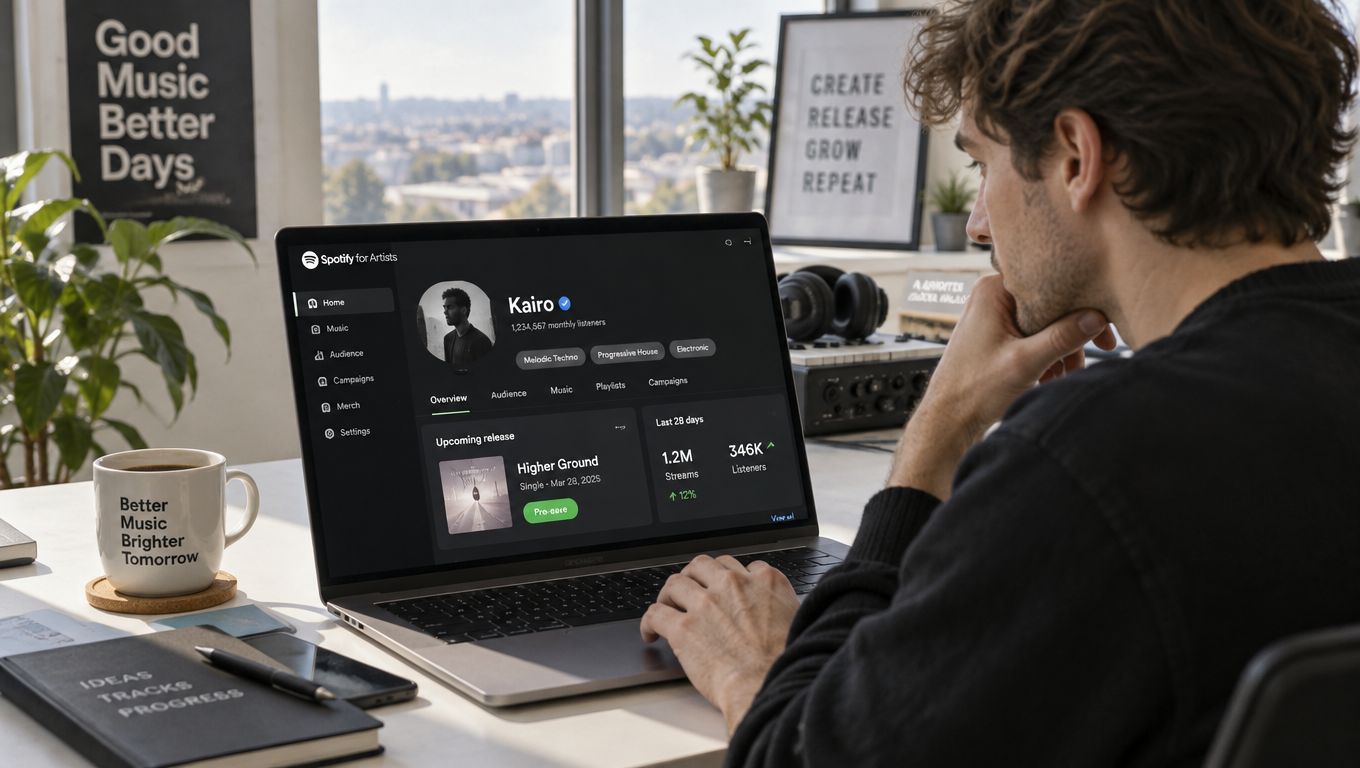
A weak profile kills good promotion before it starts. If someone lands on your page and can't tell what you make in two seconds, you've already lost the click. Your artist page has to do one job well, turn curiosity into a follow or a play.
Clean up the basics before you spend a cent
Make the profile look like one sound, not a folder of experiments. Use a clear artist name, one avatar that reads well at thumbnail size, and a header that fits the lane you want to own. Your bio should say what you make in one sentence, not tell a life story.
Put your top three tracks at the front of the profile, and make sure the strongest one leads. Add booking or label contact details if you want replies from humans instead of hoping they guess where to reach you. If you're still deciding whether SoundCloud is worth the time compared with bigger platforms, the practical trade-offs are worth reading in the SoundCloud versus Spotify breakdown.
Before release day, get the upload itself clean. That means proper artwork, a short written description, tags that match the scenes you're targeting, and a waveform that looks intentional instead of rushed. If you want people to take your record seriously, don't make them work to understand it.
Use a release checklist every time
- Artist identity: Keep the visual language consistent across avatar, header, and artwork.
- Sound description: Write one sentence that names the lane, not a genre soup.
- Track order: Lead with the strongest cut on your profile.
- Discovery metadata: Match tags to the scenes you want, not the scenes you wish you had.
- Contact path: Make it obvious how a curator, label, or promoter can reach you.
A profile doesn't win a campaign on its own. It removes friction. That matters because every visit you generate later has to convert fast, or the traffic leaks away. A clean setup turns promotional work into asset growth instead of one-off attention.
Pick Scenes That Match Your Sound
Most electronic artists try to market to “electronic fans” as if that's a real audience. It isn't. It's too broad to be useful, and broad targeting usually means you're talking to people who like a different corner of the genre than the one you're making. The better move is to map your track to two or three adjacent scenes and stay there long enough to build recognition.
House and techno are the safest defaults
SoundCloud's own audience research says house leads electronic music in plays, listening time, and listener count, while house, hardcore, and trance are the fastest-growing scenes (SoundCloud reveals electronic music fans are the most engaged worldwide). A peer-reviewed study of 150,000 accounts found that house producers were the most influential, followed by techno, hip-hop, and deep house (SoundCloud social network study). If your sound sits anywhere near club music, house and techno are the obvious starting points.
That doesn't mean every producer should pretend to make those styles. It means they're reliable engagement neighborhoods when the track genuinely fits. If your record is heavier, darker, or more percussive, techno and adjacent club scenes make more sense than some vague “EDM” bucket. If your sound is built around groove and repetition, house is usually the cleaner bet.
Don't target the whole genre when the track is narrower
A good scene choice is specific enough to attract people who already follow related records, but narrow enough to feel credible. If your track leans into bass pressure, hard-dance, or a micro-scene like schranz, target that lane directly instead of watering it down. SoundCloud's latest reporting also shows hard-dance micro-genres expanding fast, which is exactly why scene fit matters when trends move faster than labels (Rising electronic tides).
Pick the closest scene first, the trendiest one second, and the broadest one never.
For most producers, the right answer is one main scene and two backups. That keeps your outreach focused, your tagging consistent, and your audience signals cleaner. If the track sounds like it belongs in house and techno circles, act like it does. If it doesn't, don't fake it for reach.
Build a Daily Listener Discovery Workflow
Promotion gets real when it turns into a habit. Bursts look busy, but they're usually sloppy. A short daily routine aimed at similar-artist listeners beats a weekend of random outreach because it keeps your profile active without looking desperate or automated.
Start from similar artists, not random accounts
Pick three to five artists per scene whose fans overlap with your sound. Then look for the listeners already active around those artists, because those are the people most likely to respond to your track in a way that matters. Tools like SCHelper fit naturally here, since it surfaces daily curated listener recommendations from selected target artists and scenes, then lets you batch follow and unfollow with user confirmation.
A controlled review rhythm matters more than people admit. Use a small daily batch, review the accounts one by one, and skip anything that looks unrelated or inactive. SoundCloud-specific guidance and platform behavior both point in the same direction, manual-looking activity with real listeners is what keeps the work useful instead of noisy.
Keep the workflow tight enough to repeat
A practical day looks like this:
- Choose target artists in your two or three chosen scenes.
- Pull recommendations from listeners around those artists.
- Review the batch manually and keep only the accounts that clearly match.
- Follow the relevant accounts and save the best fits for later engagement.
- Clean up non-reciprocal follows after a few days, so the list stays fresh.
The point isn't to hoard followers. It's to build a visible trail of reciprocal activity around the right micro-community. That's why the daily rhythm matters more than the size of any single batch. If you want a deeper walkthrough of the listener-search process, the guide to finding real listeners on SoundCloud covers the logic in more detail.
Daily standard: review a small, controlled batch every day, not a giant list once a week.
Playlists DJ Pools and Label Routes Compared
Not every promotion channel does the same job, and pretending they do is how producers waste months. Playlists build visibility, DJ pools build DJ-side traction, labels build credibility, blogs build scene authority, and collaborations borrow trust from another artist's audience. Use them for what they're actually good at.
Promotion channels at a glance
| Channel | Realistic payoff | Time to traction | Best fit |
|---|---|---|---|
| Independent playlists | Discovery and background exposure | Medium | Producers who need visibility and can pitch well |
| DJ pools | DJ-chart traction and club use | Medium to slow | Club-focused releases with strong utility |
| Direct label submissions | Credibility and scene validation | Slow | Artists with a clear lane and polished output |
| Micro-scene blogs | Authority inside a niche | Slow | Producers with a distinct identity or local scene angle |
| Collaborations and remixes | Borrowed reach from related audiences | Fast to medium | Artists with compatible peers and shared scenes |
The strongest route depends on where you are. If you're early, playlists and collaborations can move the needle faster than label chasing. If your sound is tight and your branding is already coherent, labels and niche blogs can give you the kind of context that makes everything else easier.
There's also a practical reason to stay organized. A music promo toolkit by AIMVG is useful if you're trying to keep assets, copy, and campaign tasks in one place instead of rebuilding the same launch materials every time.
Use routes in combinations, not isolation
Don't bet your whole release on one channel. Use playlist pitching for reach, label submissions for credibility, and collaborations for adjacency. DJ pools make sense when your record is actually useful in a set, not just when you want someone to tell you it's good.
If you want a more structured network view, the SoundCloud promotion networks overview helps frame how artists, scenes, and listener clusters connect. The job is not to hit every channel. The job is to choose the ones that match your record and ignore the rest.
A Realistic Release Week Scenario
Niko drops a club track on Friday. On Monday, he posts a short teaser, a clean visual, and one line about the record's energy, not a paragraph about inspiration. On release day, he pushes it to his existing followers, then spends the next several days on the daily listener workflow, targeting listeners around house and techno adjacent artists.
The playlist work is narrow. He pitches a few relevant curators, not fifty random inboxes. He also follows up with the listeners who engaged, then watches who comes back for a second play. That matters more than the first spike, because the second visit tells him he found the right scene.
By the end of the week, the campaign looks boring from the outside, which is exactly why it works. No huge stunt, no fake virality, just a release tied to a real audience and a repeatable routine. That's the difference between a record that vanishes and a record that leaves a trace.
Consistency Compounds More Than Virality
The producers who win at this game don't treat promotion like an event. They treat it like part of the job. They choose two or three scenes, keep the profile tight, review a small batch every day, and use playlists, DJ pools, and collabs as support, not salvation.
If you need help staying systematic, the practical systems for consistency mindset applies here too. Don't improvise your outreach every week. Build a routine, keep the inputs small enough to repeat, and remove anything that doesn't create engagement.
Start this week. Pick your main scene and two backups, clean the profile, and run a daily listener routine for seven straight days. Then look at who actually responded, not who merely passed through.
SCHelper gives SoundCloud artists a controlled way to find real listeners around similar artists, then review and engage them in a daily workflow. If you're serious about electronic music promotion and want audience growth that matches your sound instead of chasing empty reach, visit SCHelper and build from listeners who already care.
Enhanced by the Outrank app