
How to Get More Plays on SoundCloud in 2026
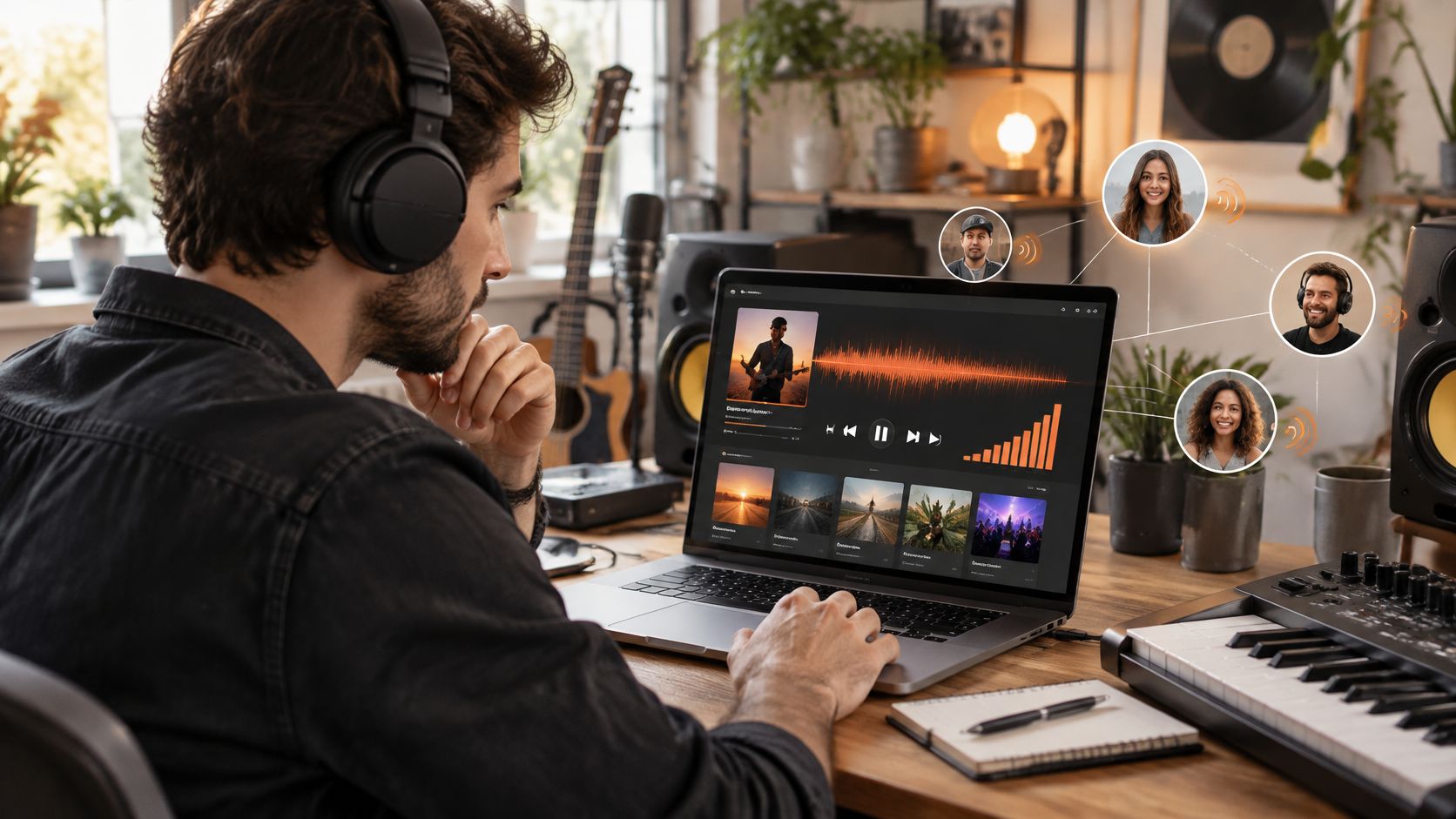
The most popular advice on how to get more plays on SoundCloud is to post more, share wider, and chase a bigger first-day spike. That advice gets the order wrong. A spike that nobody returns to doesn't teach SoundCloud who should hear you next, and it doesn't leave you with listeners for the next upload.
Table of Contents
- Channels That Count as SoundCloud Plays
- Check Plays Before You Change Tactics
- Run a Seven Day Release Routine
- Turn a Social Clip into a Real Play
- Put the Track Beside Listeners Who Stay
- Stay Inside SoundCloud's Rules
- Choose Real Listeners for the Next Release
Channels That Count as SoundCloud Plays
A play can come from several SoundCloud surfaces, but the route matters less than what listeners do afterward. SoundCloud's Advanced Insights documentation identifies plays on SoundCloud.com, embedded players, the iOS and Android apps, and through the SoundCloud API. For podcasts, streams and downloads delivered through an RSS feed also count, as described in SoundCloud's podcast insights documentation.
Use the table to choose two channels to focus on this week. A play is the starting point; the stronger channel is the one that brings listeners back.
| Channel | Counts as a play | Best use this week | Keep it if |
|---|---|---|---|
| SoundCloud.com and mobile apps | Yes | Release-day listening on your profile | People finish the track and play another |
| Embedded player on your site or link page | Yes, when a listener presses play | One owned page with the same artwork and title | |
| Stations and autoplay queue | Yes | Recommended listening | Listeners play the track again |
| Genre or scene playlists | Yes, when a listener presses play | Put the track beside similar finished music | |
| Social or short-form clip | Only after someone opens SoundCloud and plays | Send viewers to the same song version | |
| Podcast RSS | Streams and downloads through the feed | A podcast or DJ mix distributed through RSS | Listeners complete the episode, not just download it |
What Each Row Means in Practice
Profile and in-app plays keep the listener close to your other tracks. If someone finishes the release and starts another song, the route has done more than add a number.
An embedded player works like a doorway: a page view alone is not a play, because the listener must press play. Match the embed's title and artwork to the SoundCloud track so people recognize it when they visit your profile.
Stations and autoplay queues bring recommended listening. You cannot directly choose who hears the track there. Use the release week to give interested listeners a clear path to the song, then watch whether recommended plays lead to return listens and profile activity.
Choosing Your Two Channels
A playlist placement works best when the surrounding music fits the track. A short list built around a clear sound, such as late-night garage or sample-based hip-hop, gives listeners a more relevant next step than a large playlist with little connection between songs.
A social clip is attention, not a SoundCloud play. The play happens only after someone opens SoundCloud and starts the same version of the track. If clip views rise but SoundCloud activity does not, improve the handoff before making more clips.
Practical rule: Choose two rows from the table and focus on them this week. Keep a channel when it brings listeners back, not just when it adds first plays.
For an independent release, start with profile listening and one embed you control, or profile listening and one scene playlist. Each pair gives listeners a direct route to the track and a chance to continue exploring your music.
Check Plays Before You Change Tactics
The number you see on day one is incomplete, so don't redesign your release around it. SoundCloud's Advanced Insights documentation explains that plays from logged-in listeners update in real time, while plays from other listeners may take up to 24 hours to appear, and offline listening by SoundCloud Go subscribers counts after the listener reconnects, which can be up to 30 days later.
That same documentation confirms self-plays from your own account don't increase the total. Looping your track while logged in as the artist wastes an afternoon and tells you nothing about listeners.
Build a Small Cohort, Not a Single Total
Then read the pattern, not the headline number.
| What you see | Likely cause | What to do next |
|---|---|---|
| Plays rise, almost no second plays | Listeners were not a match, or the opening loses them | Change audience or the first 30 seconds, not the posting volume |
| Profile visits with few plays | Too many steps between the clip and the track | Send one direct link to the hero track |
| Dashboard barely moves for a day | Logged-out plays can take up to 24 hours | Wait a day before judging the release |
| A spike, then silence | One-off traffic with no relationship | Drop that channel on the next upload |
| Recommendations have something to learn from | Repeat the same channel and audience | |
| Extra plays weeks later | SoundCloud Go offline listens after reconnect, up to 30 days | Keep a day-30 note and do not panic on day two |
How to Read Two Common Patterns
Say a track gets a healthy first-day total but almost nobody plays it twice. That's not a promotion volume problem. Either the audience was wrong for this sound, or the opening promises something the track doesn't deliver. Adding more posts sends more mismatched listeners to the same opening.
Say profile visits climb but plays stay flat. People were curious enough to click, then couldn't find the song quickly or faced a page with five competing links. Shorten the path before you blame the music.
Change the track, the artwork, or the audience only after the 24-hour delay has passed. Judge the offline tail at day 30, not on release night.
Mobile-heavy releases need extra patience. If your listeners mostly use the app and download for commutes or flights, declaring failure at 48 hours misreads your own audience. Note the day-seven result, then check again at day 30 before you write the channel off.
Run a Seven Day Release Routine
That means a smaller group that returns is more useful than a large group that leaves. Your job for the week is to create repeat listening you can measure, then keep only the channel that produced it.
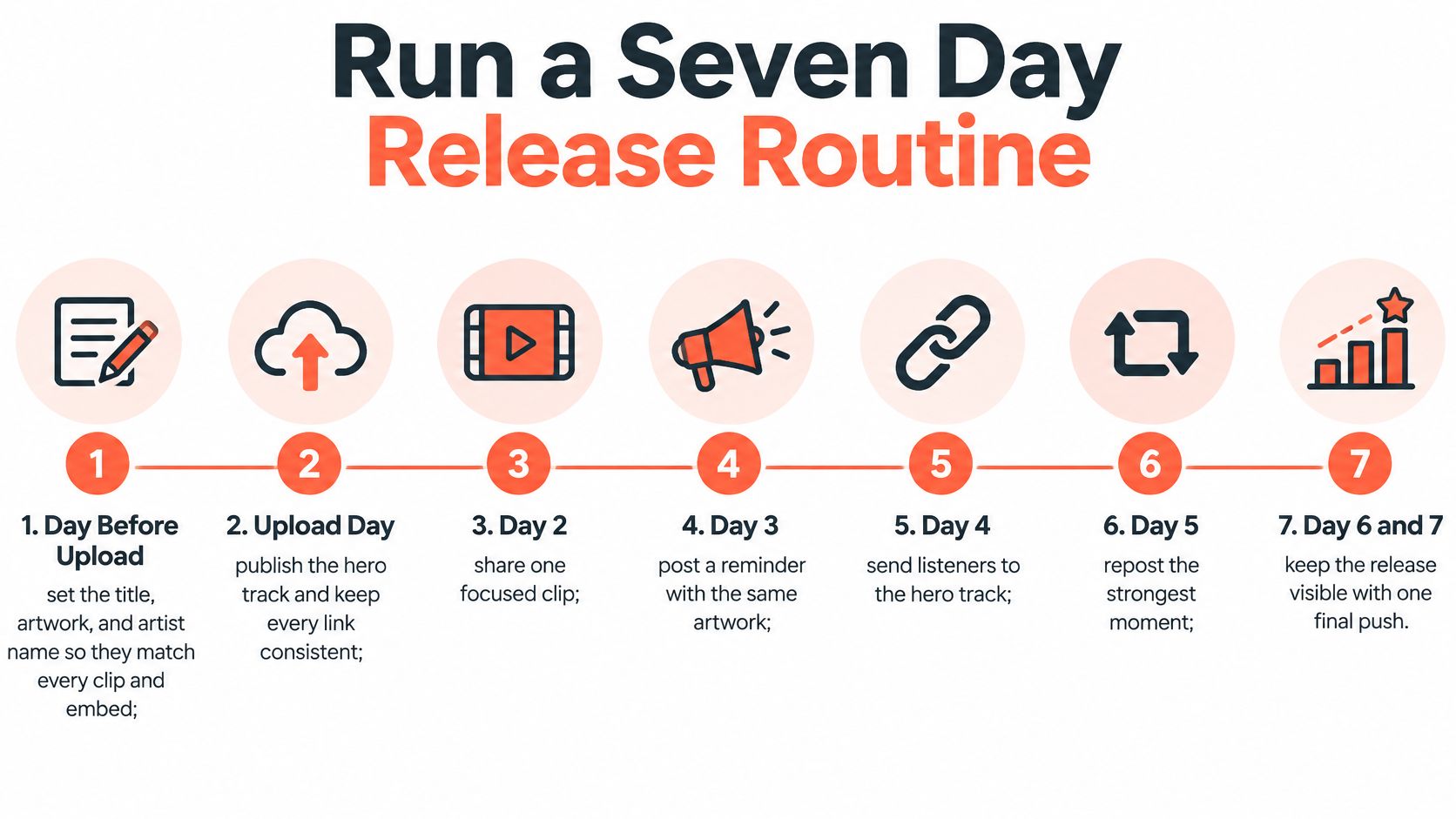
The Seven Days in Order
Day before upload: Set the title, artwork, and artist name so they match every clip and embed. Pin a first comment that names the next track or an upcoming edit. Send the private link to three listeners who already finish similar music, and ask what moment they'd replay.
Release day: Publish at the hour your city usually listens. Share one direct SoundCloud link everywhere, and ask those three listeners for a real play on the public track. Don't split attention across four destinations.
Day two: Check who finished the track. Reply to every genuine comment in your own words, mention the specific moment they raised, and answer questions about the sound or the next upload.
Day three: Add the track to two playlists that already hold music in the same scene. Use one playlist you control and one you have permission to join. Put the new track second or third, after a song listeners already finish.
Days four and five: Post one short clip that uses the same mix and the same title. Make the SoundCloud track the only destination in the caption and on the link page. One clip, one path, no menu of choices.
Why the Private Link Step Matters
Three honest listeners on day zero catch problems cheaply. If all three skip at the same point, you can fix the intro or swap the audio before the public release instead of discovering the drop-off in your insights a week later. Their finished plays also give the public track early listeners who already know they like the song.
Anticipate a common confusion here. Plays on a private link help you test the track, but your release-week cohort starts at public upload. Judge channels by what public listeners do, because those are the listeners you're trying to win again on the next release.
Write that signal down before you upload. On day seven you'll be tired and tempted to keep every channel that moved any number. A rule you wrote in advance keeps the decision honest.
Turn a Social Clip into a Real Play
Start from the conversion gap, not from posting frequency. Reporting summarized in SAE's overview of social media and music promotion states that more than half of 16 to 24 year olds who discover music on social media do not take core next steps such as looking up the artist, saving the music, or becoming a fan, and only 19% of young listeners who discovered an artist they liked subsequently listened to more of that artist's music.
A busy clip can therefore leave SoundCloud flat. The fix isn't more clips. It's a cleaner handoff, which fits the same thinking behind our guide to online music promotion, where each post has one job.
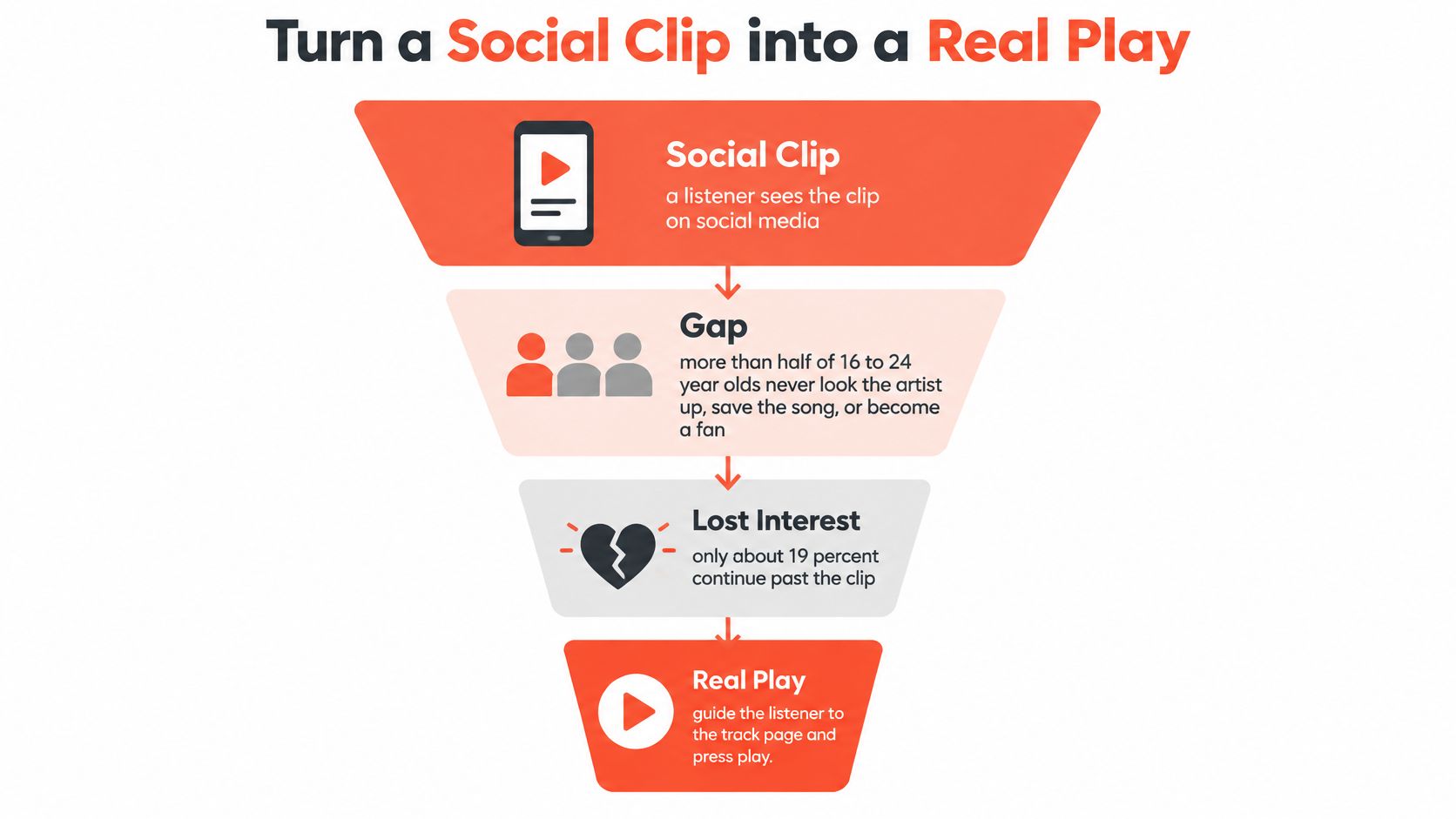
Build One Path from Clip to Track
- Same song everywhere: Use the same version, artist name, title, and cover art in the clip and on SoundCloud. If the clip uses a sped-up edit, upload that edit or name the difference clearly.
- One destination: Send every caption to one SoundCloud URL. A link page with four streaming choices splits a small, fragile stream of attention.
- Land on the track: Make that URL open the hero track directly, so the first tap is play, not a hunt through your profile.
- One reason to stay: Name an upcoming edit, a DJ version, stems, or the date of the next upload in the pinned comment and track description.
- One action in the caption: Ask for a single thing, such as playing the full mix. If you're learning the format itself, how to create YouTube Shorts in 2026 covers the production basics, and you can apply the same one-link discipline there.
Read the Result After 48 Hours
Put the Track Beside Listeners Who Stay
Broadcasting sends your track to whoever is nearby. Proximity puts it beside people and songs that already fit. That difference decides whether a new listener finishes the track or skips it.
Start with two playlist homes. Build a personal playlist ordered like a short set, with the new track second or third after a proven song, so listeners arrive warmed up. Then find one scene playlist you can contribute to, where curators and listeners already gather around your sound. Reading maxijournal on independent music blogs can also help you spot small curators who run playlists and write about the scenes they cover.
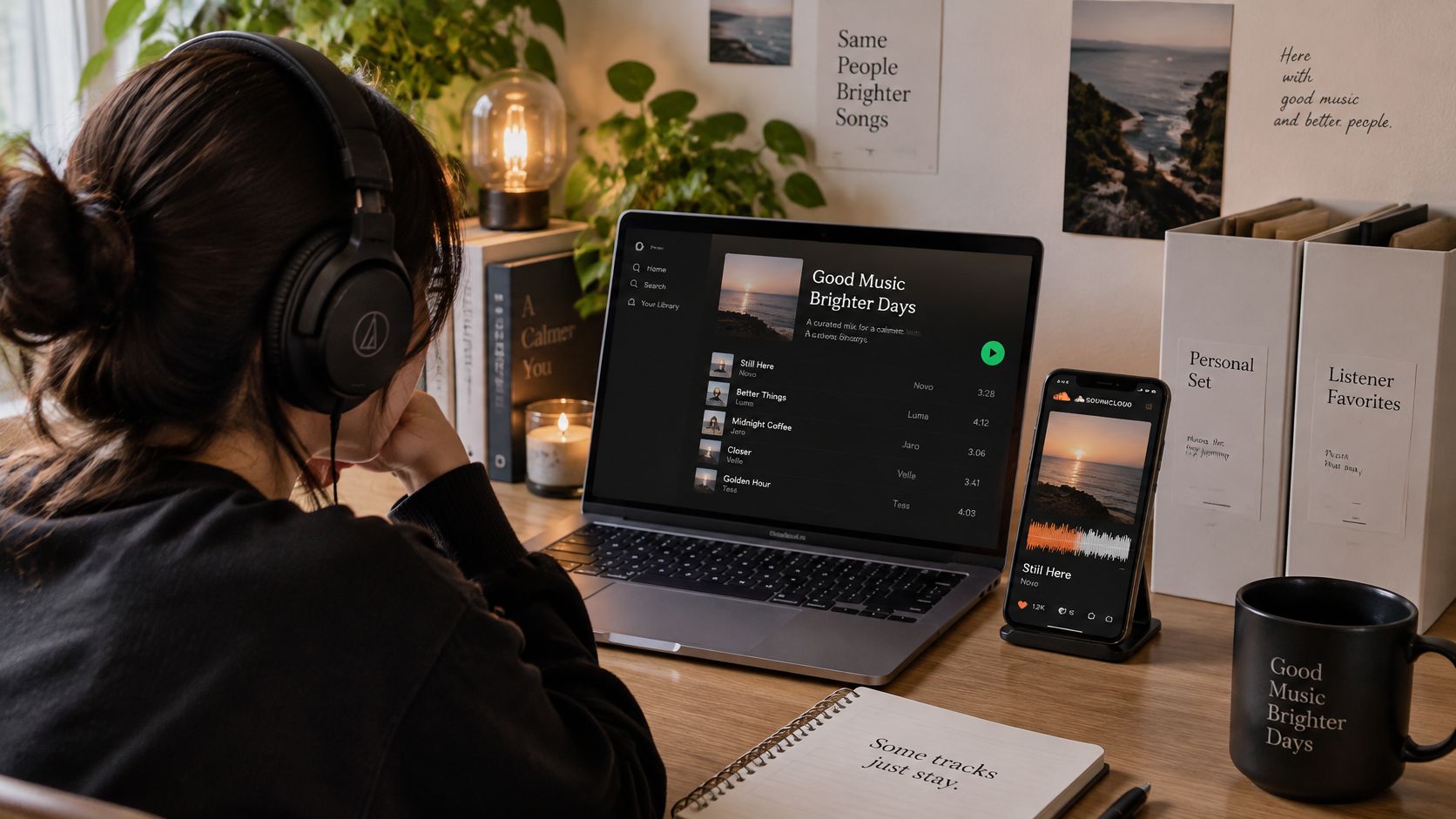
Make the Profile Match the Promise
Write a one-line playlist note that says who the track is for, such as late-night UK garage or sample-based hip-hop, instead of a generic new music tag. Pin the hero track on your profile. Keep the bio to genre, city, and what arrives next, and make the avatar match the artwork listeners saw in clips and embeds.
Meet Listeners in a Controlled Way
Pick target artists whose fans already match your sound. When manual searching eats the week, we built SCHelper to give you a focused daily batch of recommended listeners selected around your genre, scene, and target audience, based on the target artists you choose. SCHelper is not affiliated with SoundCloud, connects with SoundCloud OAuth, and does not store your password.
Keep the session short and human. Open the profiles, play their music, leave one specific comment where it fits, and repost only a track you'd play out. You still choose who to engage with, and that choice is the point.
Ask one question before each session. Would today's names plausibly finish this track? If the answer is no, change the target artists, not the volume.
Stay Inside SoundCloud's Rules
Set guardrails before any tactic runs, because a spike that breaks the rules can be removed and can cost the account. SoundCloud's Terms of Use prohibit techniques or services that misrepresent the popularity of content or user activity, and SoundCloud's Community Guidelines ban external promotion services that claim to increase followers, plays, likes, or reposts.
Five Boundaries to Check Every Tactic Against
- Don't buy popularity: Skip any service selling plays, likes, reposts, or followers. If the pitch promises numbers instead of listeners, it's the wrong side of the Terms.
- Keep every action human-chosen: Every play, comment, and repost connected to your growth should be one a person deliberately picks.
- Don't create play-generating accounts: Accounts made only to inflate activity misrepresent your popularity and put the main profile at risk.
- Keep comments personal: Identical or nearly identical comments or messages at scale break the Community Guidelines. Mention something specific about each track, a drum choice, a transition, a lyric.
- Repost with judgment: Like and repost only tracks you'd play out, and don't repeat the same action on a track you've already reposted or liked.
Safe volume is a daily count you could write by hand. If a tactic needs more personal messages than you could sign off on in one session, it's too big. Review your list weekly and drop anything that depends on volume rather than on a listener who presses play.
Choose Real Listeners for the Next Release
Before the next upload, settle three things. Know your two channels, your hero track, and the kind of listener who would finish it. Everything else is decoration until those are clear.
If finding those people by hand keeps slipping, that's the gap we address. Our targeted listener discovery leads to more profile visits, more activity, and more relevant followers over time, because you start from target artists in your scene and review a daily batch yourself. It suits a fresh profile, a mix campaign, or the quiet weeks after a release, and each connected SoundCloud account needs its own subscription. Judging whether an audience is real matters on every platform, and SuperX on Twitter follower authenticity makes a similar case for checking quality before celebrating counts.
For a single release, the 1-month plan at $9.99 covers one month of targeted growth on one account. For ongoing growth across several uploads, the 3-month plan at $26.99 is recommended for steady follower growth, and every plan includes audience research, organized listener recommendations, and account tools.
Do three things this week:
- Pick two channels from the table and commit to them for seven days.
- Write your day-seven keep-or-stop line before you upload, based on second plays plus one meaningful action.
- Start a one-account shortlist of target artists in your scene if discovery is your bottleneck.
That's how to get more plays on SoundCloud in a way that survives release week. Plays multiply when the right listeners can find the track, finish it, and come back.