Hip Hop Music Promotion: How to Build an Audience in 2026
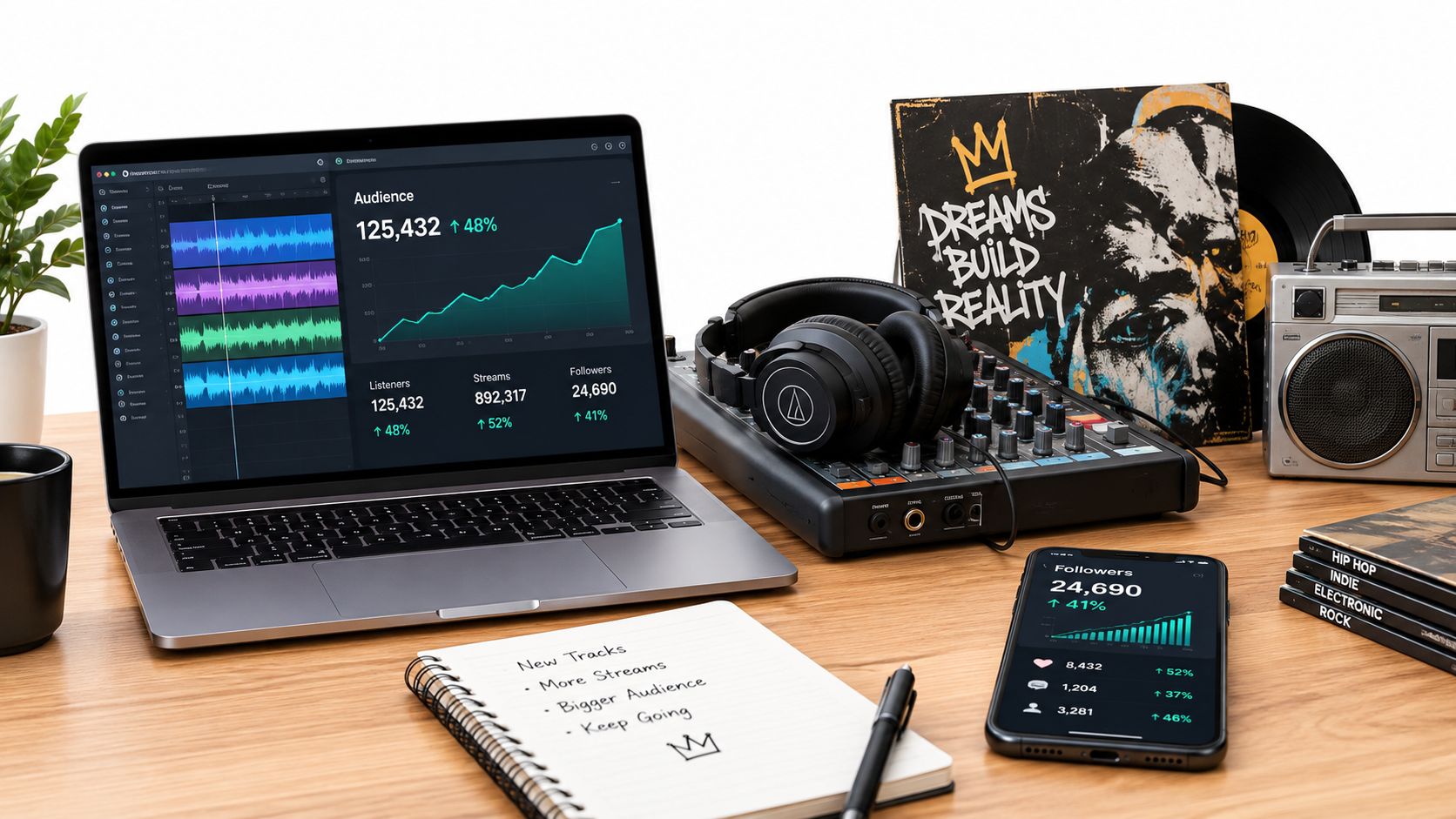
Most hip hop music promotion advice starts with the wrong question: How do I make this track go viral? That question pushes artists toward short clips, trend-chasing, playlist pitches, and inflated reach figures while ignoring what happens after someone hears the song. A view isn't a fan, a profile visit isn't a follow, and a sudden follower spike doesn't prove anyone will return for the next release.
The stronger question is: Which listeners are most likely to hear the full track, follow the artist, save the music, leave a meaningful comment, and come back? That shift changes every decision, from platform selection to target artists and daily activity. Hip hop's history supports the principle. When Billboard adopted Nielsen SoundScan point-of-sale data in spring 1991, verified purchase behavior helped releases that had been underestimated by older reporting methods gain visible commercial credibility. Chart position and certification became promotional assets because they connected attention to measurable audience behavior. XXL's account of SoundScan's impact offers useful historical context.
Digital discovery has widened the opportunity, but it hasn't removed the qualification problem. YouTube and WorldStarHipHop opened new routes for circulation in 2005, and Billboard added digital streams to the Hot 100 that same year. By 2018, R&B/hip-hop represented 37.5% of U.S. on-demand audio streams, and Nielsen reported more than 96,000 highly listened-to rap and hip-hop artists worldwide, with artists present in at least 149 countries. Nielsen's history of hip-hop's global influence shows why broad exposure matters, but exposure still needs a deliberate path toward repeat listening.
Table of Contents
- Why Hip Hop Promotion Requires a Shift in Strategy
- Making Your SoundCloud Profile Worth Following
- How Similar-Artist Targeting Changes the Outcome
- Bot Growth versus Controlled Manual Workflows
- Building a Daily Promotion Routine That Actually Sticks
- Your 30-Day Hip Hop Promotion Launch Plan
Why Hip Hop Promotion Requires a Shift in Strategy
Viral reach is attractive because it's easy to display. A screenshot of views looks impressive, while a small group of relevant listeners returning to your profile is harder to show. But the second signal is usually more useful for an independent artist building a career.
Recent global research found that 48% of consumers didn't stream music they encountered on social media during the previous month, and fewer than one-third became fans. YouTube was the leading stated source of new-music discovery at 52%, ahead of streaming services at 40% and TikTok at 37%. Only 12% of consumers were 16 to 24-year-olds who primarily discovered music on TikTok. The reported discovery findings don't mean TikTok is useless. They mean a short-form impression shouldn't be mistaken for a completed promotional outcome.
Treat discovery as a sequence
A qualified listener moves through recognizable stages:
- Discovery: They encounter a clip, repost, recommendation, playlist placement, or artist interaction.
- Profile visit: They decide the artist identity and presentation deserve more attention.
- Full-track listen: They move beyond the hook or preview and hear the song in context.
- Conversion: They follow, save, comment, repost, or add the artist to a listening habit.
- Return engagement: They respond to the next release instead of disappearing after one interaction.
Your tracking should reflect that sequence. Record the source of attention, profile activity, full-track plays, follows, saves, comments, and engagement on the next release. If a campaign produces views but no profile visits, the creative or audience is misaligned. If profile visits rise but follows stay flat, fix the profile before buying more reach.
Practical rule: Don't scale a source until it produces listeners who continue beyond the first encounter.
A focused guide for indie hip hop success can help, especially when it treats release planning as a broader artist-development process rather than a single promotional burst. For SoundCloud artists, the same logic applies to platform choice. A useful SoundCloud promotion approach should help you identify relevant listeners and maintain consistent follow-up, not just inflate activity around release day.
The trade-off is clear. Broad campaigns can create faster awareness, but targeted campaigns usually give you better information about who responds to the music. For an independent artist without a large budget or a label team, usable feedback is often more valuable than impressive reach.
Making Your SoundCloud Profile Worth Following
Promotion earns the visit. Your profile earns the follow.
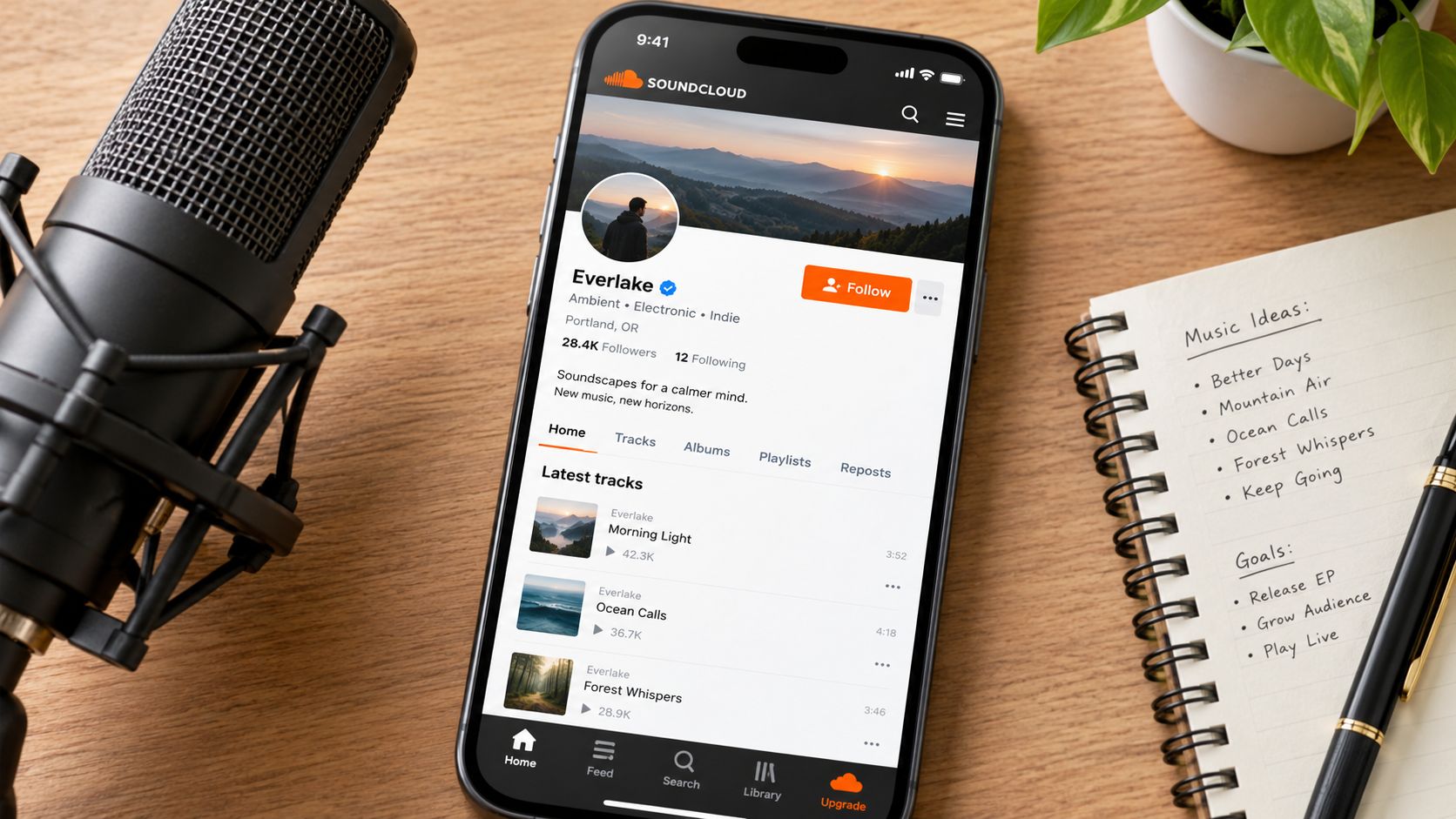
A SoundCloud page should answer three questions quickly: Who are you, what do you sound like, and what should I play first? Use the same artist name everywhere, choose an avatar that remains recognizable at small sizes, and avoid a username that looks temporary or unrelated to your music. Your header should communicate your lane without forcing visitors to decode it.
Build the page around the first listen
Your bio doesn't need a life story. State the kind of hip hop you make, name relevant influences, identify the current project, and include a credible milestone if you have one. Avoid vague claims such as “next up” unless the surrounding profile gives visitors something concrete to explore.
Track order matters just as much. Put your three most accessible songs first, even if they aren't the newest uploads. A listener who arrives through a gritty single shouldn't have to search through unfinished experiments to find the track that best represents you. Create playlists or collections by project, mood, feature, or production style so visitors can choose a clear route through your catalog.
Your page should also look active. Regular updates, thoughtful descriptions, and visible responses to listeners signal that a real artist is present. That doesn't mean posting noise every day. It means giving people a reason to believe you'll still be there when they return for the next song.
Use this guide to SoundCloud's importance for upcoming artists as a useful reference when deciding how the platform fits into your wider release system. A profile isn't a file cabinet. It's a conversion funnel, and every element should help a curious listener take the next step.
How Similar-Artist Targeting Changes the Outcome
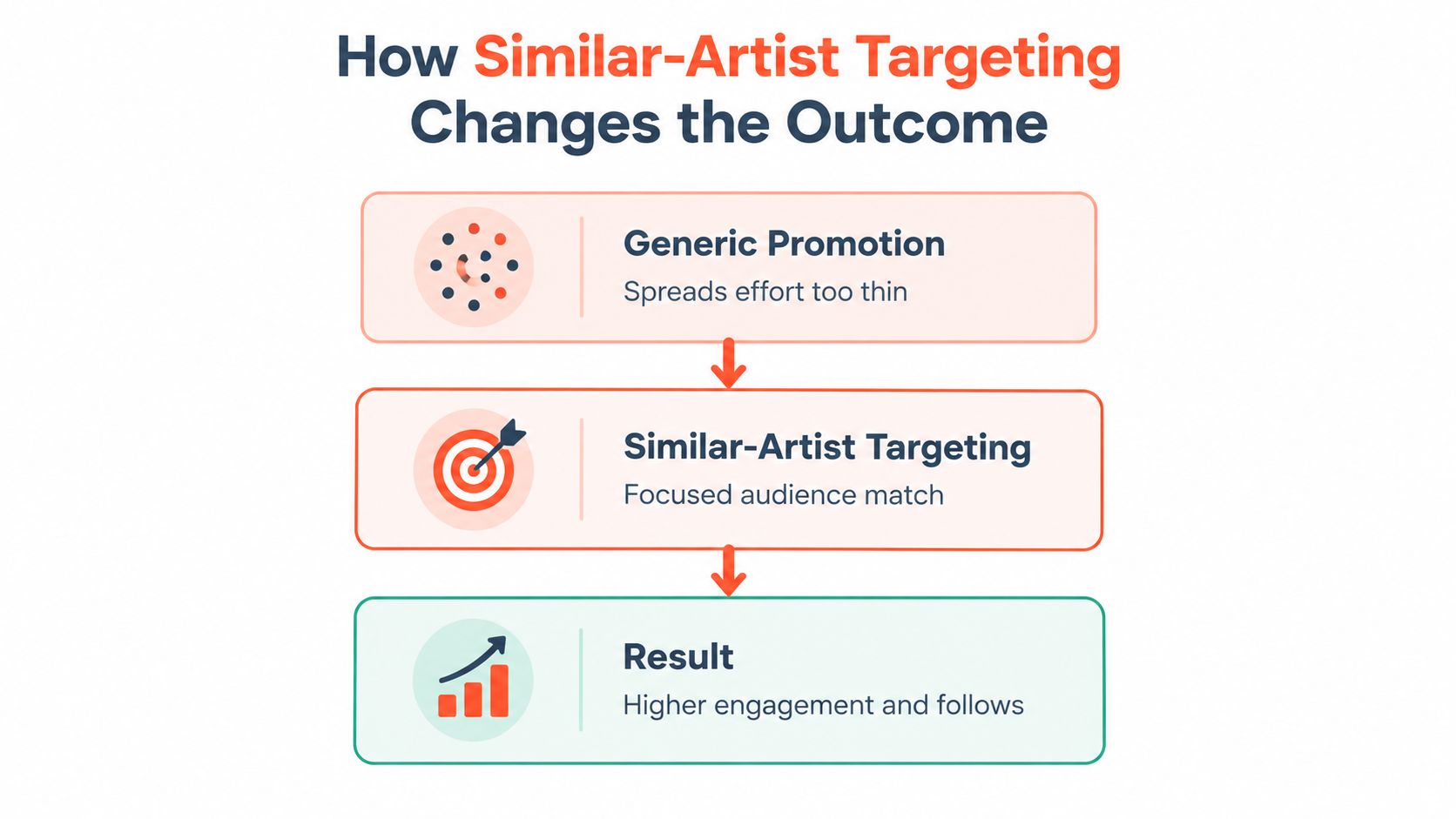
Generic promotion asks the entire platform to care about your song. Similar-artist targeting starts with people who have already shown a preference for a related sound.
Begin with the music, not the size of the artist. A boom-bap rapper should map listeners around underground lyricists, producers, and scene-specific playlists. A trap artist might study vocalists, beatmakers, and adjacent regional acts whose audiences respond to similar tempos, textures, or subject matter. A DJ uploading mixes should look for listeners who already follow that format and its surrounding community.
Map adjacency before you expand
Build a short target list from SoundCloud recommendations, related-artist links, repost networks, and curated playlists. Then inspect the audience around each artist instead of assuming every follower is relevant. Look for recent likes, comments, reposts, and signs that listeners interact with the music rather than just collecting accounts.
Smaller and mid-level artists can be more useful starting points than global stars. Their audiences may be narrower, but the connection to a specific scene is often clearer. A listener who follows several artists with a comparable sound has already done part of the qualification work for you.
Audience test: Can you explain why this listener would care about your music without mentioning follower count?
Regional expansion should follow the same discipline. Don't begin by targeting a vague global English-language audience. Test a specific scene, pay attention to its language and slang, study local artist adjacency, and sequence activity around the audience's time zone. Genuine cross-border interest shows up through repeat plays, follows, comments, and profile activity, not accidental impressions.
Chartmetric analysis reported that SoundCloud growth can precede or match Spotify growth among developing and mid-level artists, with more than half of its highlighted top-trending artists seeing SoundCloud plays rise at least as quickly as Spotify listeners. That finding appears in RouteNote's SoundCloud music intelligence coverage, and it reinforces a practical point: SoundCloud can reveal scene-level momentum before a broader expansion becomes obvious.
Review each target pool separately. If one audience produces profile visits but no full-track listening, change the creative or remove the pool. If another produces comments and repeat activity, deepen that relationship before adding more regions. Relevance first, volume second keeps your data interpretable.
Bot Growth versus Controlled Manual Workflows
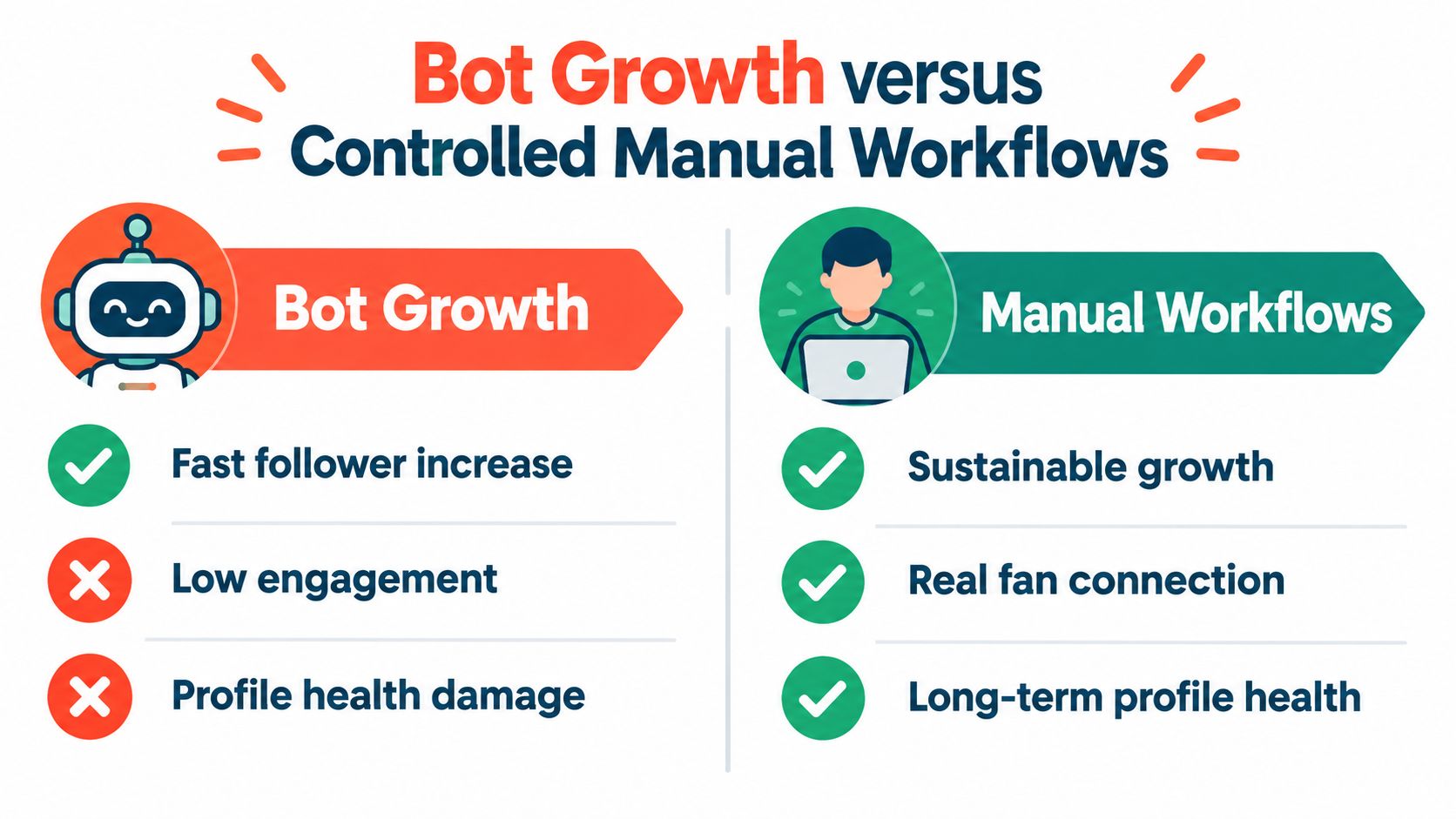
Bot growth optimizes for visible activity. Controlled manual work optimizes for people.
Follower exchanges and blind automation can make an account look busier, but they don't give you a dependable audience for the next release. An account that follows thousands of unrelated profiles may produce a flattering total while generating little listening, saving, reposting, or conversation. Aggressive patterns can also create account-health concerns when platform systems detect suspicious behavior.
| Approach | What it prioritizes | Main trade-off |
|---|---|---|
| Bot growth | Fast follower increase | Low relevance and weak return listening |
| Follower exchanges | Reciprocal numbers | Limited connection to the music |
| Controlled manual work | Relevant listeners and steady activity | Requires time and consistency |
| Assisted research tools | Faster discovery with user confirmation | Still needs human judgment |
Keep the human decision in the loop
A controlled workflow might suggest listeners connected to selected similar artists, but you review those recommendations before acting. You can inspect an account, confirm that the music is relevant, and decide whether a follow makes sense. That extra judgment takes longer than blind automation, but it protects the quality of your audience and makes your analytics easier to interpret.
Automation can still support the boring parts. A tool may organize recommendations, remember accounts you've already reviewed, track activity, or let you confirm actions in batches. It shouldn't replace your decisions or run unattended actions without clear controls.
The practical comparison is simple:
- Bot growth creates quantity without context. You don't know whether the new follower likes your sound or will ever return.
- Manual work creates slower feedback with stronger meaning. A follow from a relevant listener tells you more about audience fit.
- Controlled assistance reduces search time. You spend your attention on qualification rather than opening endless profiles.
- Steady activity protects the workflow. Avoiding aggressive spikes keeps your behavior closer to normal human use.
For a deeper look at the risks and alternatives, this discussion of SoundCloud follower bots and safer approaches is a useful companion. The central trade-off won't change: you exchange instant volume for audience quality and sustainable profile health.
Building a Daily Promotion Routine That Actually Sticks
A release campaign goes unnoticed when the artist treats promotion as an event. One post, one playlist pitch, or one burst of outreach rarely creates a listening habit. A repeatable routine gives each release more chances to reach the right people without consuming the time needed to make music.
Start with a compact daily block. Review a selected group of listeners around your target artists, check whether their activity fits your sound, and confirm only the accounts that make sense. Then spend time engaging with music in your niche. A real comment about a beat, hook, verse, or mix is more useful than a generic compliment pasted across profiles.
Use a routine with clear boundaries
A workable pattern looks like this:
- Review recommendations. Remove irrelevant genres, inactive accounts, and profiles that don't match your audience.
- Confirm targeted actions. Follow relevant listeners only after checking their relationship to comparable artists.
- Engage with context. Listen to tracks, respond thoughtfully, and avoid turning every interaction into a sales pitch.
- Maintain your profile. Share a release note, update a playlist, or respond to comments when you have something useful to add.
- Log the signal. Note which target artist, scene, or listener group produced profile activity and return engagement.
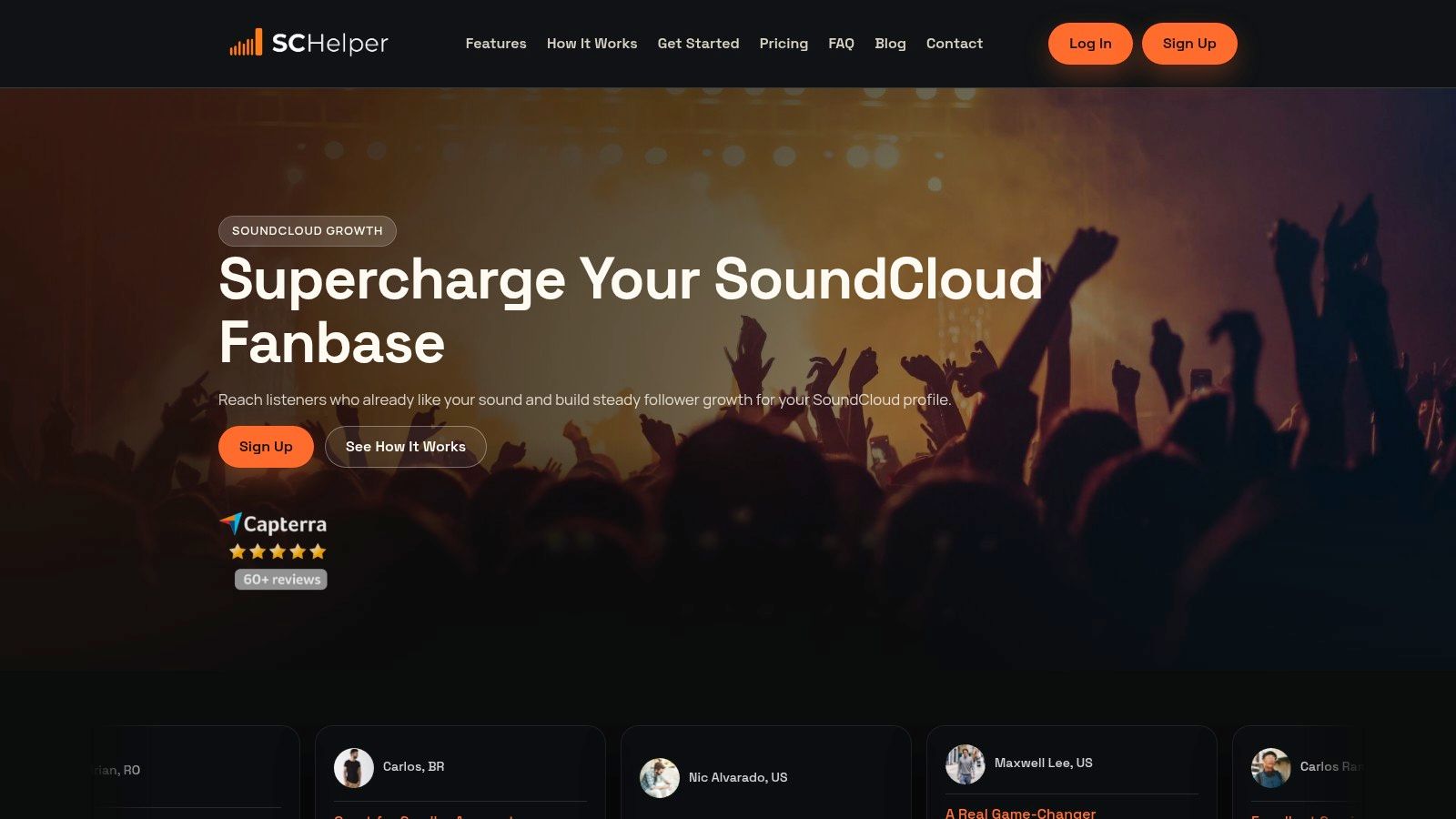
SCHelper is one option for this kind of SoundCloud workflow. It provides curated listener recommendations based on selected target artists, supports user-confirmed batch follow and unfollow actions, and includes controls for excluding previously engaged accounts. The service uses SoundCloud OAuth rather than storing a password, while the user remains responsible for reviewing and confirming activity.
Don't treat daily limits as a race. Start with an activity level you can maintain and that doesn't create a sudden spike, then adjust only after you understand the response. The best routine is boring enough to repeat and selective enough to teach you something.
Protect creative time by separating research from production. Review listeners in one focused block, create content in another, and reserve a weekly session for deciding which target artists and regions still fit. Promotion should support your release schedule, not replace it.
Your 30-Day Hip Hop Promotion Launch Plan
A useful launch plan connects profile quality, audience qualification, and consistent follow-up. It doesn't require you to contact everyone. It requires you to learn which listeners respond to your sound and then keep serving that audience with strong music.
Days one through five
Clean the profile before inviting traffic. Confirm the artist name, avatar, header, bio, links, track descriptions, and ordering. Put the most accessible songs first and group the catalog so a new listener can find a clear next listen.
Select target artists by sound and scene. Write down why each artist belongs on the list, then inspect recent audience activity. Remove names that are only attractive because they're famous. Your first checkpoint is simple: a stranger should understand your identity and find a strong starting track without assistance.
Days six through twelve
Begin daily listener review. Work from the selected target artists, inspect accounts for relevance, and confirm follows carefully. Engage with the surrounding community through specific listening and conversation, not repeated promotional comments.
Keep a note of what happens after each activity block. Record profile visits, follows, full-track listening, saves, comments, and any response from the next release when it arrives. These observations will be more useful than a single total follower figure.
Days thirteen through twenty
Maintain a predictable posting rhythm. Share context around the music, answer comments, update collections, and save relevant tracks that help you understand the scene. If one target artist's audience produces visits but another produces meaningful engagement, shift attention toward the stronger match.
Short-form video can support discovery when it sends people somewhere useful. For format, sequencing, and platform decisions, these practical video distribution tips can help you connect a clip to the full song rather than treating the clip as the entire campaign.
Days twenty-one through thirty
Review the quality of each listener pool. Which target artists produced profile visits? Which scenes generated follows? Which listeners returned, commented, saved, or engaged with your next piece of music? Keep the pools that show evidence of fit and remove the ones that only create activity without attention.
Use the final days to plan the next release cycle. Update the profile if the strongest song has changed, prepare follow-up content, and keep the daily workflow small enough to continue after launch month. A strong follow-up release gives new listeners a reason to stay, while consistent activity makes your artist presence easier to recognize.
| Phase | Focus | Key Actions |
|---|---|---|
| Days one through five | Profile and targeting | Polish identity, reorder tracks, refine the bio, select adjacent artists |
| Days six through twelve | Qualified discovery | Review listener pools, confirm relevant follows, engage with the surrounding scene |
| Days thirteen through twenty | Consistent activity | Post useful updates, respond to comments, save relevant music, adjust targets |
| Days twenty-one through thirty | Measurement and renewal | Compare listener pools, remove weak matches, plan the next release cycle |
The result isn't a promise of instant virality. It's a working system that tells you where your listeners come from, what they do after discovery, and which audience deserves more attention. Hip hop music promotion becomes more effective when every action has a qualification purpose.
SCHelper helps SoundCloud artists discover listeners around similar artists, review curated recommendations, and confirm controlled follow and unfollow actions without unattended automation. Visit SCHelper to build a steadier promotion routine around relevant listeners instead of chasing empty reach.
Composed with Outrank